The container fell overboard: who pays – insurance or you?
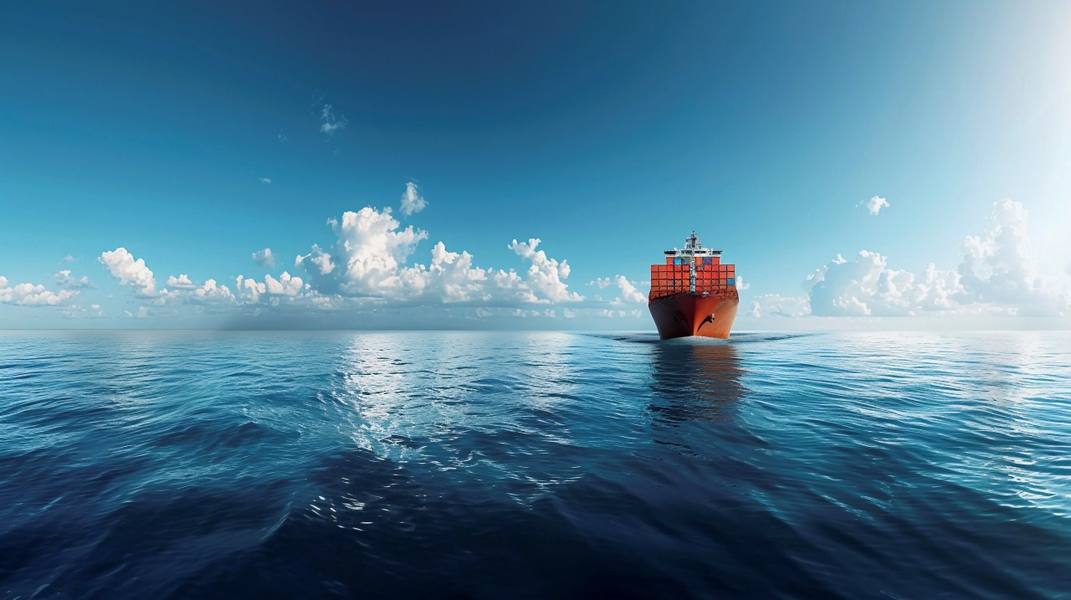
In international transport, the principle of limited liability of the shipping line applies.
Night. Storm. The ship cuts the wave in the South China Sea.
The metal boxes on the deck vibrate slightly.
One sharp tilt - The multi-ton container disappears in the dark.
In the morning, the captain recorded a dry phrase in the journal: "Container lost overboard."
And somewhere in Russia or Europe, the importer does not even suspect that his goods already lie at a depth of several thousand meters.
And here's the big question:
Who will pay for this container, the insurance company or you?
The answer is not as obvious as it seems.
Illusion #1: “The container has drowned, so it is a force majeure”
It is logical to assume that if the cargo is lost at sea - This is the responsibility of the carrier.
But marine logistics lives by its own rules.
In international transport, the principle of limited liability of the shipping line applies.
If the carrier proves that the loss occurred due to a storm, natural disaster or other circumstances beyond its control, it may be exempt from full compensation.
Yes, there is a responsibility.
But it can be limited in amount.
And that's where the fun starts.
Limitation of Liability: Unpleasant Mathematics
Maritime transport is governed by international conventions.
The amount of compensation is often calculated based on the weight of the cargo rather than its actual value.
Conventionally:
10,000 kg × established unit of account = payout limit.
If you were carrying $2 million worth of electronics in one container and the carrier’s liability limit is only a fraction of that amount - There's nobody to cover the difference.
Except you.
Illusion #2: I have insurance.
Great. Then the next question is:
What kind of insurance policy do you have?
There is a fundamental difference between:
- carrier liability insurance
- cargo insurance
It's not the same thing.
If you don’t have a separate cargo insurance, you’re actually only counting on the line’s liability limit.
And it can be many times lower than the cost of the party.
The most mysterious term in maritime logistics is General Average.
There is another scenario that not everyone knows about.
During a storm, the captain decides to dump some of the containers overboard to save the ship.
The container with your goods flies into the ocean.
It's called General Average (General Average).
And here's the paradox:
It’s not just those whose containers are dumped.
All participants in the transportation pay.
Even if your container has arrived safely.
Because the captain's decision saved the ship and the cargo.
You will be charged in proportion to the value of your cargo.
Until you pay for it. - The container will not be issued at the port.
When does insurance really pay?
The insurance company will compensate for the loss if:
- The policy covers maritime risks.
- The insurance amount corresponds to the real value of the cargo.
- The conditions of packaging and fastening are not violated.
- There are no discrepancies in the documents.
- The cargo was correctly declared.
Any inaccuracy can be a reason for refusal.
Especially if the insurance is minimal.
The most common mistake of importers
Savings on insurance.
The logic is clear:
Containers rarely fall into the sea.
Yeah, rarely.
But if it happened. - The loss is measured in millions.
Especially now that:
- ships are overloaded
- lengthened
- Weather risks increase
- harbours are at their limit
Each additional overload - additional risk.
Who's really paying?
Now the big takeaway.
If:
- You do not have full cargo insurance.
- The cost of cargo exceeds the line liability limit
- general accident
- packaging conditions violated
You pay.
Not the carrier.
Not a port.
Not an agent.
You.
How to protect yourself
To container, even gone to the bottom, does not become a disaster for business, it is necessary:
Complete cargo insurance.
Check the coverage conditions (Institute Cargo Clauses A, B or C).
Insure real commercial value, not undervalued.
Control the packaging and fastening.
Understand what Incoterms terms you are working on.
Because the moment of risk transition - It's a key factor.
If the risk has passed to you at the port of departure - A container that falls overboard is already your loss.
Why this topic is becoming more relevant
Global logistics is undergoing a transformation:
- lengthening
- overloaded
- weather
- increase in the number of containers on deck
Each of these factors increases the likelihood of incidents.
And the more expensive the cargo becomes, the more dangerous self-confidence becomes.
A question worth asking yourself
If your container falls overboard tonight - Will it be bad news or a financial disaster?
The difference between these two scenarios - Not in a storm.
She's in contract and insurance.
Instead of
Containers rarely fall.
But they do.
The sea does not compensate for the losses.
The carrier pays limited.
Insurance - Only with the right design.
And in this chain, the most vulnerable participant. - Someone who hasn't read the fine print.
In logistics, tragedy does not begin with a storm.
It begins with confidence: "That won't happen to me."