Grain Corridor Russia – China
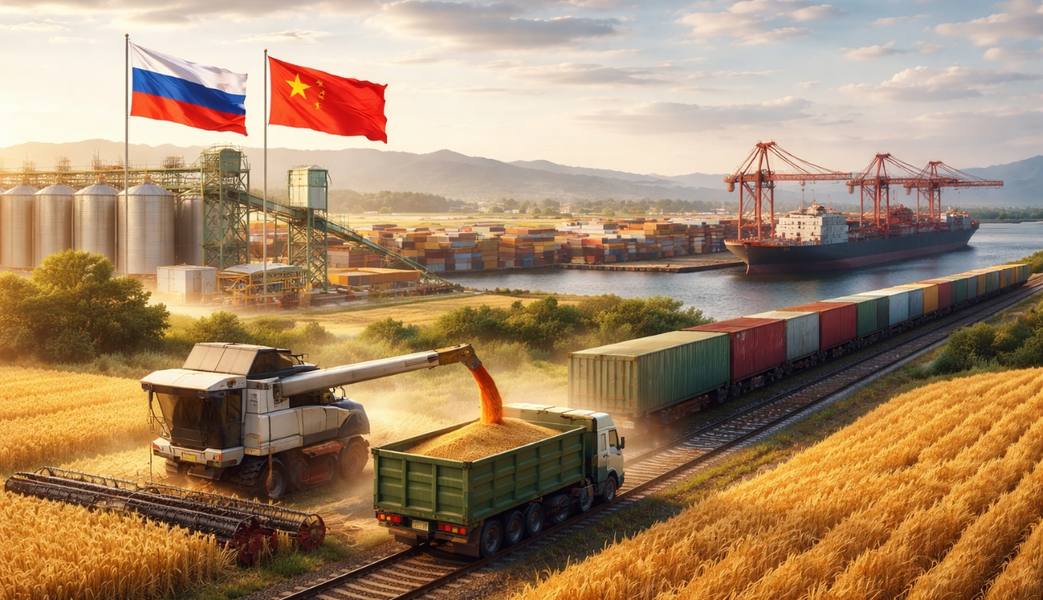
In recent years, Russia has been boosting grain exports, and China remains one of the world’s largest food importers. Against this background, the formation of a sustainable grain corridor between the two countries is becoming not just a logistics project, but an element of a long-term economic strategy.
We are talking about building a system infrastructure capable of ensuring stable supply of large volumes of products with minimal costs and risks.
Preconditions for the formation of a corridor
Russia holds leading positions in the world in grain exports, primarily wheat and barley. China, for its part, is seeking to diversify its supply sources and reduce dependence on traditional partners.
The convergence of interests is due to several factors:
- Increased food consumption in China
- Sustainability in the face of geopolitical instability
- Development of bilateral trade between countries
Against this background, logistical constraints are beginning to play a key role.
What is a grain corridor?
The grain corridor is not a single route, but a set of transport solutions, including railway, road and port directions.
The main focus is on land logistics, including:
- Rail delivery through border crossings
- Infrastructure development in Siberia and the Far East
- creation of specialized terminals and hubs
This approach reduces dependence on sea routes and speeds up delivery.
Infrastructure change
The development of the corridor is accompanied by the modernization of logistics infrastructure. The capacity of railway lines is increasing, border crossings are expanding, and new grain terminals are being built.
Particular attention is paid to:
- Acceleration of cargo handling at the border
- standardization
- rolling stock downtime
In the long term, this should lead to cheaper logistics and an increase in supply volumes.
Economic Importance for Russia
For the Russian agricultural sector, the grain corridor opens up new opportunities. Access to one of the largest markets is expanding, which allows diversifying export destinations.
In addition, infrastructure development stimulates:
- investment in agricultural production
- recycling
- Development of regions involved in export chains
Thus, the project has not only foreign economic, but also internal significance.
China's interest
Supply stability and flexible import management are important for China. Overland routes reduce delivery times and reduce risks associated with maritime logistics.
In addition, cooperation with Russia fits into the strategy of food security, where the reliability of partners and predictable supply are key factors.
Limitations and challenges
Despite the obvious advantages, the development of the grain corridor faces a number of limitations.
These include:
- Differences in product standards and requirements
- Infrastructure bottlenecks at individual sites
- The need for coordination between different agencies
- Tariff policy and subsidies
These factors can hold back growth if not systematically addressed.
Prospects for 2026
It is expected that in the coming years the volume of deliveries to Russia - China will increase. The development of the corridor will be part of a broader integration of trade flows between countries.
At the same time, the key factor for success will remain not only the availability of infrastructure, but also the efficiency of its use.
Grain Corridor Russia - China - It is not just a logistics route, but a strategic project reflecting changes in the global food trade.
It forms new growth points for the agricultural sector, strengthens economic ties between countries and influences the distribution of global grain flows.
With the transformation of international markets, such projects become the basis for long-term sustainability and competitiveness.