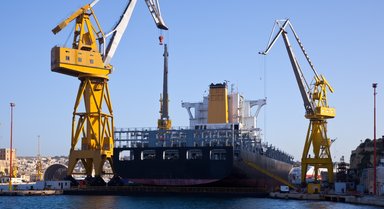
China reduces exports of dual-use goods
This is not only a supply crisis, but also a signal for a reassessment of the development strategy of high-tech industries.
Over the past few months, foreign markets have experienced significant A sharp decline in dual-use exports from China.
This is not just a time limit. We are talking about products that can be used for both civilian and defense purposes, and which play a key role in high-tech industries around the world.
For Russian businesses focused on importing equipment and technology from China, this creates new challenges and forces them to look for alternatives.
List of key dual-use goods from China
1. Electronics and computing
- High-performance processors and computing modules
- specialized computing systems
- Microcontrollers and electronics for controlling complex equipment n
- Secure communication devices and cryptographic components
These products can be used in both industrial automation and defense systems.
2. Advanced equipment for production
- CNC machines (5-axis and higher)
- precision measuring instruments
- semiconductor
- Robotics for complex technological lines
These are key components of high-tech production.
3. Navigation, aerospace components
- navigation systems and sensors
- aerospace materials and components
- UAV / drones with advanced functions
Applicable in both civil aviation and defense.
4. Optics, lasers, sensors
- photonics and lasers
- high-precision sensor systems
- optical components for measuring equipment
Such devices are used in scientific, medical and military technologies.
5. Materials and metals
- rare earths
- special alloys (titanium, magnesium, molybdenum, tellurium, bismuth, samarium, etc.)
- high-strength composite
Their use covers everything from electronics to propulsion systems.
6. Chemical and biological components
- chemical agents and precursors
- biotechnology
- Reagents used in both civil and defense technologies
They can have both industrial and military biotechnological applications.
7. Communications and telecommunications
- communications equipment
- specialized network components
- electronics
A critical area for both civilian infrastructure and military networks.
Reasons for the reduction
China restricts exports for several reasons:
- Geopolitical caution
Strengthen controls on goods that may have military applications to minimize the risks of sanctions and external pressure. - Internal regulatory changes
Revising the classification of dual-use goods and tightening export licensing. - Technology security strategy
China protects its high-tech developments and equipment, reducing the risk of their “leakage” abroad. - Growth of domestic demand
Many high-tech components are in demand domestically, which reduces export opportunities.
These factors together create a real shortage for foreign companies, especially those in the defense, aviation and high-tech industries.
Impact on the Russian market
For Russian enterprises, the reduction in imports of dual-use goods from China poses several risks:
- Project delays - Production lines can be idle due to the lack of critical components.
- Rising prices - Limitation of supplies increases the cost of equipment and components.
- Postponement of contracts - Export-oriented projects face the need to revise schedules.
- Reorientation of supply chains – There is a need to look for alternative sources in other countries or localize production.
For companies with long-term contracts, this is already a strategic issue requiring a review of procurement planning.
How companies react
Russian companies and their partners are looking for several ways to adapt:
- Search for alternative suppliers South Korea, Japan, Europe, Turkey.
- Localization of production - assembly and production of critical components within the country.
- Optimization of consumption - revision of flow rates and replacement of some components with analogues.
- Long-term contracts with Chinese manufacturers Preliminary delivery until restrictions are tightened.
The main goal is to maintain the continuity of production and minimize financial risks.
Long-term implications
The decline in exports of dual-use goods from China creates the following trends:
- Technology transfer. Russia and other countries will actively seek localization of critical technologies.
- Increased competition for alternative supplies Equipment prices are rising.
- Focus on strategic independence Businesses are starting to build long-term supply chains domestically or with friendly partners.
Thus, this is not only a supply crisis, but also a signal for a reassessment of the strategy for the development of high-tech industries.
China has sharply reduced exports of dual-use goods.
For business, this is not a temporary shock, but a signal for long-term planning.
- to seek alternative supplies,
- building local production,
- optimize chains,
- Increase technological independence.
The response to this decision determines the sustainability and competitiveness of companies in the next 3-5 years.