Why many farmers in the Altai region remain outside the state register
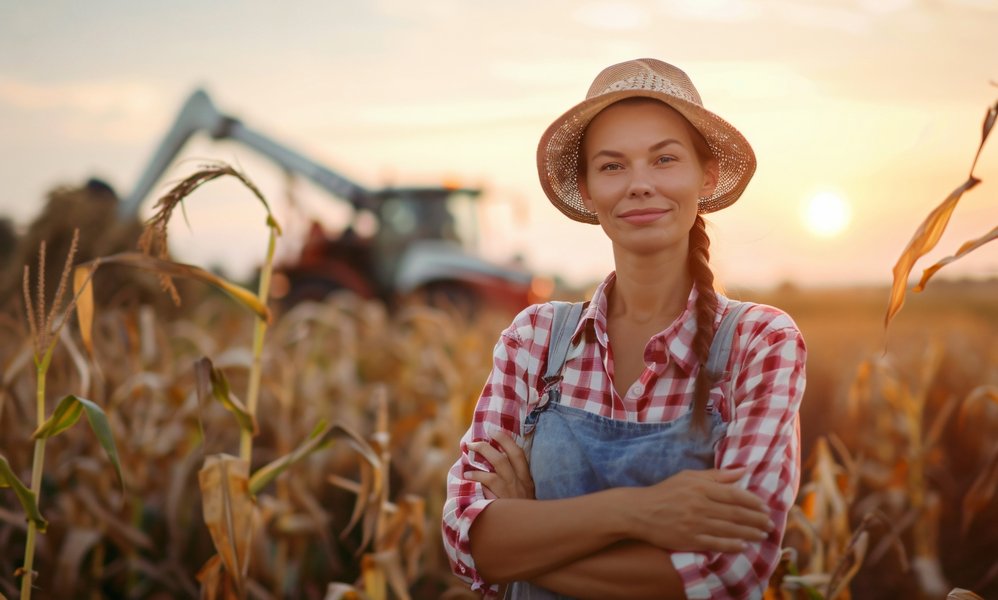
In the agricultural regions of Russia, there is a paradoxical situation: in the presence of state support and development programs, some farmers prefer to remain outside the official field. This is especially noticeable in the Altai Territory. - one of the key agricultural regions of the country.
Here, a special model of management is formed: independent, self-financing and often invisible to the state.
Context: What does “not registered” mean?
Failure to register in a public register does not always mean illegal activity. More often than not, these are small businesses that:
- Not registered as a legal entity or IP
- Work in the format of personal subsidiary farming
- They do not participate in government programs.
Such farmers operate “on the ground” relying solely on their own resources. - financial, labor and organizational.
Reasons for refusal to register
The decision to stay off the register is rarely accidental. Behind it is a pragmatic calculation and accumulated experience.
Bureaucratic burden
Registration and subsequent reporting is perceived as complex and time-consuming. For a small farm, this can mean:
- bookkeeping
- regularity
- inspection
For farmers working alone or as family members, this becomes a major barrier.
Tax burden and risks
Registration automatically entails tax liabilities. Even with benefits, farmers fear:
- Instability of Tax Policy
- possible fines
- growth
In the face of uncertainty, many choose a risk minimization strategy. - stay in the shadows.
Distrust of public institutions
Historical experience and practical observations form a skeptical attitude towards state programs.
Farmers often believe that:
- Support is not available to everyone
- Subsidies are subject to additional difficulties
- The rules can change without warning.
As a result, independence is perceived as a more reliable strategy.
Self-sufficiency and local economy
Many farms in the Altai Territory are focused on local markets:
- hand-selling
- habitualization
- sharing within the community
This model does not require scaling and official status.
Benefits of informal farming
Despite the obvious limitations, this model has its advantages.
- Full autonomy in decision-making
- Lack of bureaucratic pressure
- Flexibility and rapid adaptation
- traditionalism
For many farmers, this is not a forced measure, but a conscious choice.
Cons and limitations
However, the long-term effects may be less beneficial.
- Limited access to funding
- Inability to participate in major markets
- lack of legal protection
- vulnerability to external risks
In addition, shadow activities reduce the transparency of the entire agricultural sector.
Impact on the regional economy
The situation in Altai Krai reflects a broader trend: the coexistence of formal and informal economies.
This has a dual effect:
- sideways - employment and production
- other - Government loses some of its tax base and control
In the long run, this complicates the strategic planning of the region.
Possible solutions
The problem is not solved solely by tightening control. On the contrary, measures aimed at reducing barriers are more effective.
What could make a difference:
- facilitation of registration procedures
- reduction of administrative burden
- transparent and stable rules
- Real availability of support
The key factor is trust. - Without it, all reforms remain formal.
The phenomenon of unregistered farmers - It's not just an economic issue. It reflects the relationship between the state and citizens.
In the Altai Territory, many choose the path of independence, relying on their own strength. Sustainable development requires a balance. - between freedom and inclusion in the system.
The search for this balance will determine the future of agriculture.