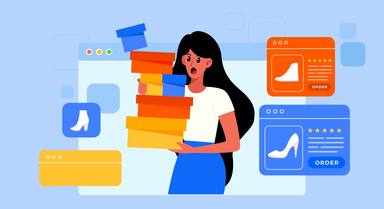
Social Commerce (Social Commerce)

Social commerce turns likes and subscriptions into real orders
The world of e-commerce is undergoing a new evolution.
If before users bought through sites and marketplaces, now - without leaving social media.
Social commerce turns likes and subscriptions into real orders, and bloggers into full-fledged sales channels.
In 2025, the share of purchases made through social networks already exceeds 20% of all online retailThis number is growing faster than traditional e-commerce.
What is behind this phenomenon, what tools work best and what mistakes prevent companies from making money in social networks – we understand in detail.
What is Social Commerce
Social commerce Sales of goods and services directly within social networkswithout going to an external site.
The user sees the post, clicks on the product, places the order and pays – all in one ecosystem.
The main difference from the classic e-commerce social interaction:
- purchase occurs in the context of communication, recommendations, reviews;
- The role of “seller” is often played by bloggers, ambassadors or users themselves.
- Buying decisions are influenced by emotions, community and trust.
How Social Commerce Works
Social media is turning into multifunctional trading platforms.
Increasingly, users do not search for products in search engines, but go to TikTok or WeChat to find out what is “in trend”.
The scheme is simple:
- The user sees the content – video review, stream, story or post.
- The product is marked with a tag or embedded link.
- The buyer clicks, sees the product card, pays directly in the application.
- The system automatically sends the order to the seller.
Thus, Content and Selling Combined Buying becomes part of the user experience.
Major platforms for social commerce
TikTok Shop
TikTok has become a symbol of buying by inspiration.
Algorithms instantly pick up viral goods, turning short videos into a stream of orders.
Key tools:
- Live shopping (live shopping)
- Integration with Shopify and other CMS
- Native recommendations through For You algorithms.
Instagram Shopping (banned in Russia)
Users can mark products in posts and stories, and businesses can keep a catalog right in their profile.
Instagram has become the perfect platform for fashion, beauty and lifestyle segments, where visual presentation decides everything.
WeChat and Douyin (China)
In China, social commerce has evolved into a separate ecosystem.
WeChat combines stores, streams, mini-programs and payment through WeChat Pay.
Douyin generates millions of sales through live streaming and integration with Taobao.
YouTube and Telegram (banned in Russia)
YouTube introduces shopping features directly into videos and Shorts, and Telegram becomes a platform for direct sales through mini-apps and chatbots.
Trends of 2025
Live Commerce (live trading)
The format that came from China is taking over the world.
Brands and bloggers conduct streamwhere the goods are displayed in real time and orders are accepted.
Conversion is 5-10 times higher than standard advertising.
Personalization and Artificial Intelligence
AI systems analyze the interests of the user and offer products directly in the tape.
In 2025, personalized recommendations are becoming the norm, not a bonus.
Influencer marketing 2. 0
Brands are moving away from cooperation with “stars” and bet on microinfluencers People with a small but engaged audience.
They create trust and ensure stable sales.
Video and short content
Short videos up to 30 seconds are becoming the main selling tool.
Users buy emotion, not product description.
Social community model
Successful brands form communityUsers share experiences, participate in challenges and become co-authors of the product.

Tools and sales mechanics
- Built-in shops - directories directly in the brand profile;
- Product tags and cards - labels leading to the purchase;
- Chat commerce Sales through messengers and chatbots;
- Gamification - discounts, drawings, challenges, interactive filters;
- Reviews and UGC (user-generated content) Content from users increases trust;
- AR/VR Virtual fitting of clothes, furniture and cosmetics directly in the application.
Brand Mistakes in Social Commerce
1. Lack of strategy
Many companies simply duplicate content from Instagram or the site, not adapting it to the specifics of the site.
Each social network requires its own style and scenario of interaction.
2. Ignoring the community
Social commerce is the dialogueNot a window.
If a brand does not respond to comments, does not communicate and does not maintain loyalty, the audience quickly leaves.
3. Bet only on advertising
Sales through social networks are based on trust and emotionNot just on the budget.
Content should be organic, not intrusive.
4. Underestimating the role of opinion leaders
Influencers are not just “advertising persons”, but intermediaries between the brand and the customer.
The wrong choice of a blogger can ruin your reputation and lead to a campaign failure.
5. Lack of analytics
Without tracking metrics, it is impossible to know which formats work.
Brands that don’t analyze engagement and conversion lose money at every turn.
Benefits of Social Commerce for Business
- Increased conversion through emotional involvement
- Shortening the path from interest to purchase (1-2 clicks)
- the possibility of direct communication with the client;
- Scaling sales without launching a website;
- Quick feedback and testing of new products.
Social commerce allows the company n Be where your customer is already.- in the tape, in the chat, in the story.
Social commerce is a synthesis of content, emotion and technology.
It's changing the logic of shopping: the consumer is not looking for the product. commodity finds.
Companies that have already adapted to this model receive not only sales, but also sales. audience loyaltyTurning customers into a community.
Mistakes are expensive, but success increases trust and profit.
Social commerce is not the future of online commerce, but its present.
And right now, brands need to learn how to sell. in dialogue, not through advertising.