China Cargo Cancel: The Era of Legal Logistics
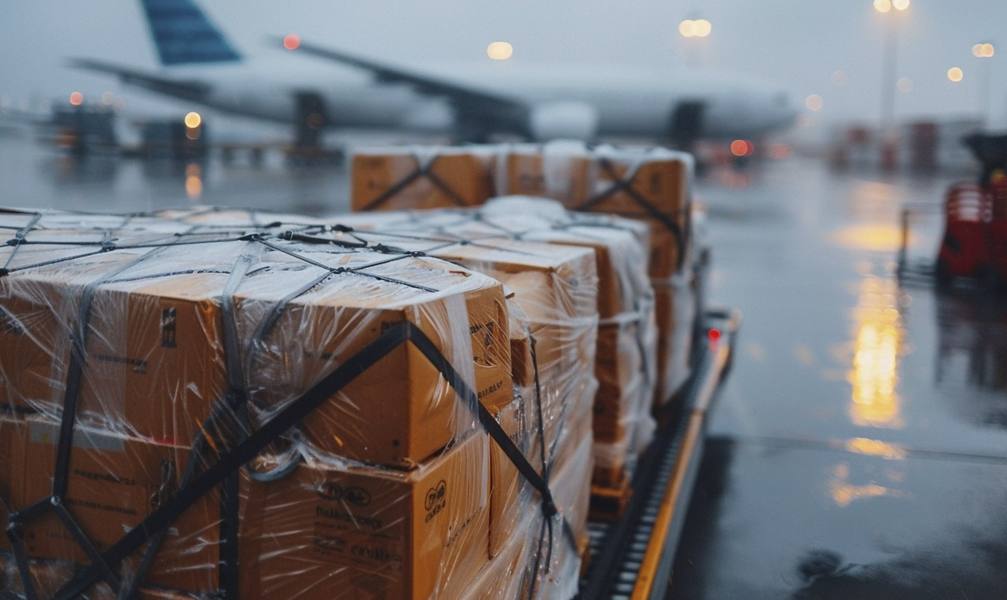
From October 1, 2025, China introduces new export rules: all transactions must be transparent.
When people say “China abolishes cargo,” they usually don’t mean the literal closure of all freight traffic, but a sharp rejection of opaque (“gray”) export and delivery schemes, especially “cargo schemes” that bypass formal export clearance, simplify customs clearance and minimize bureaucracy. These schemes were often used to expedite the export of goods (especially small consignments, e-commerce, “collection cargoes”) with minimal documentary support, which allowed to avoid taxes, costs and inspections.
In 2025, China began to actively tighten regulation in this area - new rules are introduced, every component of the transaction is controlled, disclosures, fines and liability are required. It is said that this is equivalent to the end of the cargo circuit.
The main changes: what exactly is canceled
Closing of trading houses and simplified exports schemes
From October 1, 2025, amendments and orders come into force in China, which effectively eliminate the schemes of “simplified exports” through intermediaries and “buy-order export documents”.
Key elements of change:
- When exporting agents (forwarder/intermediary) must disclose the real data of the manufacturer (factory) and the amount of the transaction. If the data indicate an intermediary rather than a factory, the agent will be treated as a self-exporter and will be required to pay the tax as if he had made the export himself.
- GACC Order No. 277 (introduced on May 1, 2025) strengthens the responsibility of declarants for the reliability of data and introduces “through inspection” between customs, tax and foreign exchange controls.
- Schemes where the intermediary formally acts as an exporter remain risky – if the data do not match or there are suspicions, additional charges, fines, stops or checks are possible.
In other words, the “cargo-export” scheme is being targeted and becomes legally and fiscally unacceptable.
Abolition of de minimis benefits for postal items
From May 2, 2025, the de minimis exemption for goods from China and Hong Kong was canceled - previously small shipments (up to a certain cost) were exempt from customs duties.
Now, such shipments are subject to tariffs, either at an ad valorem rate (for example, 90% of the cost) or a fixed rate (for example, $75, and then $150).
This change severely limits the possibilities of fast and cheap mail/small cargo parcels.
Strengthened border and customs controls
At the borders, especially on the Russian-Kazakh border, traffic jams and increased control of trucks carrying Chinese products are recorded.
Reasons:
- counterfeiting
- requirement of a complete package of documents
- identification of “gray” schemes (goods can come with an unreliable price, without a full declaration)
Such measures are already causing delays and costing logistics for those who have so far relied on “cargo” schemes.
New port charges and trade friction
While not directly "cargo cancellation," one element of the high pressure on shipping is the new port charges China is imposing in response to the US measures.
From October 14, 2025, China introduces a fee for ships associated with the United States (owners, operators built in the United States, etc.) of 400 yuan per tonne of net port call, with a limit of maximum 5 calls per year, an increase in the rate to 1,120 yuan by 2028.
These measures are increasing pressure on global logistics chains, especially for those operators who have attempted to maneuver through gray routes.
Why such measures were introduced – the motivation of China
To better understand why China is cancelling cargo, it’s important to take a look at the motives:
- Combating tax evasion and grey schemes
Too many exporters and intermediaries used schemes with minimal reporting, low prices, and “third-party registration.” This practice reduced budget revenues and created unequal conditions. - Streamlining export statistics and controls
Cargo schemes often lost alignment between sales, production, and supply chains. The new measures allow the authorities to control who exports what, reduce double accounting and fraud. - Enhancing the prestige and legitimacy of Chinese trade
China wants to show that it is moving to “white schemes”, to more transparent foreign trade, excluding “gray zones”. This can increase the trust of foreign partners. - Geopolitical Instrument and Response to External Measures
As part of the aggravation of trade conflicts (USA-China, etc.) China is using maritime transport, port charges and export controls as an argument in trade negotiations. - Improving the quality of supply chains
Reduction of “gray” routes forces operators to work “in white”, which can increase the standards of logistics, customs support, certification and security.

Implications for Business, Logistics and Users
Risks and negative effects
- Slowdown of supplies and increase in time
Checks, stricter documentation, the need to disclose the manufacturer – all this adds time to the logistics.
Logisticians have already reported on the suspension of cargo delivery: “China from October 1, 2025 introduces new export rules: all transactions must be transparent.” Any mistake may result in delay, fine or confiscation.”
- Higher costs
More complex procedures, the need to attract trusted brokers, the possibility of additional taxes or fines, loss of benefits - all this increases the cost.
- Risk of fines, additional charges and legal claims
If the data in the documents prove to be incorrect or incomplete, the agent, intermediary or exporter may be liable as a "self-sufficient exporter", with additional taxes and fines.
- Difficulties for small businesses and e-commerce
Many small sellers relied on reverse delivery schemes, small shipments, and minimal control. Now those paths are closing.
- Chain length and route selection
Some routes, especially grey shoulders, are no longer viable. Reorientation to legal routes can lead to congestion of conventional channels.
Possible positive effects
- More stable supply chains
Those who adapt can benefit: less risk of stoppages, customs and bank checks.
- Improving quality and confidence
Companies working in white can more easily work with marketplaces, participate in public procurement, attract investment.
- Standardization and simplification through digitalization
With the growth of control, there will be an incentive for digital tracking systems, unified databases and automation, which in the long run can accelerate processes.
- Reducing Illegal Competition
Participants who previously operated in the shadows will be forced to either enter legal schemes or leave the market.
How to adapt and survive: recommendations
For companies and sellers working with Chinese suppliers and logistics, it is important to prepare in advance. Here are the practical steps:
- Work with factories eligible for export (и人и)
Ask the supplier (factory) official documents: license for foreign trade activities, registration data, export code, statutory documents. - Sign direct contracts with the factory
The contract, invoice, specifications, all documents must be drawn up so that the factory in China is the seller, and in the declaration - the real sender. - Attract verified customs brokers and logistics
Those who are already familiar with the new rules will be able to correctly issue an export declaration, avoid errors in data and minimize risks. - Carefully check HS codes and duty/tax rates
Even legitimate companies can be subject to unexpected tariffs if the HS code or product category is controlled. - Document everything from and to
Contracts, invoices, payment transactions, correspondence – everything should be in the “white trail” mode, so that in case of verification there is something to show. - Don’t rely on grey shoulder schemes or rounds
Even if some ways seem faster or cheaper, they can be a trap (fines, confiscation, stops). - Plan stocks and time buffers
Keep in mind that logistics will become slower, and leave a stock of time and goods. - Explore possible new routes (e.g. multimodal, overland, trans-Caspian routes)
Some logistics players are already looking towards alternative corridors to reduce reliance on offshore schemes.
Examples and evidence from practice
- Logistics companies report that Cargo almost stopped.“China is introducing new export rules ... any mistake in the documents could result in delay, fine or even confiscation.”
- On the Russian-Kazakh border recorded furnaceInspections are greatly increased, especially for prefabricated shipments of Chinese products (electronics, tobacco, vapes) – this is a blow to those who used to use “gray” logistics.
- Media and analysts describe that the organizers of transportation from China “lost $154 million”, Russian customers were left without goods, marketplaces “empty” – the consequences of a sharp exit from the “cargo scheme”.