China’s AI + Manufacturing Project
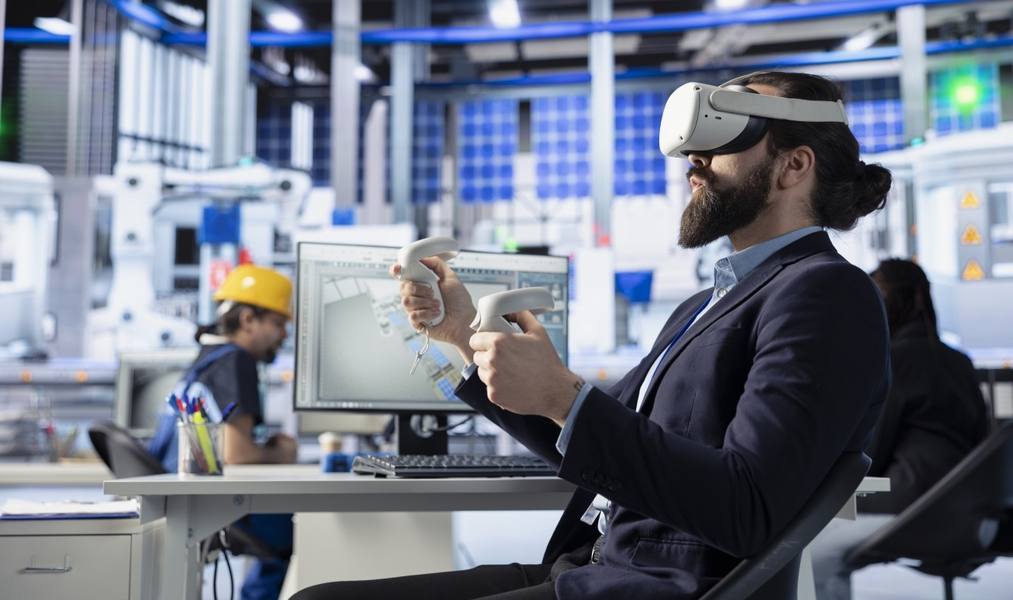
Today, China is betting on smart manufacturing, digitalization and the integration of artificial intelligence (AI) technologies into industry.
In recent decades, China has become a “factory of the world.” For a long time, the competitive advantage of the country remained low cost, mass production and a huge export potential. But in the twenty-first century, this image gradually fades into the past.
Today, China is betting on intellectualismDigitalization and integration of artificial intelligence (AI) technologies into industry. The national AI+Manufacturing initiative has become a key element of this strategy. Its goal is to turn traditional factories into flexible, smart and self-managed systems.
The concept of “double effect”
The initiative is built on an idea. reinforcement:
- AI increases efficiency production - reduces costs, speeds up processes, improves the quality of products.
- Industry gives AI fuel Real data sets and complex production scenarios. This allows machine learning systems to evolve faster and find new solutions.
That's how it forms. circularWhen factories become a platform for developing technologies, and technologies become a driver of factory growth.
Scale and numbers
Artificial intelligence in China has already moved to the level of a strategic industry.
- The market is valued at more than $70 billion.
- more 4,300 companiesthose working in the field of AI,
- By 2030, the basic value of the industry should reach $140 billion.
- related industries up to $1.4 trillion.
This data shows that we are not talking about local experiments, but about local experiments. Systemic transformation of the entire industrial base of the country.
National Projects and AI+ Action
To accelerate the implementation, in 2024 launched a national program "AI+ Action". It identified several priority areas, and AI + Production was among the key areas.
Programme focus:
- Large language models (LLM) to manage and optimize processes;
- computer vision for quality and safety control;
- predictive maintenance (prevention of equipment breakdowns);
- intelligent control systems and automation.
This means that AI ceases to be an auxiliary tool and becomes production-cycle.
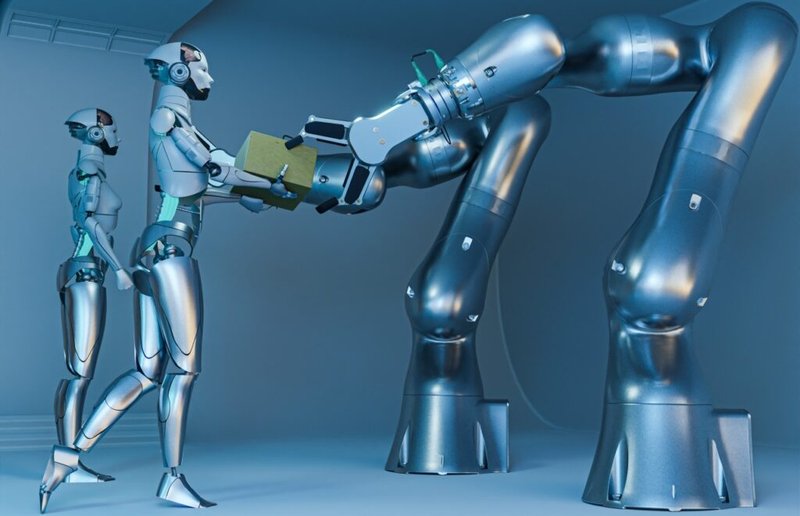
The Role of Regions: The Example of Shanghai
China has traditionally strengthened national programmes with regional initiatives. So in August 2024. Shanghai He started his own three-year program.
It included:
- implementation of AI solutions at key enterprises of the city;
- creation modellingwhere the standards of digital production will be worked out;
- production of reference “smart products”, which should show competitiveness in the world market.
The city plans to become countrywidesetting standards in intelligent production.
Opportunities for foreign companies
China's National Policy Opens Up new windows of opportunity for foreign players.
- Technology supply: software, sensors, automation systems, AI algorithms.
- Joint projectsEstablishment of joint laboratories and R&D centers with Chinese partners.
- Access to dataSmart factories can become a testing ground for solutions in real-world conditions.
However, it is impossible to work in this direction without knowledge of local rules.
Challenges and regulation
To gain a foothold in the Chinese market, foreign companies need to consider:
- regulation the introduction of AI and robotics,
- safety and compliance standards.
- localization of solutions (language, interface, specificity of Chinese production).
Without adapting to China’s certification and regulatory framework, market access will be closed.
The AI + Production initiative is not just another state program project. It's New Model of IndustrializationChina aims to combine large-scale manufacturing with advanced digital technologies.
In the twentieth century, the country’s competitive advantage was scale and costIn the twenty-first century, the emphasis is on intelligence.
For international business, this is both an opportunity and a challenge: you can find new markets, but you have to play by Chinese rules.