China's reaction to U.S. port charges
Those who are able to respond quickly and build flexible logistics strategies win.
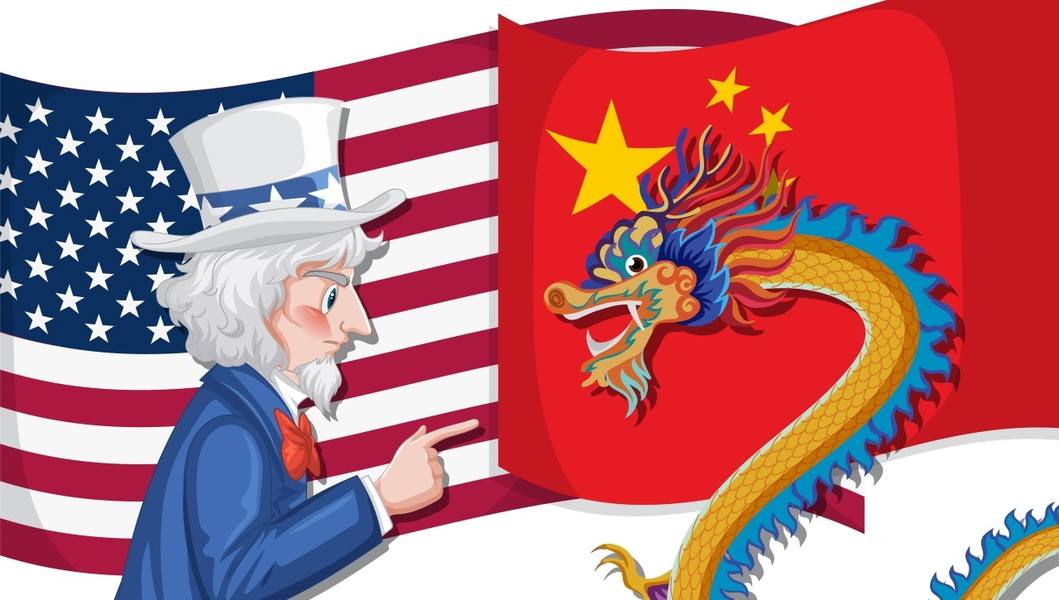
In 2024-2025, relations between the United States and China in the field of maritime transportation moved to a new stage. The U.S. administration has imposed special port charges against ships linked to China as part of a trade investigation. In response, China announced mirror measures: imposed its own fees on American ships and changed the rules for access to its ports.
These steps have caused serious consequences for international carriers, operators and exporters working with China. Let’s take a closer look at what new rules are in place, who they affect, and how businesses adapt to the new reality.
Reasons for introducing new charges
In the spring of 2024, trade union and shipbuilding associations of the United States issued a statement on the need to limit the influence of Chinese companies in the field of sea transportation. They pointed out that Chinese subsidies and government support create unequal conditions for competition.
As a result, the US authorities decided to impose special port charges on ships associated with China. Shortly thereafter, China’s Ministry of Transport announced retaliatory measures, setting its own tolls for ships related to the United States.
Thus, the situation became a trade confrontation in which ports and logistics became an instrument of economic pressure.
The new rules of the PRC: who they concern
Criteria for collection
Chinese port charges apply to ships that:
- owned by companies registered in the United States;
- are operated by American operators;
- are controlled by companies where the share of American capital is 25% or more;
- flying the U.S. flag;
- They were built in American shipyards.
Exceptions
Some categories of ships are exempt from new charges. For example:
- Ships built in China, even if they are owned by American owners.
- Ships entering Chinese ports for repair purposes only, without commercial loading;
- Ships making no more than five calls at Chinese ports in a calendar year.
New commitments
Before entering a Chinese port, shipowners are required to submit a report on the country of construction, owner, operator and route of the ship to the port administration within seven days.
Violation of these requirements may result in a ban on entering or leaving the port.
Impact on logistics and shipping
Restriction of access
Vessels falling under tolls have begun adjusting routes to avoid additional costs. Some U.S. or joint vessels have removed Chinese ports from the schedule, which has already changed the configuration of world sea routes.
Rising freight rates
The introduction of fees provoked an increase in the cost of transportation. Container rate indices on Asian destinations showed an increase of 10-15% in the weeks following the publication of the new rules.
The decline in the number of ships calling into China has created a shortage of tonnage and increased strain on alternative ports.
Flow redirection
Part of the cargo began to go through the ports of third countries – South Korea, Vietnam, Malaysia, where there are no direct restrictions. This increases the delivery time, but avoids additional costs.

Implications for market participants
For exporters and importers
Companies working with China should consider new freight costs and possible delays. When choosing a vessel, it is important to check whether it does not meet the criteria of “American affiliation”.
For shipping companies
Operators need to review the ownership structure and flag of ships to mitigate risks. In addition, it is recommended that charter agreements include clauses on the allocation of port charges between the parties.
For ports and terminals
China's port authorities have tightened control over the origin of ships and operators. This increases ship handling and parking times, which requires more careful planning of schedules.
Prospects for the situation
Although the U.S. has announced a temporary suspension of its port duties, Chinese measures remain in place. Beijing said it was ready to negotiate, but on equal terms.
Experts note that such port charges can become a new tool of geopolitical pressure. Further adjustments to the rules are possible – the introduction of additional criteria, the expansion of the list of exceptions or changes in rates.
What to do business
To minimize risks, companies are advised to:
- audit vessels, operators and supply routes;
- lay down possible additional costs for port charges in advance;
- to review contractual relations with carriers;
- monitor the updates of regulations of the port administrations of China;
- Consider alternative shipping routes through neutral ports.
China’s response to U.S. port charges set an important precedent in global trade. Ports are becoming an instrument of foreign economic regulation.
For participants in the international market, this is a signal for adaptation: from the analysis of routes and ownership structure to the revision of contractual schemes. In the new environment, those who are able to react quickly and build flexible logistics strategies benefit.