Impact of inflation on international trade and logistics

Inflation has a significant impact on international trade and logistics, altering the cost structure, creating uncertainty and complicating business planning.
Inflation affects almost every aspect of the economy, including international trade and logistics. Sustained increases in prices for goods and services have an impact on companies’ competitiveness, supply structure, and ability to adapt to global changes.
The effect on business costs
The first thing companies feel about inflation is the increase in production and transportation costs. With rising prices for raw materials, fuel and labor, companies are forced to adjust their budgets, which in turn leads to higher prices for goods and services. In international trade, the rise in production costs is especially noticeable, as competition between market players becomes more acute, and consumers are not always ready to accept new, higher prices.
Particularly noticeable is the impact of inflation on fuel costs in logistics. Logistics companies are forced to review delivery routes and negotiate new prices with suppliers. In some cases, this leads to the need to look for cheaper alternatives, which can reduce the quality of services.
Impact on supply chains
Inflation often leads to disruptions in supply chains, especially in countries with varying levels of inflation. For example, if inflation is significantly higher in one country than in another, companies may face problems in supply arrangements. This can cause delays in delivery, rising logistics prices and a general decrease in the efficiency of trading operations.
In order to minimize such risks, companies may seek to diversify suppliers, which is also accompanied by increased costs. However, if inflation is on a global scale, diversification becomes a challenge, as all participants in the supply chain can be under the same price pressure.
Impact on exchange rates
One of the most notable effects of inflation on international trade is the impact on exchange rates. When inflation rises, countries’ currencies can depreciate, leading to higher import costs and lower exporters’ purchasing power. Companies are forced to take into account currency fluctuations when concluding contracts and planning long-term projects.
In the context of inflation, companies may face the need to insure currency risks, which also leads to additional costs. This factor is especially important for small and medium-sized enterprises, which are more sensitive to financial fluctuations and do not always have access to effective mechanisms to protect against currency risks.
Market uncertainty and lower investment
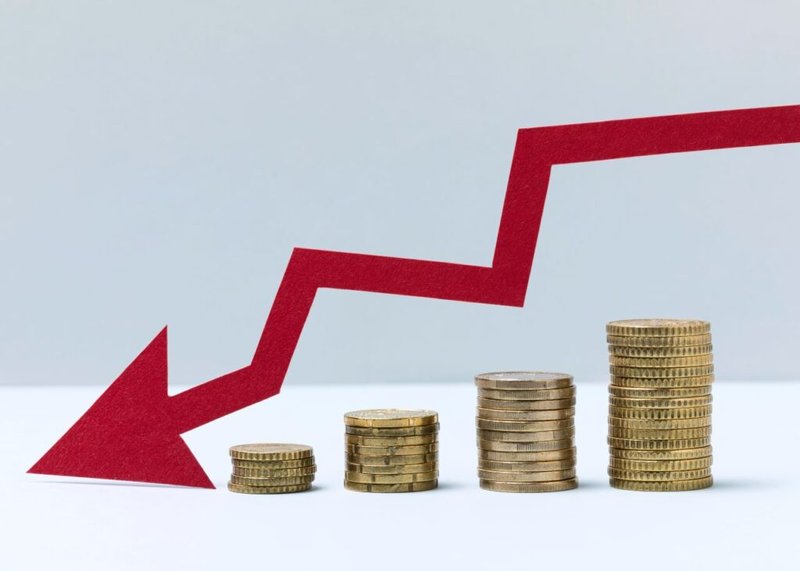
Inflation creates additional uncertainty for businesses as companies cannot predict their future costs and revenues with certainty. This results in many companies delaying investment in expanding or upgrading their infrastructure, which in turn has a negative impact on overall business performance.
It is particularly important to note that inflation reduces access to credit, as interest rates tend to rise in the wake of inflation. This complicates the financing of new projects, and many companies may be forced to reduce their activities or even stop operations in certain regions.
Impact of Inflation on Logistics
A striking example is the crisis of 2021, when rising fuel prices and a shortage of workers in logistics led to a sharp rise in the cost of international transportation. Companies reliant on shipping have been forced to raise prices significantly or seek alternative but less efficient routes.
A similar situation is observed in air transportation. The increase in the cost of jet fuel leads to the fact that companies are forced to either increase the cost of services or reduce the number of flights, which negatively affects the delivery time.
Adapting business strategies
In order to successfully counteract inflationary processes, companies develop various strategies. Among them is the transition to more efficient technologies that reduce production and logistics costs. For example, automation of warehouse processes or the use of software to manage traffic flows.
In addition, companies are actively reviewing their supply chains, entering into long-term contracts with key suppliers and building strategic inventories of raw materials and products. This reduces dependence on short-term price fluctuations and ensures stable supply.
Some companies also resort to hedging, using financial instruments to protect against inflation risks. This approach helps reduce the impact of price and exchange rate fluctuations on the business, but requires some cost and financial planning knowledge.
Inflation has a significant impact on international trade and logistics, altering the cost structure, creating uncertainty and complicating business planning. Companies that are able to adapt effectively to new conditions, using innovation and flexibility in supply chains, will be able to remain competitive in the global market.