Commodity Market: Structure, Players and Trends
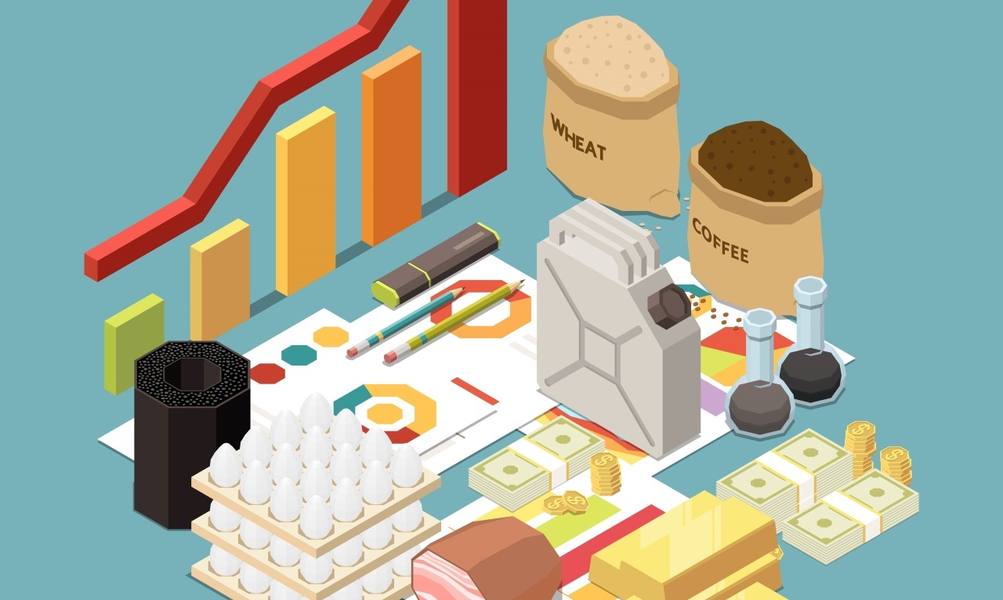
The commodity market is a complex and dynamic system influenced by economics, geopolitics and technology.
Commodity market It is the basis of the world economy, determining the cost and availability of key resources necessary for industry, transport, energy and agriculture. Commodity price dynamics affect economies, exchange rates and even policy decisions.
In 2023, the volume of the global commodity market was estimated at $ 15.8 trillion, and by 2030 its growth is projected to $ 20 trillion. The main players in this market are countries rich in natural resources, such as Russia, the United States, Saudi Arabia, Canada, Australia, Brazil and China.
In this article, we will consider:
- Primary commodities
- The largest producers and exporters
- Factors affecting the market
- Global trends and projections
Structure of the commodity market
Commodities are divided into three main groups:
- Energy raw materials
Main commodities: oil, natural gas, coal, uranium
Key countries:
- Oil – Saudi Arabia, Russia, USA (total account for 40% of world production)
- Gas – USA, Russia, Qatar
- Coal – China (over 50% of world production)
- Uranium – Kazakhstan (more than 40% of world production)
- Metals and ores
Main commodities: gold, silver, copper, aluminum, nickel, iron ore, lithium
Key countries:
- Gold – China, Australia, Russia
- Copper – Chile (more than 30% of world production)
- Aluminum – China (more than 50% of world production)
- Lithium – Australia, Chile, China (based on electric vehicle batteries)
- Agricultural raw materials
Main goods: cereals (wheat, corn, soybeans), sugar, coffee, cotton
Key countries:
- Wheat – Russia, EU, USA, Canada
- Corn - USA, China, Brazil
- Brazil (leader with 40% of world exports)
Key players in the commodity market
Russia
Share of commodity exports: 65%
Russia is one of the largest suppliers of oil, gas, coal and metals. In 2023:
- Oil production – 10.9 million barrels per day (2nd place in the world)
- Gas exports – 180 billion cubic meters (main buyer – China)
- Gold production – 330 tons (3rd place in the world)
USA
Share of commodity exports: 20%
The United States is the world’s largest producer of oil and gas due to the development of hydraulic fracturing (fracking) technologies. In 2023:
- Oil production – 12.9 million barrels per day (1st place in the world)
- Exports of liquefied natural gas (LNG) – 90 million tons (world leader)
China
Share of commodity imports: 70%
China is the largest consumer of raw materials in the world, which depends on imports:
- Oil – 70% of demand is covered by imports
- Iron ore – more than 1 billion tons per year (the main suppliers are Australia and Brazil)
- Lithium is a key player in the global transition to electric vehicles
Saudi Arabia
Share of oil in GDP: 50%
The Kingdom is the leader in oil exports (about 7 million barrels per day) and the main player of OPEC, which influences prices by regulating production.
Factors affecting the commodity market
- Geopolitics and sanctions
- The conflict in Ukraine has led to a record rise in gas prices in Europe.
- Sanctions against Russia have changed oil and coal supply routes (more volumes are going to China and India).
- OPEC+ regulates oil production, affecting global prices.
- Economic cycles
- During periods of growth, the demand for raw materials increases (for example, 2021 after the pandemic).
- In crises, demand decreases (for example, 2008 and 2020).
- Environmental trends
- Countries are switching to gas and renewable sources.
- The growth of electric vehicles is increasing the demand for lithium, nickel and copper.
Global trends and forecasts
- Increased demand for rare metals
It is projected that by 2030:
- Lithium consumption will increase by 5 times.
- Nickel demand will grow by 40%.
- Copper production will reach 30 million tons per year (against 22 million in 2023).
- Diversification of supply
- Europe is reducing its dependence on Russian gas and switching to LNG from the US and Qatar.
- China is increasing production of its own rare metals.
- Development of renewable energy
- Investments in green energy in 2023 amounted to 1.1 trillion dollars.
- The share of renewable sources in the energy mix will grow from 12% to 30% by 2050.
Commodity market It is a complex and dynamic system influenced by economics, geopolitics and technology. Major players such as Russia, the United States, China and Saudi Arabia determine global trends and prices.
In the coming years, we can expect:
Increased demand for lithium, copper and rare earth metals.
Transition to renewable energy sources.
Changing the supply routes of oil, gas and metals.
The commodity market will remain a key element of the global economy, but its structure will gradually change under the influence of new technologies and global policy decisions.