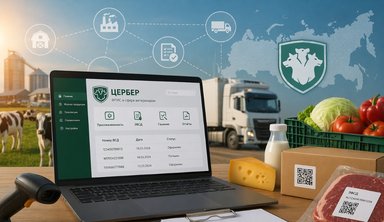
February 15, 2026: new export quotas for agricultural products from Russia
One of the tools of export regulation is the introduction of quotas.
The agricultural sector in Russia is under the attention of both internal and external factors: increasing competition, changing logistics, price volatility and geopolitics. One of the tools of export regulation is the introduction of quotas - limits on the volumes or types of products that can be exported outside the country.
It is reported that with February 15, 2026 New quotas for grain exports from Russia may come into force.
This article looks at what is currently known about quota projects, what impact they may have on the market, and how supply chain participants are prepared.
What is known about the quota project
Prerequisites
- According to analysts, Russia is considering the introduction of a quota for grain exports of approximately 20 million tons from February 15 to June 30, 2026.
- In the 2025 season, the quota for wheat was 10.6 million tons, and for barley and corn - zero.
- The Ministry of Agriculture of Russia allows an increase in quotas, citing the projected harvest and the need to balance the domestic market.
What exactly is offered
- A limit of about 20 million tons of grain, including wheat, possibly barley and corn, is possible.
- The validity period is from February 15 to June 30, 2026.
- Quotas assume a “floating” export duty, that is, the amount of duty can vary depending on the world price.
Why February 15, 2026?
The date of February 15 is marked as the beginning of the new quota, since the previous quotas for grain were launched in February to regulate the outflow after harvest and before spring demand in the domestic market.
Why the introduction of quotas is important
Protection of the internal market
One of the main tasks is to prevent a sharp decline in stocks or a sharp increase in prices at home. If exports are too large, domestic prices may rise, which is unfavorable for food security.
Crop and logistics
A good harvest is forecast, but at the same time, logistical and export restrictions (terminals, loading, port capacity) can become a bottleneck. The quota allows you to regulate the flow and avoid the “aural”.
External markets and competition
Russia competes in the world grain market with other major exporters. Volume control and export duties can be used to regulate price position and market share.
Possible consequences for market participants
For exporters
- Grain exporters will have to take into account in advance that export volumes may be limited, requiring supply planning, contracts and logistics.
- If the quota is exhausted, some of the additional grain may remain on the domestic market or require another form of export.
- Additional duties or licenses are possible, which will increase the administrative burden.
For logistics and supply chains
- You will have to plan shipments more accurately so as not to fall into the tail of the limit.
- If there is a quota, there may be queues for export rights or licenses - you need to be prepared for delays.
- The domestic market can hold more cargo, which will affect logistics routes and terminal load.
For prices in the domestic and foreign markets
- The external price of Russian grain may rise if the quota restricts supply.
- Domestic prices may rise if export demand remains high with limited supply.
- Redistribution of demand: buyers can switch to other exporters (Ukraine, Kazakhstan, Argentina) if Russia restricts the withdrawal.
Risks and uncertainties
- There are no final figures yet: 20 million tons is a project, not an official decree.
- It is possible to adjust the conditions depending on the harvest, the internal situation (stocks, prices) and external factors (weather, logistics, sanctions).
- Sanctions and geopolitics: Foreign markets may restrict the purchase of Russian grain, making the effect of quotas less predictable.
- Internal Resistance: Exporters and logistics companies may challenge overregulation as limiting business.
What to do with market participants
- Monitoring of official documents Follow the decrees of the Ministry of Agriculture of the Russian Federation and government orders.
- Contract planning Exporters should consider the possibility of a limit and provide options for the domestic market or redirection of supplies.
- Logistics in advance Loading, hiring, port terminals, licenses – all this must be prepared before the launch date of the quota.
- The domestic market as an option If the quota restricts exports, some of the products may be used for domestic consumption or processing.
- Analysis of price scenarios Evaluate the risks of rising prices and competition; it is possible to fix prices in advance or conclude forwards.
The introduction of a new export quota for grain and possibly other agricultural products from Russia from February 15, 2026, is a signal for the entire sector. It is a regulatory tool that affects exporters, logistics, prices and company strategy.
Although many parameters are not yet final, market participants should already prepare to adapt plans, routes and contracts. In a changing global agricultural market, the key will be not just volume, but flexibility and the ability to respond to external and internal changes.