Quality control points in factories: best practices
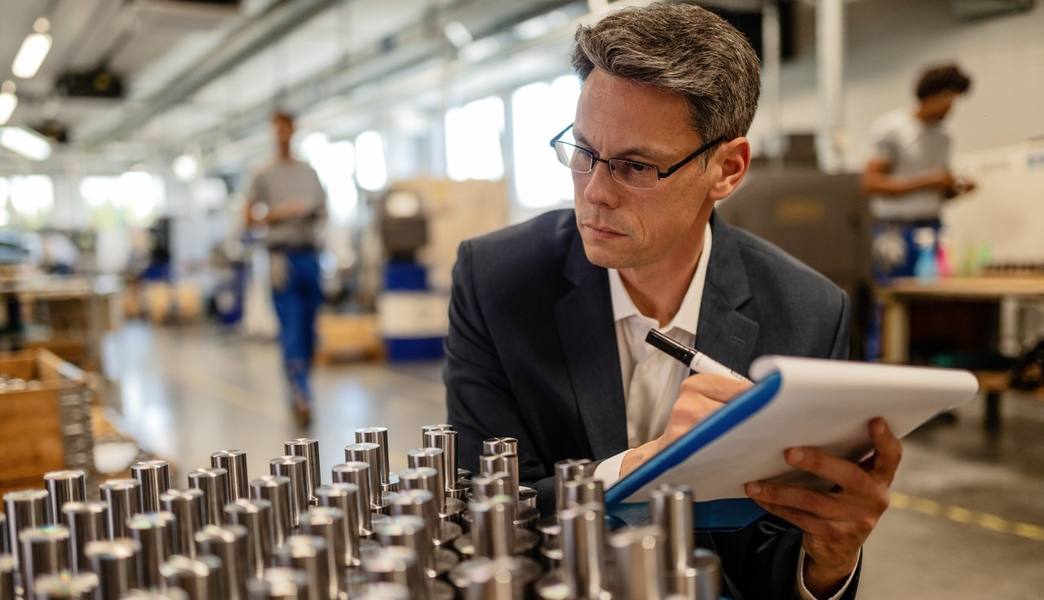
Quality is not achieved at the finish line – it is created at every step of the production process.
Quality control is the basis of stability and competitiveness of any production.
In an era of global supply, international standards, and high certification requirements, it is no longer enough for companies to simply check products out.
Modern approach requires implementation quality control points at each stage of the production process - from the receipt of raw materials to the packaging of the finished product.
This system minimizes defects, reduces the cost of repairing a defect and increases customer confidence.
What are Quality Control Points
A checkpoint is a specific stage in the production cycle where a product, semi-finished product or process is evaluated, measured or tested.
The main goal is to timely identify deviations and prevent their further spread.
The checkpoints may include:
- Incoming control of materials and components;
- verification of parameters of technological operations;
- visual control of the assembly;
- measurement of product characteristics;
- Final inspection before packaging and shipment.
Principles of building a system of control points
Relying on the process approach
Each enterprise should consider quality as part of the technology chain, not as a separate department.
The checkpoints are based on the logic of the production flow, where each next stage depends on the previous one.
Risk-based approach
Control is not established everywhere in a row, but where the risk of defects is highest.
To do this, FMEA methods (analysis of types and consequences of failures), statistics on marriage, as well as the experience of engineers are used.
Digitalization and traceability
Modern factories are moving to MES and QMS systemsEach operation is recorded digitally.
This allows you to track the origin of the parts, processing parameters and test results – all the way down to a particular work or line.
Types of checkpoints
Entrance control
It is carried out when accepting raw materials, components and materials from suppliers.
The main task is to ensure compliance with standards, specifications and certificates.
At this stage, packaging defects, incorrect marking, mismatch of size and composition are most often detected.
Interoperability control
It takes place between technological stages.
Examples:
- checking the size of parts after processing on the machine;
- testing of electronics after installation of components;
- Control of assembly operations on the conveyor.
Interoperative control helps prevent a domino effect, where a single defect leads to the marriage of an entire batch.
Final control
Final inspection before sending the product to the customer.
It includes functional testing, external inspection, packaging and markings.
Results are recorded in quality reports and can serve as the basis for certification.

Best Practices: How World Leaders Do
Toyota Production System (TPS)
The Toyota system is based on principle jidoka Automation with an element of human control.
Each operator has the right to stop the line if a defect is detected.
Checkpoints are built not only into the equipment, but also into the decision-making process itself.
Siemens and Digital Quality
Siemens introduced in its factories Digital twins of production processes.
Each checkpoint is modeled in advance to predict possible defects and adjust the process in real time.
Bosch and Standardization of Control
Bosch has developed common control point standards for all divisions.
In each production area, panels with visual indicators recording the status of control are installed.
This allows you to instantly identify deviations and eliminate them without stopping the entire line.
Chinese factories and hybrid models
Chinese factories are actively used QR Codes and Visual Management Systems.
Each part has a digital identifier, and all checkpoints are linked into a single database.
Thus, quality control becomes an integral part of the production rhythm.
Organization of the monitoring system
Map of checkpoints
First, it is necessary to develop process cardAll key control points, responsible persons and verification methods are noted.
Definition of quality criteria
At each stage, specific parameters are set: dimensions, weight, appearance, tolerances, functional characteristics.
All data is recorded in journals or electronic systems.
Use of SPC tools
Methods Statistical Process Management (SPC) They allow you to monitor the stability of processes and predict the appearance of defects.
With the help of graphs and diagrams, engineers can determine when parameters begin to deviate from the norm.
Feedback and corrective actions
After each control cycle, it is important to analyze the causes of defects and form corrective measures.
This makes the system "alive" - it not only detects errors, but also prevents them from recurring.
Errors in the organization of control points
Even a well-designed system can be ineffective if:
- control is carried out formally, without data analysis;
- Responsible for local quality has not been identified;
- There is no interaction between departments;
- Only the final product is tested, not the process.
Special attention should be paid training.
Workers and craftsmen need to understand why checkpoints are needed and how their use affects the reputation of the enterprise.
Economic impact
The introduction of the control point system gives a tangible result:
- reduction of marriage to 50%;
- Reducing the loss of time and materials;
- increasing the trust of customers and certification bodies;
- Acceleration of supply due to predictable quality.
At enterprises where digital control systems have been introduced, the failure index on assembly lines falls by an average of 2-3 times.
Checkpoints are not just a control tool, but part of a quality culture.
They can transform production from a set of operations into feedback-basedEach stage is transparent and predictable.
The best practices of global companies show that quality is not achieved at the finish line – it is created. at every step of the production process.
That is why the installation of control points becomes a prerequisite for sustainable and competitive production in the twenty-first century.