The closed circle of industry
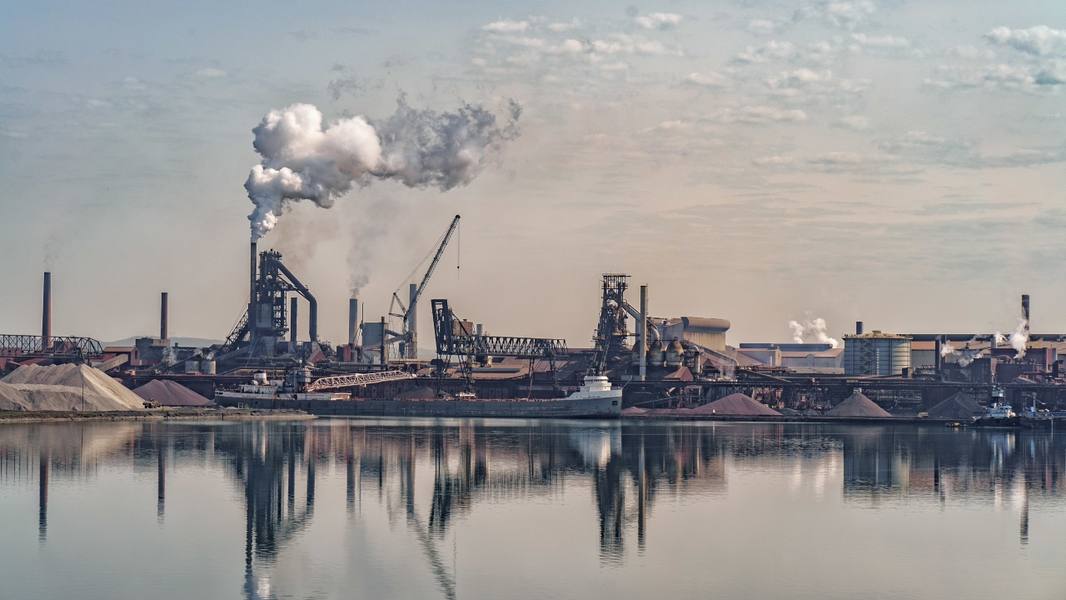
In the industry and trade of raw materials there is a little discussed, but very common problem. a closed financial circle between suppliers, distributors, production and end customers.
At first glance, the supply chain looks logical: raw materials are sold, products are produced, the customer receives the goods. In practice, however, the system often cash-flow gap, which leads to cash gaps, growth of receivables and direct losses.
This mechanism can be conditionally called “infinite industrial circle”Each participant shifts the financial burden to the next.
What a Classic Supply Chain Looks Like
In most industries, the supply chain is structured as follows:
- A producer of raw materials or a commodity holding company sells products to distributors.
- Distributors sell raw materials to manufacturing companies.
- Production enterprises produce finished products.
- The finished products are sold to end customers.
In the ideal model, at each stage, participants receive money and keep working. But in practice, financial conditions in this chain rarely coincide.
Where the problem arises
The main source of problems Non-compliance of payment terms at different stages of the chain.
Most often, the situation looks like this:
1. The raw materials supplier sells the raw materials to the distributor for money.
Commodity companies rarely work with delays and prefer to receive payment immediately.
2. The distributor sells raw materials to production with a deferred payment.
To retain the customer, distributors are forced to grant delays.
3. Manufacturing produces products and sells them to the end customer.
And here comes the key problem.
The customer often asks:
- delay
or - Additional discount on prepayment.
In a highly competitive environment, the manufacturer may be forced to make concessions. But if the company is not ready to take on additional financial risks, the client may be refused.
The "reverse movement" effect
When the manufacturer refuses to delay the customer, there is a backlash throughout the chain.
The client may:
- withdraw from the transaction;
- transfer the order;
- Go to another supplier.
As a result, production loses sales.
But raw materials for production have already been purchased from the distributor, often on credit.
Then the chain reaction starts:
- production does not receive money from the customer;
- The distributor expects payment from the production;
- The supplier of raw materials has already received the money or requires payment.
As a result, the financial burden is concentrated on the middle link of the chain. Distributors and Production Companies.
Why does the system become closed?
This model gradually forms a closed financial circle.
The scheme is as follows:
Resource supplier → distributor → production → customer
But cash flow moves at different speeds.
- Raw materials suppliers require quick payment.
- Distributors give delays.
- Manufacturing sells on credit.
- Customers try to pay as late as possible.
Each participant tries to reduce their own risks by shifting the financial burden to the next.
Business implications
A vicious cycle of delays can have serious consequences for companies.
Increase in accounts receivable
When companies grant long delays to customers, the volume of unpaid bills increases.
Cash gaps
The difference between the timing of payment to suppliers and the receipt of money from customers leads to a shortage of working capital.
Decreasing margins
To retain customers, companies often give discounts or additional financial terms.
Losses and bankruptcy
In extreme cases, the accumulation of debt and cash gaps can lead to financial instability or business closure.
Why the problem has increased in recent years
In recent years, the situation has become noticeably more complicated.
This was influenced by several factors:
- Increase in the cost of raw materials;
- increasing the cost of logistics;
- High competition in the markets;
- reducing the availability of loans;
- instability of the world economy.
Companies are increasingly operating on minimal margins, so any delays in payments become critical.
How companies are trying to get out of the vicious circle
Businesses are gradually looking for ways to reduce financial risks.
The most common solutions are:
Tightening of payment conditions
Some companies reduce delays or completely switch to prepayment.
Factoring.
Selling accounts receivable to financial institutions allows you to get money faster.
Customer Diversification
Companies try to work with multiple market segments to reduce dependence on large buyers.
Optimization of procurement
Business reduces inventory and plans to purchase raw materials more carefully.
Why the problem is with the whole industry
The closed financial circle - This is not a problem for individual companies.
This is a systemic feature of many industries:
- metallurgy;
- chemical industry;
- construction materials;
- agricultural sector;
- production of packaging and polymers.
In almost any long production chain, there is a gap between payment terms.
Modern industrial supply chains are becoming more complex. Commodity suppliers, distributors, manufacturing companies and end customers operate under different financial conditions.
When payment terms at different stages do not coincide, there is a vicious circle of deferred payments. In such a system, each company tries to transfer financial risks to the next participant in the chain.
For businesses, understanding these processes becomes critical. Only competent cash flow management, customer diversification and sound financial policy can avoid cash gaps and maintain the sustainability of the company.