Lack of provision of railway cars by Russia
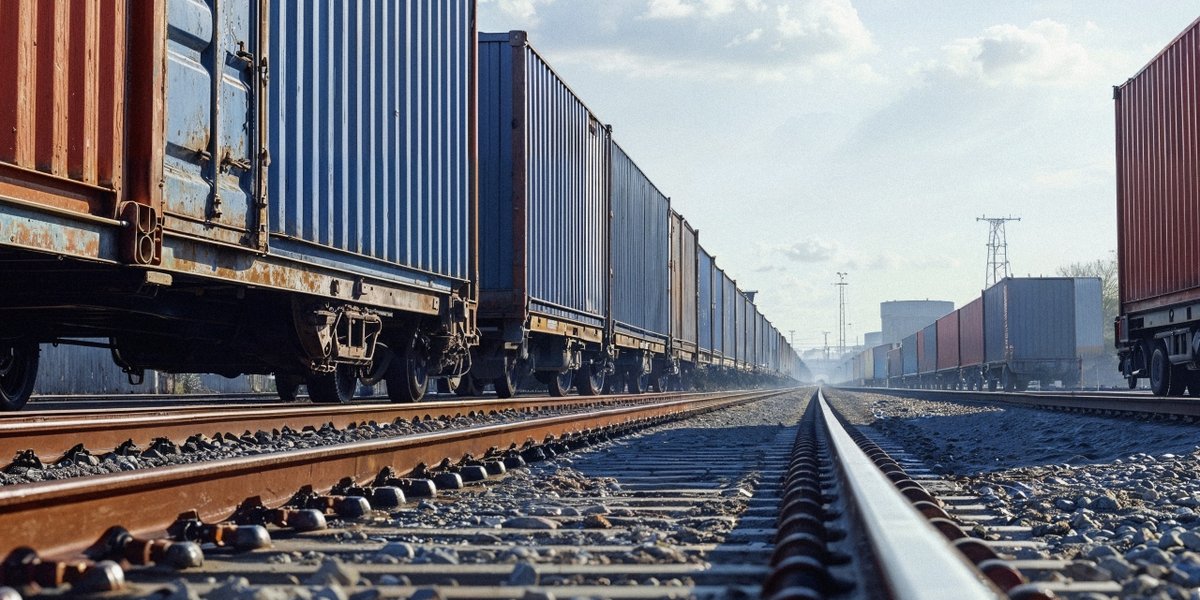
Russian-Chinese railway crossings are experiencing systemic overload.
The key problem - shortage of rolling stock from Russia, which directly affects exports, imports and transit through border crossings:
- Zabaikalsk / Manchuria
- Erlian/Arlenhote
The problem has long gone beyond temporary logistical difficulties. It's a structural imbalance.
What happens in practice
On the Russian side, it is regularly observed:
- shortage of gondola cars and covered cars
- Lack of container platforms
- late delivery
- Priority allocation of wagons for “strategic” cargo
As a result:
- cargoes are collected at the stations of departure
- Export contracts shift
- Chinese side forms counter queues
- The cost of logistics increases
The situation is particularly acute during peak periods of grain shipments and coal exports.
Why there is a shortage of cars
1. Growth of export flows to the East
After the reorientation of foreign trade of the Russian Federation, the volume of traffic in the direction of China increased multiple times.
At the same time, the infrastructure and fleet of cars did not increase proportionally.
The railway does not physically have time to service the increased flow.
2. Uneven distribution of rolling stock
Most of the car fleet is owned by private operators.
In conditions of high profitability of transportation:
- coal
- petroleum products
- ore
Operators redistribute the park where the rate is higher.
As a result, less marginal cargoes (agricultural products, equipment, groupage cargo) are experiencing a shortage of wagons.
3. Infrastructure restrictions at border crossings
Transition Zabaikalsk / Manchuria - The largest land corridor between Russia and China.
However, its capacity is limited:
- length
- number of loading fronts
- the difference in track width (1520 mm and 1435 mm)
The same applies to the Erlian / Arlenhote node, which works on overloading and changing trolleys.
Even in the presence of cargo and contract bottleneck - wagon + capacity.
How this affects business
Increase in delivery times
The average lengthening of the logistic shoulder can be 7-20 days.
For fixed-term contracts, this is critical.
Rising logistics costs
The effect is formed:
- downtime
- fines
- storage
- flattening
The final price of logistics can grow by 15-35%.
Supply chain disruption
The Chinese side works on the principle of planned capacity utilization.
If the Russian side does not ensure rhythm, the entire production chain suffers.
This reduces confidence and strengthens the requirements for financial guarantees.
Systemic Cause: Model Imbalance
Russia has historically worked in a western direction.
The eastern vector requires:
- park
- new terminals
- traction
- Development of port and border infrastructure
Reconfiguring takes years.
Why China is not experiencing a similar shortage
The Chinese railway system is centralized and state-run.
Planning of rolling stock is integrated with export strategy.
China forms:
- plan
- quota
- spare capacity
The Russian model is more market-oriented and fragmented.
Possible development scenarios
Scenario 1: Increase the park
Investment in the production of new cars.
Problem. - long production cycle and high capital intensity.
Scenario 2: Creation of integrated export operators
Formation of vertically integrated structures:
- cargo
- carriage
- logistics
- financing
This reduces dependence on the rental market.
Scenario 3: Increasing Containerization
Container transportation allows:
- flexibly
- shorten
- optimize loading
However, the transition to containerization is not possible for all types of cargo.
What Exporters Should Do Now
Practical recommendations:
- Enter long-term contracts with rolling stock operators.
- Putting a temporary buffer in contracts.
- Consider alternative routes (including maritime logistics).
- Work through structures that control the wagon fleet.
- Plan shipments outside peak periods.
Strategic conclusion
Shortage of wagons - It's not a temporary failure.
This reflects the restructuring of trade flows.
The Trans-Baikalsk/Manchuria and Erlian/Arlenhote transitions are becoming not just logistics hubs, but indicators of the transformation of the entire Eurasian trade.
Who controls the rolling stock - It controls exports.
In the conditions of the eastern turn of the economy, it is the car that becomes a key asset.