Packaging code in logistics

The packaging code is one of the key elements of effective logistics management. In today’s supply chain, where accuracy, speed and traceability are important, packaging codes play an important role in identifying and tracking cargo. These codes can be both numerical and alphabetical, and they are necessary to standardize and ensure seamless interaction between the various participants in the logistics network.
In this article, we will look at what the container code is, what types of codes exist, their functions in logistics, and how digital and letter codes help optimize the processes of transportation and storage of goods.
What's the packaging code?
Packaging code A unique identification number assigned to different types of packaging or containers used for the transport and storage of goods. These codes allow you to accurately identify each item of the container, which simplifies the management of logistics processes, and also helps in tracking goods at all stages of their movement in the supply chain.
Basic functions of the packaging code:
- Identification of packaging type and characteristics.
- Simplification of accounting and tracking processes.
- Improving the safety of cargo transportation.
- Reducing the risk of loss or damage of cargo.
- Automation of warehouse accounting and inventory processes.
Types of packaging codes: digital and letter format
There are two main types of packaging codes: digital and alphabetical. Both formats are widely used in logistics to identify packaging and containers.
- Digital packaging code
The digital packaging code is a sequence of digits that is used to accurately identify a particular packaging. This code usually includes information about the type of packaging, its volume, weight, material and other characteristics.
Example:
Code 1234567890
In this example, each digit may denote a specific container parameter, for example:
The first two digits are the type of packaging (such as a box or container).
The next three are size or volume.
The remaining ones are the identifier of a specific container unit.
Examples of digital packaging codes:
- Containers for maritime transport: For containers used in international trade, there is a system of standardized identification codes such as container ISO codes.
- Euroallets (EUR pallets): The pallets can also be marked with a digital code indicating the manufacturer, quality standard and region.
- Letter code for packagings
The letter code of the container, unlike the digital one, consists of letters of the Latin alphabet and is used to encode information about the container, which avoids errors and ambiguity. Such codes may also include numerical values, making them combined.
Example:
Code ABC-XYZ-123
Here, the letter combinations may indicate the type of packaging, manufacturer or place of origin, and the numerals may indicate the unique identifier of a particular package.
Examples of application of packaging letter codes:
- ISO 6346 Container Codes: To designate containers, an alphanumeric code is used that includes four letters (which identify the owner of the container) and a subsequent sequence of digits, allowing each container to be uniquely identified.
- Coding of standardized packages: Many companies use letter codes to mark reusable containers, making it easier to record and inventory.
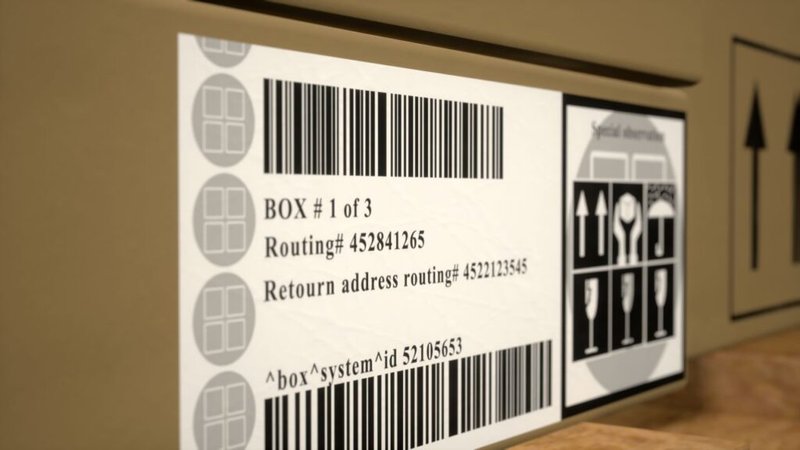
Role of packaging code in logistics
- Simplification of accounting and tracking
Packaging codes allow logistics companies and their customers to easily track the movement of goods at all stages. With the help of scanning numerical and letter codes, it is possible to automatically record the receipt and dispatch of packages, as well as their location in real time.
- Optimization of warehouse accounting
Assigning a unique code to each container element helps to effectively manage inventory and optimize storage processes. For example, in a warehouse you can quickly find the right product or container by scanning the code, which significantly reduces the search time and increases the accuracy of inventory.
- Process automation
Packaging codes can be integrated into Warhouse Management Systems (WMS), which allows you to automate the processes of accounting, inventory, order processing and shipment. Automation with packaging codes also reduces the likelihood of errors associated with manual data entry.
- Security and loss reduction
Digital and letter codes allow you to accurately identify each item of packaging, which helps reduce the risk of loss or theft of goods. In the event of loss of cargo, the last recorded item can be easily traced using packaging codes.
- Standardization and international trade
International logistics standards such as ISO 6346 for containers provide a unified coding system that is used worldwide. This simplifies the interaction between different participants in the international supply chain and increases the overall efficiency of logistics.
Packaging code standards
International standards have been developed to unify and standardize the use of packaging codes, such as:
- ISO 6346
This international standard regulates an alphanumeric container encoding system. The code includes:
- Ownership code (three letters indicating the owner of the container)
- Equipment category (one letter indicating the type of container)
- Serial number (six digits, unique container identifier).
- Check number (one digit used to verify the correctness of the code).
Example: ABCD1234567
- EPC Code (Electronic Product Code)
These codes are used to identify packages and goods in the supply chain. EPC codes are used in RFID tags and allow you to automate the processes of accounting, shipment and storage in the warehouse.
- GS1-128
It is a barcode standard that includes codes for identifying packaging, cargo, and tracking and accounting. The GS1-128 standard is widely used in retail and logistics for marking boxes, pallets and other types of packaging.
Advantages of using digital and letter packaging codes
The use of packaging codes in logistics has many advantages:
- Acceleration of order processing: Automated systems easily read codes, which speeds up the process of shipping and receiving goods.
- Improved accuracy: Each item can be accurately identified and tracked, reducing the likelihood of errors.
- Cost optimization: Automation of accounting and inventory processes reduces labor costs and minimizes downtime.
- Improving communication: Standardized codes provide better interaction between different actors in the supply chain, including suppliers, carriers and customers.
Packaging codes play a crucial role in modern logistics, providing accurate identification, tracking and accounting of packages and containers. Whether digital or letter codes are used, they can improve the efficiency of logistics processes, reduce the likelihood of errors and speed up the delivery time. Standards such as ISO 6346 and GS1-128 help unify the coding system, making logistics more transparent and manageable.
Promising packaging materials and packaging designs. Article here.!