SCO Maritime Logistics
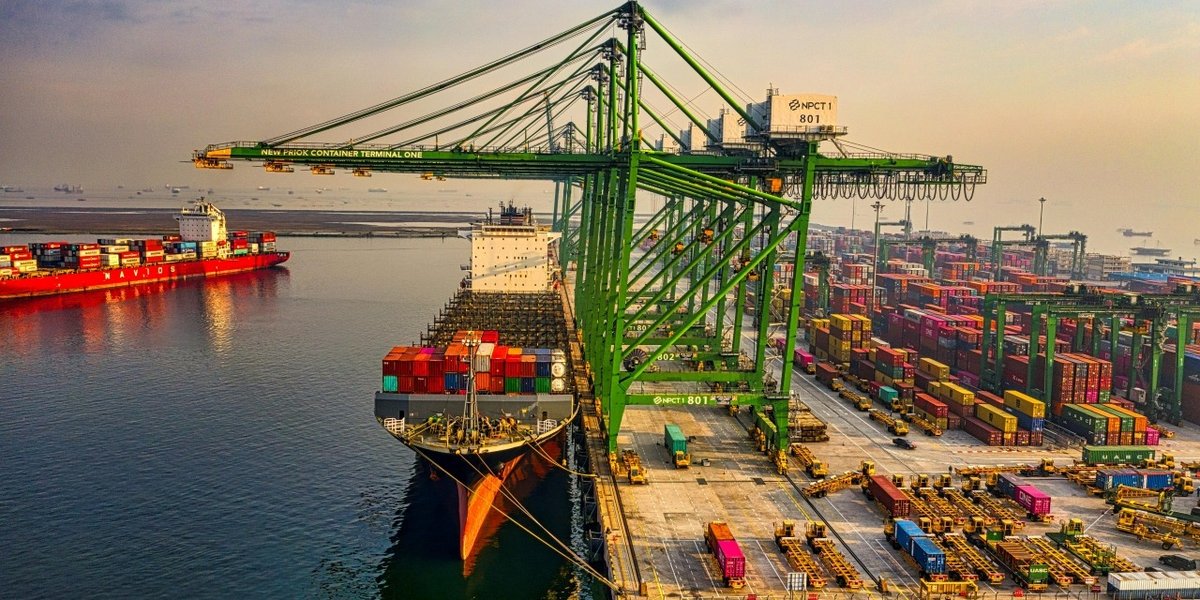
The Shanghai Cooperation Organization (SCO) unites a number of Eurasian states, covering a vast area from East Asia to Europe. Despite the continental nature of many of its member states, maritime logistics is becoming a key link in trade and economic cooperation.
Geography and importance of maritime logistics for the SCO
The SCO brings together countries such as:
- China
- Russia
- India
- Pakistan
- Iran
- Kazakhstan
- Uzbekistan
- Tajikistan
- Kyrgyzstan
- Observers and dialogue partners
They have direct access to the sea: China, Russia, India, Iran and Pakistan. This makes them sea hubs for transit and export of interests of all SCO members.
Key seaports in the SCO countries
China
- Shanghai (Shanghai Port) - the largest port in the world, serves cargo in all directions
- Ningbo-Zhoushan (Ningbo-Zhoushan) Southern hub with powerful processing and container turnover
- Qingdao, Tianjin, Guangzhou, Shenzhen Multiformat sea gates
Russia
- Vladivostok, Nakhodka - the main eastern gate in the APR
- Novorossiysk, St. Petersburg Important points of entry into the Mediterranean and Baltic Seas
- Ust-Luga, Murmansk - logistics on the Northern Sea Route
India
- Mumbai, Chennai, Vishakhapatnam Ports of international and regional importance n
- Kandla, Mundra Active cooperation with Iran and Central Asian countries
Iran
- Bandar Abbas (Bandar Abbas) Key port in the Strait of Hormuz
- Chabahar (Chabahar Port) Strategic transit port to Afghanistan and Central Asia (in cooperation with India)
Pakistan
- Gwadar (Gwadar Port) CPEC-developed port connecting China to the Arabian Sea
- Karachi The largest operating port in the country
Main maritime logistics routes
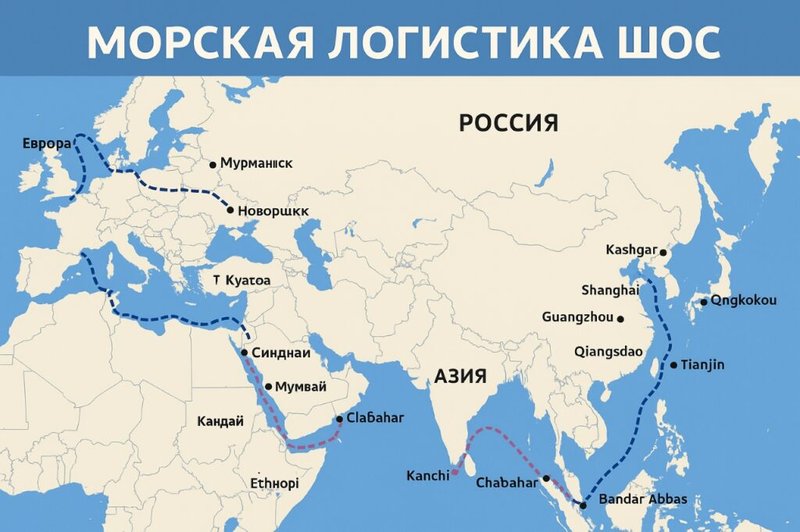
China – Europe (via the Indian Ocean and Suez)
- Route: Shanghai – Singapore – Suez – Rotterdam
- Advantages: High throughput, scalability
India/Iran – Central Asia
- Route: Mumbai – Chabahar – Iranian Railways – Turkmenistan / Uzbekistan / Kazakhstan
- It is used in the format “Sea Route + International North-South Transport Corridor”
Russia-Asia
- Route: Vladivostok – Shanghai / Busan / Tokyo
- Used for export of energy resources, wood, metals
Southern Corridor: Pakistan-China (CPEC)
- Gwadar - Kashgar - further by rail to Central China
- Strategic direction of the Chinese Belt and Road Initiative
Infrastructure initiatives
CPEC (China-Pakistan Economic Corridor)
- Provides direct maritime logistics for western China
- Significantly reduces dependence on congested eastern ports
International North-South Transport Corridor
- Alternative to the route through Suez
- Links Russia, Caucasus, Iran and India to the Indian Ocean
Port modernization projects in Iran, India and Russia
- Development of Chabahar, Mumbai and Dammam as Multimodal Nodes
- Creation of a joint venture between logistics operators of the SCO countries
The role of multimodal logistics
Maritime logistics is increasingly integrated with rail and road routes, forming multimodal chains.
- Port – FEA terminal – railway – warehouse in the depths of the continent
- Use of bond zones, dry port, special storage and transit modes
Challenges and challenges
- Geopolitical instability (sanctions, tariffs, wars)
Competition with other transport alliances (e.g. TRACECA, INSTC) - Insufficient digitalization of logistics
- Disparate regulation and customs barriers
Development prospects
- Creation of a single SCO logistics window based on blockchain and EDI
- Development of green solutions: LNG vessels, green ports
- Formation of transregional logistics operators on the basis of state-owned companies
- Expansion of the SCO zone to the Middle East, Southeast Asia and Africa
SCO maritime logistics is an integral part of modern Eurasian transit. With massive infrastructure investments, strategic partnerships and a shared drive for integration, sea routes will be the cornerstone of trade in the region for decades to come.