Cargo transportation through Kazakhstan and Mongolia
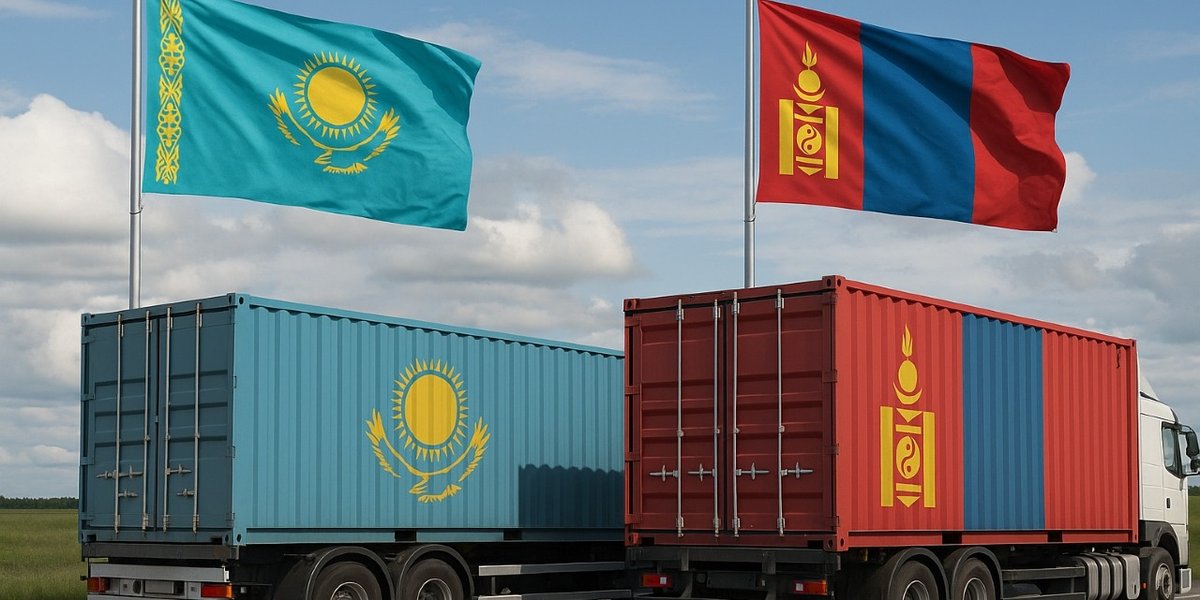
Modern realities of international logistics, including geopolitical instability, sanctions, congestion of traditional routes and rising prices for container transportation, have led to an active search for alternative destinations. Two such routes – through Kazakhstan and Mongolia – are becoming increasingly popular among shippers, especially when transporting goods from China to Europe and back.
This article examines the pros and cons of using transport corridors through Kazakhstan and Mongolia, logistics features, infrastructure and practical tips for business.
Geography and strategic importance of routes
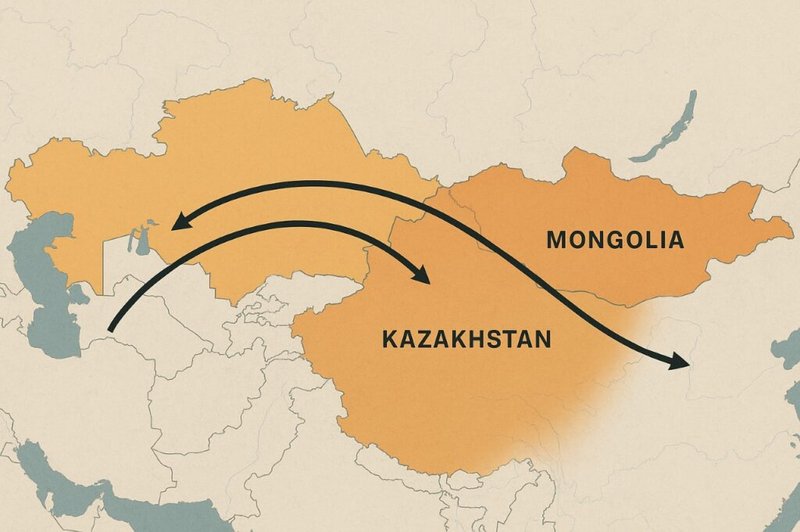
Kazakhstan Route (New Silk Road)
- Passes through the cities of Khorgos, Altynkol, Almaty, Nur-Sultan, then to Russia or Europe
- Based on cooperation within the initiative One Belt, One Road (BRI)
Mongolian route
- Route: China (Eren-Khoto) → Mongolia (Zamyn-Uud, Ulaanbaatar) → Russia → Europe
- It is used less often but is actively developing.
Pros of the route through Kazakhstan
Developed infrastructure
- Many years of investments in railway terminals (Khorgos, Dostyk, Altynkol)
- Intermodal hubs and customs terminals with digital services
Speed of delivery
- Average transit time: 12-18 days (China to Europe), which is faster than the sea route
Support from China and Kazakhstan
- Political assistance, joint projects of logistics operators
Relatively stable geopolitical situation
- Kazakhstan is a partner of both China and Russia, which minimizes the risks of delays.
China Railway Express Container Trains
- Regular flights with a fixed schedule
Cons of the route through Kazakhstan
Congestion of railway infrastructure
- High demand → queues at terminals, especially during peak periods
Dependence on Russia
- The route to Europe still passes through the territory of the Russian Federation, which in the conditions of sanctions can be difficult.
High cost
- The price of container transportation is higher than the sea
Necessity of overload due to different track width
- Switching from Chinese to Kazakh (1,520 mm) requires container overloading, which increases time and cost.
Pros of the route through Mongolia
Less congested route
- Less trains, less time at borders and terminals
Support from the China-Mongolia Agreements
- Transit, simplification and infrastructure investment agreements
Alternative routes through Russia
- There is a potential to access the Trans-Siberian Railway or multimodal routes bypassing the Russian Federation
Less Risks of Political Restrictions
- Mongolia remains neutral and open to cooperation
Cons of the route through Mongolia
Less developed infrastructure
- Insufficient number of modern logistics terminals, especially outside Ulaanbaatar
Fewer regular services
- Fewer container trains, unstable timetables
Difficulties in winter
- Climate conditions, especially in northern Mongolia, may cause delays
Limited capacity
- Single-track railway sections, lack of duplicate corridors
Comparative table: Kazakhstan vs Mongolia
| Features | Kazakhstan | Mongolia |
| Infrastructure | Advanced. | Limited. |
| Delivery time (China-EU) | 12-18 days | 14-21 days |
| Cost of transportation | Medium/high | Medium |
| Capacity | Tall. | Medium/low |
| Regularity of flights | Often. | Less |
| Political risks | Moderates (due to Russia) | Low. |
| Possibilities of multimodality | High (railway, car, air) | Medium. |
When and to whom alternative routes are suitable
It is recommended to use the route through Kazakhstan if:
- High regularity of supply is required
- You work with big parties.
- Quick delivery is important.
- You plan to deliver to Russia, Belarus or Europe through Russia
A route through Mongolia is recommended if:
- Your business is focused on Kazakhstan, Russia, Mongolia
- You need to bypass congested points (for example, Khorgos)
- There is a flexible delivery schedule
- Requires fewer intermediates
Practical advice on the use of routes
- Choose an experienced freight forwarder Knowledge of customs and local realities is critical
- Evaluate seasonality In spring and autumn, demand for transportation is higher
- Keep an eye on exchange rates and railway tariffs
- Use multimodal solutions Container + car or container + air
- Check the compatibility of the equipment Especially important for non-standard packaging
Routes through Kazakhstan and Mongolia are becoming an important part of the logistics strategy for companies operating between Asia and Europe. Kazakhstan offers a developed and fast infrastructure, but depends on the political situation in Russia. Mongolia is a more flexible but less predictable route that will suit those looking for an alternative to congested routes.
The right route depends on business objectives, supply volumes, time sensitivity and political constraints.