Expert Chinese Manufacturers’ Transition to Processes and Automation

Automation is not a fashion or an experiment, but a forced and strategic step.
Author: Sergei Gatilov - China expert, entrepreneur, 15+ years of life and work
When I first found myself in a Chinese factory in 2010, I was struck not by the equipment, but by the people. Dozens and sometimes hundreds of workers performed the same manually. Conveyors moved slowly, quality control largely depended on human factors, and cheap labor remained a key competitive advantage for China.
It's been 15 years - And today, in many factories that used to employ hundreds of people, I see robots, automatic lines and operators behind monitors. China has changed, and these changes have a direct impact on the country’s business, logistics and economy.
Why China is going into automation
Automation - This is not a fashion or an experiment, but a forced and strategic step.
In recent years, I have heard the same phrase from factory owners:
“There are fewer people and customer requirements are growing. - above”.
The main reasons for the transition to automation:
- Increased wages of workers;
- Lack of young staff;
- falling birth rate;
- Migration of the population to services;
- pressure on the cost of production;
- strategy Made in China 2025.
China does not rely on the number of workers, but on technology, quality stability and manageability of processes.
Personal example #1: before and after factory
A few years ago, I accompanied a client to an electronics factory in Guangdong. I've been there before. - There were about 200 people working in the workshops.
When we arrived again, I did not immediately understand where the workers had gone. Production remained, volumes increased, but there were no more than 40 people in the shop. Everything else. - Robots, automatic lines, surveillance cameras and a digital marriage record system.
The factory owner told me bluntly:
I fired some people, but otherwise I would have lost customers.
How automation is changing the job market in China
Rising unemployment in China - The topic is inconvenient, it is not accepted to speak openly about it. However, on the ground it is felt more and more.
Who loses his job:
- manual workers;
- migrants from rural areas;
- age-related staff;
- People without technical skills.
Who's in demand?
- engineers;
- CNC operators;
- automation specialists;
- IT engineers;
- Quality control specialists of a new level.
This is not a crisis, but a restructuring of the economy: some professions are leaving, others are replacing them.
Personal example #2: customer error
One of my clients complained to me:
The factory is modern, but the batch of goods was unstable in quality.
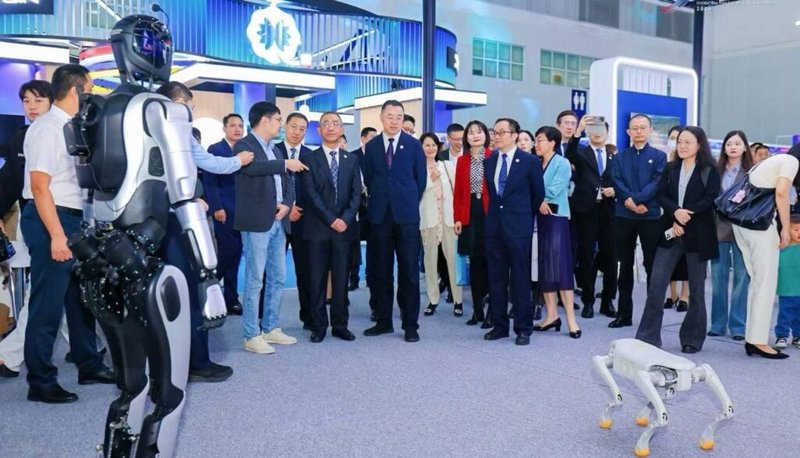
The inspection showed that the problem was not in people or raw materials, but in the wrong setting of the automatic line, for which there was no proper control.
This is a common mistake of the day: workers used to be tested, but now they have to check processes, algorithms and equipment.
What automation brings to business
Advantages:
- stable quality of products;
- predictable deadlines for fulfilling orders;
- decrease in the percentage of marriage;
- scalability of production;
- Minimize the human factor.
Disadvantages:
- High investment at the start;
- less flexibility for small orders;
- growth of minimum parties;
- complication of technical control.
Today, China is becoming less convenient for one-off small orders, but increasingly attractive for systemic and long-term business.
Why it is more difficult without an expert
Previously, it was enough to evaluate the factory:
- to come to production;
- see the shop;
- Talk to the manager.
That is no longer enough today.
It is necessary to understand:
- How technological processes are structured;
- where automation is real, and where ostentatious;
- What stages still depend on the person;
- where the main risks are hidden.
This is where foreign customers often make critical mistakes.
How I work with this in practice
My job as an expert on China - Not just finding a factory, but understanding how it really works.
- analysis of production processes;
- verification of compliance with the declared automation;
- Audit of equipment and quality system;
- support of negotiations;
- Control of release and shipment of products.
I help clients avoid costly mistakes that are not caused by people, but by processes that are wrong.
My personal conclusion.
China is no longer a country of cheap manual labor.
Today China - It is a high-tech manufacturing platform.
If you care:
- stable quality;
- predictable timing;
- understandable and managed economics of the project,
It is necessary to work with China in a new way and with a deep understanding of internal processes.
Automation. This is not only the growth of production efficiency, but also the new social reality of China.
Those who understand these changes gain a sustained competitive advantage. Those who continue to work under old schemes face rejection, marriage and financial loss.
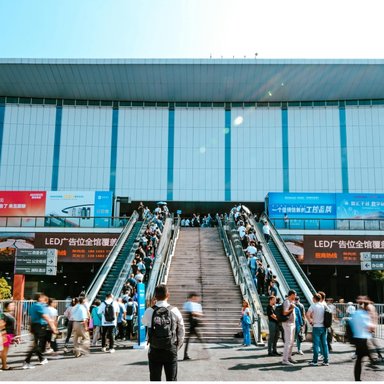
I constantly keep my finger on the pulse, participate in profile exhibitions and see how rapidly the industry is changing. Keep up. - Time plays against those who ignore change.
Expert contact:
Gatilov Sergey Ivanovich- Holiday Int. Ltd. (PRC)
Phone/WeChat:+86 18211220886
WhatsApp/Telegram:+7 9399161022
Mail:gatilove@mail.ru