Potential Markets in Central and South Asia
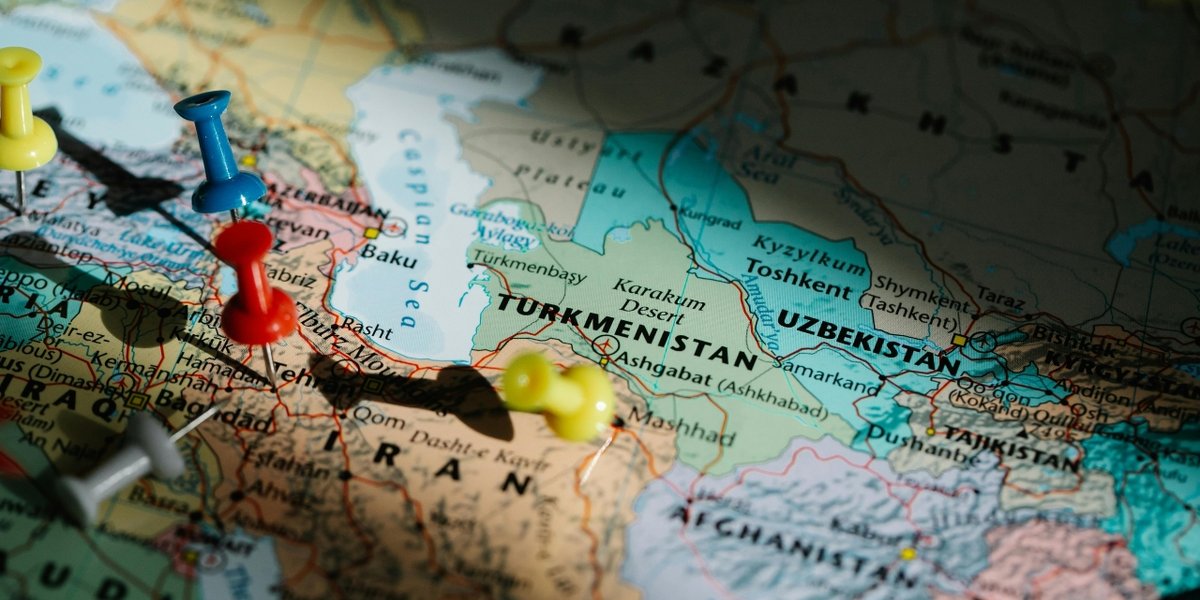
The region from Central Asia to South Asia is no longer the periphery of world trade.
It is turning into a space of intersection of interests of Russia, China, India, Iran and the Middle East. New transport corridors are forming here, the population is growing, the industrial base is strengthening and there is a demand for technology, equipment and food.
Here are seven countries that form this belt:
Afghanistan, Kazakhstan, Kyrgyzstan, Pakistan, Tajikistan, Turkmenistan and Uzbekistan.
It's important to understand: These are markets of different maturity levels, but united by a common logic. - Demographic growth + infrastructure development + the need for industrialization.
Afghanistan
Afghanistan - A market of high risk but strategic importance.
The economy remains dependent on imports. Domestic production is limited, infrastructure needs modernization, and the banking system is unstable. However, the demand for basic goods is consistently high.
There is a need to:
- food and flour
- fuel
- building materials
- farming
- basic industrial equipment
The main factor - Geography. The country is on a route that can connect Central Asia with the ports of South Asia. With the development of infrastructure, this can change the entire logistics of the region.
Working here requires a rigorous risk management system and reliable partners.
Kazakhstan
Kazakhstan - The largest economy in the region and the most structured market.
It is a resource power with developed production of oil, metals and uranium, but at the same time actively diversifying industry.
Key areas of growth:
- engineering
- mining and processing equipment
- agriculture
- logistics infrastructure
- digitalization
The country has a developed transport network and is the main transit hub between China, Russia and Europe.
For exporters, it is the main entry market with the ability to scale across the region.
Kyrgyzstan
Kyrgyzstan - A compact but flexible economy.
The market is actively involved in regional trade and re-export operations. Small and medium-sized businesses play a significant role.
Promising directions:
- textiles
- farming
- building-material
- warehouse and distribution logistics
The economy is price-sensitive but has high trading activity. Suitable for companies focused on flexible supply and mid-price segment.
Pakistan
Pakistan - A large market in South Asia with a population of more than 240 million people.
This is no longer a niche economy, but a large-scale domestic market with a strong industrial base.
Strengths:
- textile
- agriculture
- recycling
- port infrastructure
The country has access to the Indian Ocean, making it an important logistics partner for overland routes from Central Asia.
The main demand is formed in:
- energy
- machinery
- construction
- agriculture
The market is competitive but voluminous.
Tajikistan
Tajikistan - an economy with a pronounced energy potential.
Main resource - hydropower. The country is gradually increasing electricity production and is interested in modernizing infrastructure.
Potential directions:
- powerhouse
- building-material
- farming
- raw-processing
The market is relatively small, but growing due to demographic factors.
Turkmenistan
Turkmenistan - Gas economy with limited external openness.
The country has one of the largest natural gas reserves in the region. The state is actively investing in infrastructure projects.
Promising areas:
- powerhouse
- construction
- industrial infrastructure
- transport
Market entry is complex from a regulatory perspective, but projects are often large-scale and long-term.
Uzbekistan
Uzbekistan - The most dynamically developing market in the region.
With a population of over 35 million people, active industrialization and economic reform, the country is one of the centers of growth.
Developing:
- engineering
- textiles and light industry
- agricultural processing
- construction
- construction
The state stimulates the localization and creation of production within the country. This creates demand not only for goods, but also for technology, equipment and engineering.
The general logic of the region
When these markets are combined into a single strategic model, their role becomes clear:
- Young and growing population
- The need for infrastructure modernization
- The disadvantage of own technological production
- Formation of new transport corridors
These are not “fast” markets, but long-term markets.
Who enters through infrastructure, equipment, food and industrial cooperation- They form positions for years to come.