Principle of accreditation of agricultural products for import to China
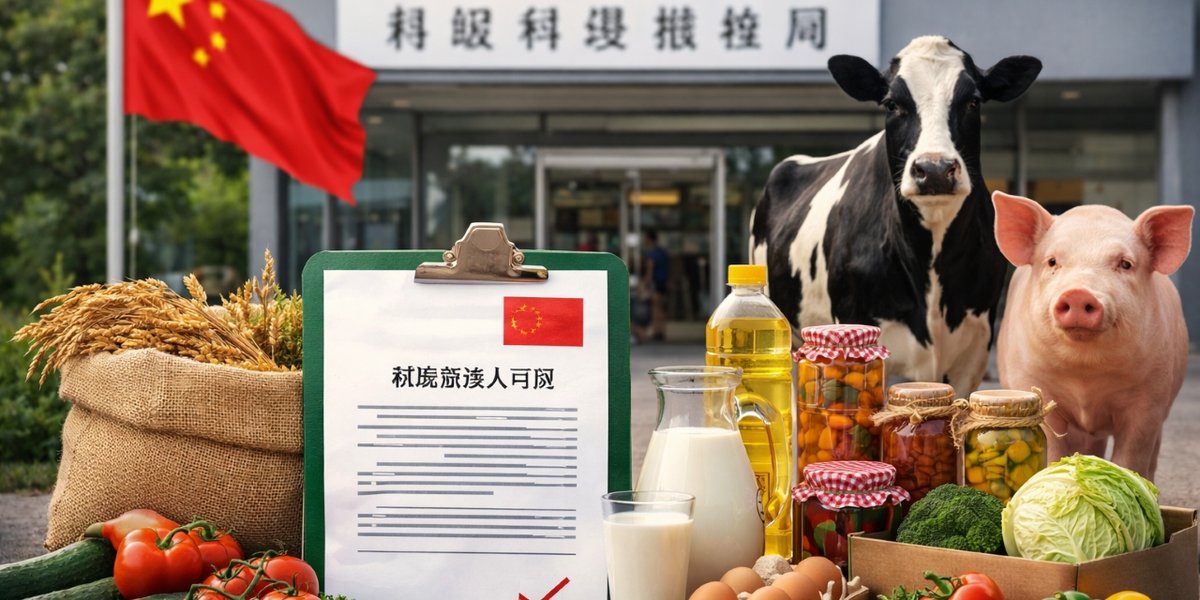
China is one of the world’s largest markets for agricultural products. With population growth and increasing consumption, the country is actively importing grain, meat, seafood, dairy products, fruits and other food products. However, access to the Chinese market is strictly regulated by government authorities and foreign suppliers must undergo accreditation procedures.
Accreditation of agricultural products - This is a system of admission of foreign manufacturers and suppliers to the Chinese market. It includes coordination between state authorities of exporting countries and Chinese regulators, as well as registration of enterprises, confirmation of safety standards and compliance with product quality requirements.
Understanding the principles of accreditation is key for companies planning to export agricultural products to China.
State regulation of food imports to China
Principal regulatory authorities
Imports of agricultural products to China are controlled by several government agencies.
The main regulatory body is General Administration of Customs of China (GACC)which is responsible for:
- registration of foreign manufacturers
- food safety control
- veterinary and phytosanitary control
- admission of products to the Chinese market
In addition, the regulatory process involves:
- Ministry of Agriculture of China
- State Administration for Market Regulation
- quarantine and sanitation services
These bodies jointly form a quality control system for imported products.
Interstate agreements
The first stage of market access
Before a certain category of products can be exported to China, formal agreements must be reached between the countries.
This process includes:
- negotiations between public authorities
- Assessment of the food safety control system in the exporting country
- Coordination of veterinary and phytosanitary requirements
- signing of relevant protocols
Without such an interstate agreement, the export of a specific type of agricultural products to China is impossible.
Registration of foreign producers
Mandatory accreditation procedure
After signing the interstate agreement, registration of specific enterprises begins.
Exporting companies must undergo accreditation in the Chinese customs system. This requires:
- Provide information about the company
- Confirm compliance of production processes with safety standards
- Provide data on the quality control system
- Be subject to regulatory review
After successful registration, the company receives a unique registration number, which is used when exporting products to China.
CIFER registration system
Electronic registration platform
China uses special system of registration of foreign enterprises CIFER (China Import Food Enterprise Registration).
Through this platform:
- filing
- updating of business information
- compliance n
- Interaction with Chinese Regulators
The use of a digital platform allows to centralize the process of control of imported products.

Product safety requirements
Quality standards
China has strict requirements for the quality of imported food. These include:
- control of harmful substances
- compliance
- compliance with packaging and labelling standards
- compliance with veterinary and phytosanitary requirements n
Each batch of products can undergo additional checks at the border.
Product traceability
The Chinese control system provides the ability to track products at all stages. - from production to delivery.
This means that businesses must have:
- quality control
- raw material documentation
- process data
This system increases the level of food safety in the market.
Inspections and inspections
Business audits
Chinese regulators may conduct inspections of foreign enterprises. Verifications may be carried out:
- remotely
- on the basis of the submitted documents
- through joint inspections with national regulators
The purpose of such checks is to confirm the compliance of enterprises with the requirements of Chinese law.
Labeling and packaging of products
Packaging information requirements
Imported products must comply with Chinese labeling laws.
As a rule, the package must show:
- product
- country
- manufacturer
- registration number
- expiration date
- storage
The marking must be in Chinese.
Reasons for refusal of accreditation
Despite the high interest in the Chinese market, some businesses face refusal to register.
Main reasons:
- non-compliance with safety standards
- partial documentation
- non-sanitary n
- Problems with the quality control system
In some cases, registration may be suspended or cancelled.
Importance of accreditation for international trade
Opportunities for exporters
Despite the complexity of the procedure, accreditation provides access to one of the largest consumer markets in the world.
For many countries, agricultural exports to China are becoming an important driver of economic growth.
Companies that have successfully passed the registration procedure have the opportunity to:
- expand the geography of supply
- increase exports
- strengthen international reputation
The system of accreditation of agricultural products for import into China is a complex but transparent mechanism for quality control and food safety.
It includes several key stages: interstate agreements, enterprise registration, compliance with quality standards and regular inspections by Chinese regulators.
For foreign manufacturers, understanding these procedures is a prerequisite for successful entry into the Chinese market. Companies willing to invest in compliance and transparent quality control processes are able to operate in one of the world’s largest and most dynamic markets.