Hainan to close customs border until December 31, 2025
What does the closure of the Hainan border mean?
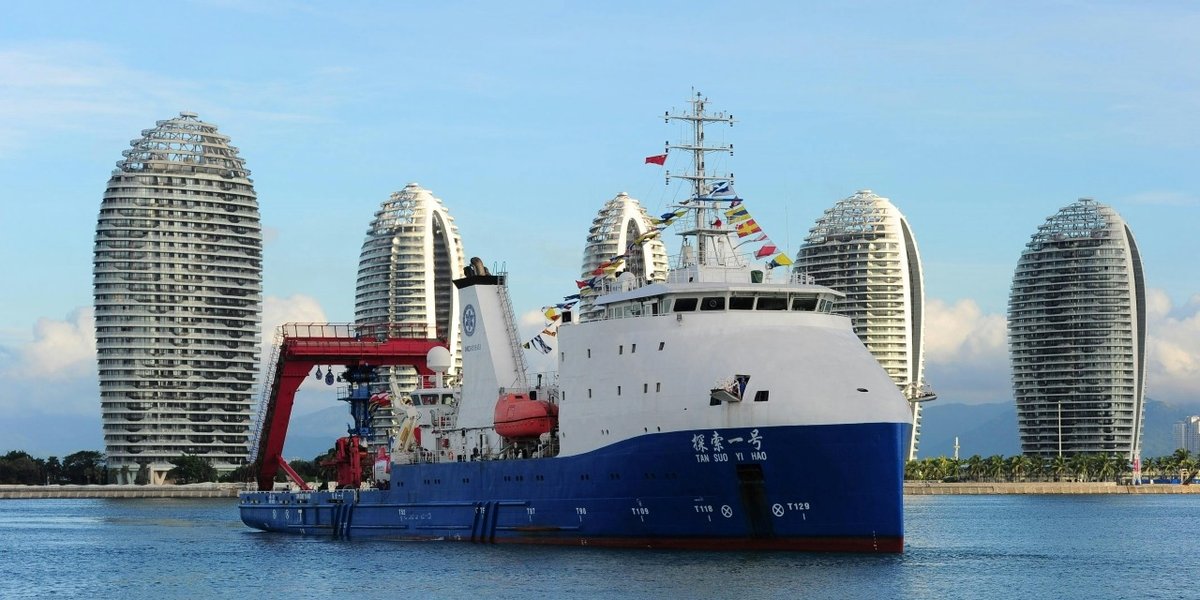
From January 1, 2025, the entire island of Hainan officially enters the regime closed customs control will function as China-isolated economic zone before 31 December 2025.
Main model:
- Free flow goods, capital and personnel between Hainan and foreign countries;
- Control and taxation displacement between Hainan and mainland China;
- Inability to move goods freely from the island to China without customs procedures;
- Import to the island carried out zero-rate for most categories (except for limited ones);
- High degree of market liberalization and a simplified mode of doing business.
Opening a company in Hainan
Form of ownership
- WFOE (Wholly Foreign-Owned Enterprise) 100% foreign capital;
- EJV/CJV joint venture with Chinese partners;
- Representation (Rep. Office) – without the right to direct commercial activity.
Requirements:
- Legal address in Hainan;
- Office, employees and business activities (substance requirements);
- The core business must match the supported sectors: tourism, digital technology, fintech, international logistics, medicine, culture, etc.
Tax policy
Corporate Tax (CIT)
- Bet: 15% (Instead of the standard 25%);
- Valid for companies registered in Hainan, if there is significant activity on the island;
- Term of benefits: until the end of 2035.
Personal Income Tax (IIT)
- Also. 15% instead of a progressive scale;
- Applies to residents staying in Hainan more than 183 days a year;
- It applies to both foreigners and Chinese citizens if the conditions of residence are met.
Import duties and VAT
- Most products including raw materials. equipment. transport. yacht) taxable zero duties and taxes;
- Prix mainland goods become subject to taxation at the usual rates: duties, VAT, consumer tax (if applicable);
- Customs controls carried out on the border of Hainan к mainland.
Future tax consolidation
- Planned. five-tax substitution (including VAT) on single-tax;
- This will make it easier for businesses to plan cash flows, reduce red tape, and eliminate duplicate taxation.

Foreign economic activities
International trade
- Duty-free import of goods for local consumption or processing;
- Hainan is becoming a logistics and processing hub between Southeast Asia and China.
Industrial chains
- Import of raw materials with subsequent production and export is possible without payment of duties;
- When exporting finished products, a tax is levied on the mainland, if value added <30% on the island.
Business opportunities
| Opportunity | Description |
| Duty-free trade | The island is the largest duty-free zone in Asia. |
| Reducing the tax burden | 15% income tax and personal income tax, exemption from duties |
| International hub | Direct deliveries without unnecessary regulation and currency control |
| Quick registration of companies | Simplified procedures for foreign investors |
| Regulatory flexibility | Tax reform, digitalization, e-government |
Risks and limitations
Limited domestic market
Hainan is an island with a population of about 10 million people. Entering the main Chinese market requires customs clearance.
Limited list of zero tariffs
Not all categories of goods are exempt from duties. For example, certain foodstuffs, medicines, and luxury goods are still subject to tariffs.
Substance requirements
To enjoy the benefits:
- The company should actually work in Hainan;
- Requires an office, employees, accounting, tax reporting on the island.
Oversight and regulation
Despite “liberalization,” strict tax transparency and capital controls are still in place (including KYC, currency controls, BEPS).
Practical advice
- Start with WFOE registrationA fully foreign company is the best choice to control.
- Planning a business for exportHainan is not a point for bypassing customs in China, but a separate export hub.
- Observe legal purity: substance, accounting, contracts - everything must be formalized.
- Use the benefits legallyOptimize the tax burden, but do not abuse the schemes.
Hainan is not an offshore in the usual sense, but a unique model of “flexible global integration”: freedom from internal taxes and duties – but only under the condition of transparent, real activities.
For companies focused on international trade, logistics, IT and finance, this is a chance to take a position in the heart of the future South Asian free trade zone.