Classification of goods by degree of processing: raw materials, semi-finished products and finished products

In the global economy, any product goes through several stages of transformation: from a natural resource to a finished product on a store shelf. This sequence is called value chainIt is based on the basic classification of goods by degree of processing:
- raw materials.
- semi-finished.
- finished.
Each stage plays a role in the production process, shapes the price, influences logistics and determines the country’s place in world trade.
What are raw materials: the first stage of the production chain
Raw materials Natural materials that have not yet undergone industrial processing or have undergone minimal preparation stages.
Characteristics of raw materials:
- natural origin;
- minimum level of processing;
- It is used as a basic resource for production.
- low added value.
Primary raw materials
- Mineral raw materials - ore, coal, oil, natural gas, salt and chemical minerals.
- Agricultural raw materials - grain, sugar beets, raw cotton, milk "raw", live cattle.
- Forest raw materials - round forest, sawmill, wood raw materials for pulp and paper.
- Fish and biological raw materials - catch, seafood, fish raw materials for processing.
Examples of logistics and trading operations with raw materials
- export of oil, ore, coal;
- supply of grain to elevators;
- roundwood transportation.
Raw materials - This is the beginning of the production chain.On which all further value creation depends.
Semi-finished products: intermediate stage where added value appears
Semi-finished products Products that have already undergone primary or deep processing, but are not yet ready for final consumption.
Signs of semi-finished products:
- intermediate level of processing;
- used in the production of other goods;
- average value added;
- They may have a strict industrial classification.
The main types of semi-finished products
1. Food industry
- flour, cereals, raw sugar;
- meat and fish semi-finished products;
- milk base.
2. Metallurgy
- Iron, steel, rolled, ingots, rod, blanks.
3. Chemical industry
- Plastic pellets, polymers, resins, fertilizers.
4. Light and textile industry
- yarn, raw fabric, flieselin, nonwoven materials.
5. Engineering
- assembly units, parts, modules, mechanisms.
Why semi-finished products are important
- allow distribution of production chains between regions and countries;
- affect the depth of processing and the competitiveness of the economy;
- They are the basis of international specialization.
Finished products: the final result of processing
Finished products Goods that are fully completed, ready for sale and consumption.
Characteristics of finished products:
- the full processing cycle has been completed;
- high level of added value;
- intended for end-user, trade or export.
Examples of finished products:
- food products (bread, pasta, sausages);
- household appliances and electronics;
- Vehicles and components;
- clothing and shoes;
- furniture;
- medicines;
- construction materials of the final type (windows, doors, finishing panels).
The finished products are finaleThis is where most of the economic impact is generated.
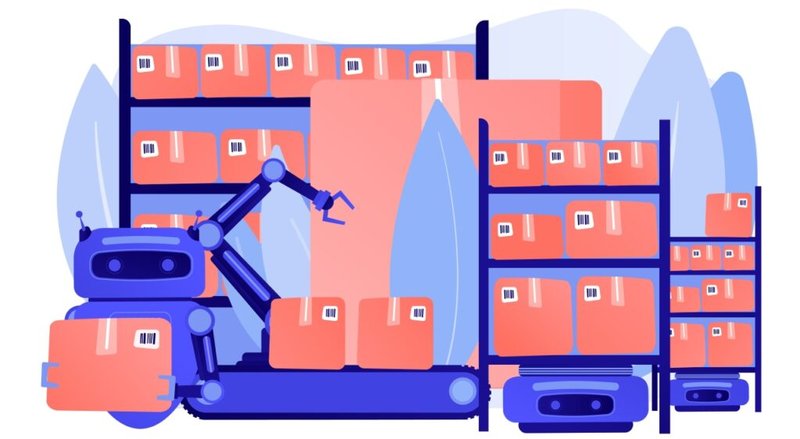
The chain of creation of goods: the way from the extraction of raw materials to the store shelf
Below is a typical chain of goods processing:
1. Raw material extraction and collection
Oil is extracted, grain is harvested, wood is harvested.
2. Primary processing
- ore crushing,
- grain drying,
- leaning,
- oil refining.
This is the transition from raw materials to basic semi-finished products.
3. Deep recycling
- The metal turns into a rental,
- grain to flour,
- milk in the cheese mass,
- Oil into plastics and fuel.
This creates the bulk of the added value.
4. Manufacture of finished products
Semi-finished product
- flour → bread → packaging;
- steel → car body;
- polymers are household appliances.
5. Distribution and logistics
Factory → warehouse → distributor → retail.
6. Sale to the final consumer
The product appears on the shelf of the store or in the online store.
This chain can include dozens of participants and hundreds of logistics operations.
Why Product Classification by Processing Level Is Important
For the economy
Countries with a predominance of commodity exports lose on value added.
Countries that produce finished goods benefit.
For logistics.
The supply routes of raw materials and finished products vary greatly:
- raw materials are transported in large volumes,
- Finished products require more precise and expensive logistics.
For pricing
Each step increases the cost of goods:
raw materials → semi-finished product → finished product.
For production planning
Understanding processing levels helps build optimal supply chains.
For international trade
The classification is used in:
- customs codes,
- tariffs,
- export regimes.
Examples of value chains
1. Grain chain
Grain → flour → bread → packaging → logistics → shop.
2. metallurgical
Ore → cast iron → steel → rental → details → car.
3. Petrochemical chain
Oil → fractions → plastics → components → electronics.
Each chain creates thousands of jobs and an entire industry.
Classification of goods by degree of processing is a fundamental tool for analyzing the economy, logistics and industry. Raw materials, semi-finished products and finished products Three key categories that form the entire commodity system of the modern world.
Understanding these levels helps:
- Analyze value chains,
- Building effective production processes,
- optimize logistics,
- Improve the competitiveness of business and the country.