Classification of goods by origin: natural and processed

When we talk about products, most often we talk about price, brand or country of production. Much less attention is paid to the origin of the product, although it is this factor that underlies its economic logic. Natural goods and processed goods - It's not just different categories in the textbook, it's different value chains, different approaches to pricing, and different roles in economics.
Understanding the classification of goods by origin is not only important for theory. It directly affects trade, logistics, marketing and business strategy.
What does "origin of goods" mean?
Origin of the goods - This is not geography, but the degree of human intervention in the creation of a product. It is a question of whether the product appears as a result of natural processes of nature or whether it is formed through industrial and technological processing.
It is on this basis that goods are conditionally divided into two large groups: natural and processed. This boundary is not always obvious, but it determines the economic role of the product.
Natural products: a product of nature with minimal intervention
Natural products - These are products derived directly from nature and used with minimal processing. Such goods are based on natural resources: agriculture, mining, forestry, fisheries.
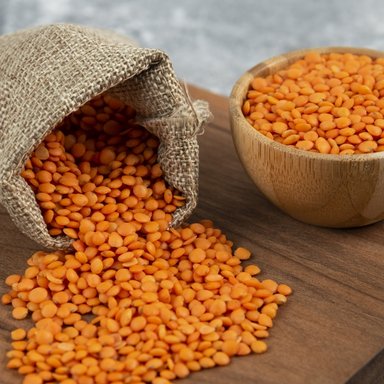
Grain, raw milk, vegetables, fruits, wood, fish, oil ore - These are all examples of natural products. A person can collect, clean, sort or cool such products, but their essence does not change. They remain what they were in nature.
The economic feature of natural goods is a high dependence on external factors. Yields, climate, seasonality, logistics and storage directly affect volumes and price. The added value at this stage is usually low, so competition is built around scale, efficiency and access to resources.
Processed Goods: Value Added and the Economics of Production
Processed goods appear where natural raw materials undergo technological transformation. Grain becomes flour, milk - cheese or yogurt, oil - fuel and plastic, wood - furniture or building materials.
Industry, technology, equipment and human labor are already working here. Each process adds value, and with it - New business opportunities. It is processed goods that often become the basis of exports, brands and sustainable market positions.
Recycling reduces dependence on seasonality, simplifies storage and expands the geography of sales. But at the same time it requires investments, competencies and stable supply of raw materials.
Where is the boundary between natural and processed
In practice, this line is rarely clear. For example, chilled meat or washed vegetables are still considered natural goods, although they cannot be sold without processing. On the other hand, flour or vegetable oil is already uniquely recycled, even if the process seems simple.
Economically important is not the name, but the level of added value. The deeper the processing, the higher the role of technology and the less dependence on natural factors.

Why Classification by Origin Is Important for Business
For a business, the origin of a product determines almost everything from cost structure to sales strategy. Natural products require efficient logistics, storage and turnover. Here the volume, speed and minimization of losses are critical.
Processed goods, on the contrary, allow you to compete not only in price, but also in quality, brand, service and uniqueness of the product. It is in processing that opportunities for differentiation and long-term customer loyalty emerge.
In addition, classification by origin affects taxation, government support and regulation. In many countries, including Russia, processing is stimulated as a source of economic growth and jobs.
Role of processing in the economy and trade
Countries that remain exporters of natural raw materials almost always face growth constraints. The main profit is formed where raw materials are converted into a product with high added value.
That is why processing is considered as a strategic direction of development. It allows you to retain income at home, create sustainable supply chains and reduce dependence on fluctuations in world commodity prices.
Natural doesn't always mean better.
It is important to note that the natural origin of the product does not automatically make it more valuable or quality. From an economic and business perspective, a processed product is often more stable, predictable and profitable.
Naturality. - It is a feature, not a universal advantage. It all depends on the market, the consumer and the business objectives.
Classification of goods by origin - It is neither a formality nor an abstract theory. It helps to understand how the value of the product is formed, where risks arise and where the business can grow.
Natural products - It is the basis of the economy, raw materials and resources. Processed goods- This is development, technology and added value. Understanding the difference between them allows you to build more meaningful strategies in trade, production and logistics.
If a product is correctly understood from the point of view of origin, it is much easier to find its place in the economic chain. - from the field or field to the final buyer.