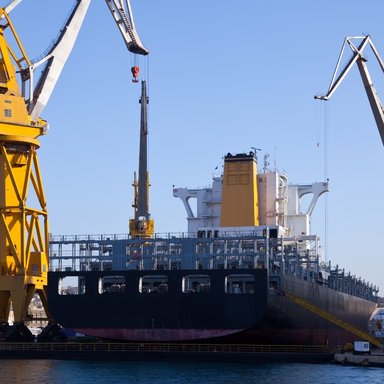
The fall in exports and imports of Russia: what is really happening

The decline in exports and imports in Russia is increasingly presented as a temporary phenomenon: seasonality, restructuring of routes, adaptation to new conditions. In practice, we observe steady-stateIt affects not only trade, but also logistics, production and domestic demand.
Not individual directions falling The volume of transportation and purchases is reduced. And this is an important signal: the market is not just changing routes, it is shrinking.
What is falling: figures and facts without emotions
The decrease is noticeable at several levels:
- Container traffic decreases
- Imports of industrial equipment decrease
- Exports of products with high added value fall
- trade slows down in non-commodity segments
Especially significant is the decline not in money, but in physical. When the number of tons and containers transported decreases, this does not mean a revaluation of prices, but a real contraction of the economy.
Reason 1. Weakening of internal and external demand
Key factor demand. The domestic market faces limited purchasing power. Business is cautious, investment decisions are delayed, procurement is optimized. Imports are increasingly taken “at a minimum”, under a specific contract, without inventory.
External demand is also changing. Russian products, especially non-resource products, are losing competitiveness in some markets due to logistics, calculations and political risks. Even where there are no formal bans, contractors prefer alternative suppliers.
Reason 2. Logistics has become longer, more expensive and less predictable.
Logistical restructuring - It's not just about changing routes. New chains are longer, more expensive and require more intermediate operations. Each additional transshipment, intermediary or transit country increases the cost and timing.
As a result, some transactions become economically meaningless. The goods can be transported physically, but Its price at the exit stops satisfying the market. This directly affects the volume of traffic, especially in segments with low margins.
Reason 3. Currency Factors and Calculation Uncertainty
Fluctuations in the course and the complexity of international calculations increase the compression effect. It is difficult for businesses to plan purchases and exports when:
- Currency conditions change faster than contract cycles
- calculations go through complex schemes
- Increased risk of blockages and delays
In this environment, companies choose caution. Less volume - less risk. This directly affects import and export statistics.
Reason 4. Restrictions and regulatory barriers
Restrictions don’t just work in the form of outright bans. A much stronger influence:
- certification
- check-up
- informal restrictions by counterparties
- growth of compliance requirements
Even if the product is formally allowed, its maintenance becomes more expensive and difficult. Part of the business is simply abandoning deals that used to be routine.
Why the market won’t bounce on its own
A common expectation - The market will adapt and volumes will return. The problem is, Structural conditions for growth have disappeared. Demand remains limited, logistics expensive and risks high.
In addition, the business has already rebuilt to smaller volumes:
- reduced procurement
- optimized warehouses
- downturn
Once the system has learned to work in compression mode, it has no internal incentive to quickly return to its previous scale.
Implications for the economy and business
Reduced imports limit the upgrading of equipment and technology. The fall in exports narrows foreign exchange earnings and production load. In logistics, turnover decreases, which puts pressure on tariffs and carrier margins.
It shapes everything. circularity: less trade - less - less economic activity.
What this means for market participants
For business, the key is not growth, but survival and efficiency. Companies:
- working with smaller parties
- shorten
- Choose the most sustainable directions
Imports and exports cease to be mass and become point, project.
Falling exports and imports of Russia - This is not a temporary anomaly or an adaptation period effect. It's factorThey are simultaneously putting pressure on demand, logistics, settlements and the regulatory environment.
The market didn't crash, but it did. flattened.
And wait for the automatic "rebound" - It means not understanding the nature of change.
The economy will continue to work, but in other volumes and under different rules.