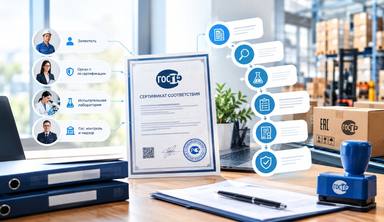
International grain supply: how to check the lot and elevator before shipment
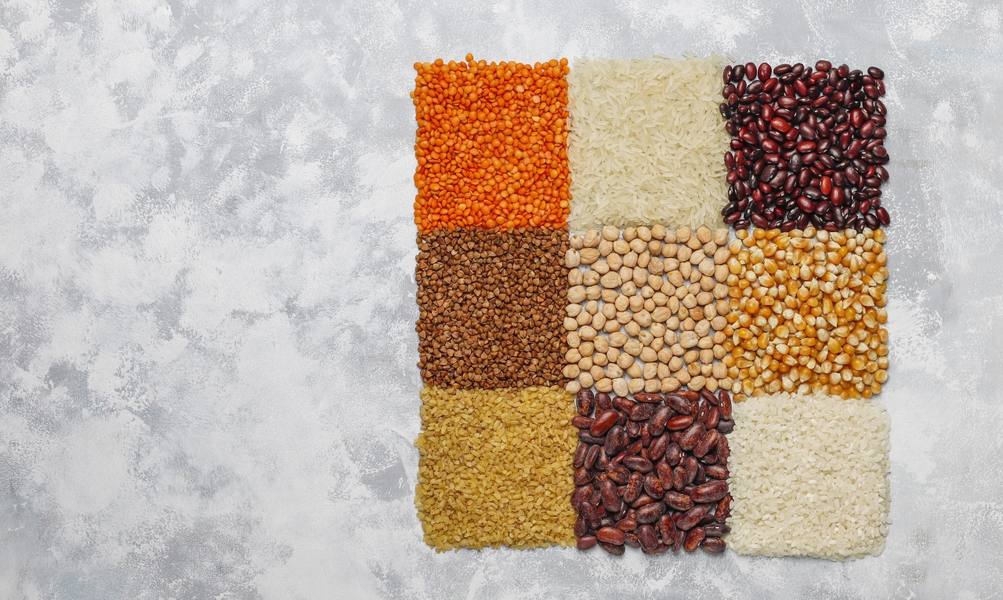
Can a particular batch go all the way from an elevator to a foreign buyer without stopping?
Why good grain is not enough to successfully send a shipment abroad
In international grain trade, one of the most expensive mistakes is to estimate future supply only by the price of a ton and basic quality indicators.
In practice, the question is different:
Can a particular batch go all the way from the elevator to the foreign buyer without stopping at one of the control stages?
Grain can correspond to commercial parameters, suit the buyer at a price and at the same time create a problem at the stage of analysis, phytosanitary control, container preparation or paperwork.
This is especially important when supplying countries with their own phytosanitary requirements. The Rosselkhoznadzor separately publishes information on the requirements of destination countries, including China.
Therefore, a reliable scheme begins. not from loading or even from signing a contractAnd with three things checked:
- quality and condition of grain;
- elevator capabilities;
- requirements of the country of destination.
And only then it makes sense to collect the supply in a single logistics chain.
Step 1. First we check not the grain, but the ability to ship it.
The first thing you need to get from an elevator is the most detailed information about the lot and its storage conditions.
Because the same number in the lab protocol doesn't always mean the same commercial risk.
What to look at
Quality of acceptance and storage
Minimum set of questions:
- How much grain is cleaned of impurities;
- What is the humidity during acceptance and storage;
- What is the content of weed and grain impurities;
- Are there signs of infection by pests?
- whether castor, protein and nature are controlled - depending on the culture and requirements of the buyer;
- How to control the state of the party during storage.
Special attention - humidity.
For grain, this is not just a laboratory indicator. Humidity affects the safety of the lot and the risk of deterioration of its condition during storage.
The same applies to contamination: the presence of insects, fungi or mold can turn a conventional shipment into a problem already at the stage of phytosanitary control.
Step 2. Check the technological readiness of the elevator
Even if the grain is suitable for quality, you need to understand, How the elevator can prepare and ship this batch.
There are already technological indicators:
- acceptance performance;
- performance of drying and cleaning;
- Possible losses during storage and processing;
- availability of automated control;
- Temperature monitoring systems;
- humidity control;
- ventilation.
This is especially important for large volumes.
For example, if the elevator is technically able to receive and store the desired volume, but cannot dry or clean the lot quickly enough, the delivery time begins to depend not on the contract, but on the technological capacity of the object.
Separately evaluate the infrastructure
Before the transaction, it is useful to find out:
How much grain the elevator can actually accept, where it will be stored and how it will be shipped.
Checking:
- capacity of warehouses and silos;
- condition of the equipment;
- the need for modernization;
- reliability of power supply;
- availability and efficiency of ventilation;
- The ability to organize the desired method of loading.
It seems like a technical part of the deal, but that’s where the gap often arises. "Elevator says he can." and The elevator can actually deliver on time..
Step 3. We send an independent expert before the contract.
This is one of the key elements of the whole scheme.
It is not necessary to make a decision only on the basis of information provided by the elevator itself.
If the supply is large or the buyer's requirements are stringent, it is reasonable to engage an independent expert who will check:
- grain condition;
- actual quality;
- compliance with the declared indicators;
- storage conditions;
- readiness of the party for further shipment;
- sampling procedure.
The task of the expert here is not just to say “good grain”.
His task is to answer a much more important question:
Does a particular party meet the parameters on which an international deal will be based?
Step 4. Do not confuse commercial analysis and official sampling
This is a crucial point.
Contractors may conduct their own quality checks in advance, but Official procedures related to phytosanitary certification cannot be replaced by internal laboratory analysis..
At the same time, sampling is not a formality.
GOST 13586.3-2015 establishes rules for grain acceptance, methods of sampling and forming samples. In particular, the standard describes point, combined and medium samples and provides for different methods of selection depending on where the grain is located – in the car, warehouse, silo, during loading, etc.
That is why the principle:
Let’s take one sample from above and check it out.
It is not enough for a serious delivery.
The representativeness of the sample is no less important than the result of the laboratory analysis.
It's not a handful of grain that's being checked. Check the batch - through a properly formed sample.
Step 5. Requirements of the destination country are determined before the purchase of grain
This is perhaps the main principle of the whole scheme.
You can't buy grain first and then find out. What indicators will be required by the destination country.
The correct sequence is inverse:
destination country → requirements → party specification → grain search → elevator inspection → deal.
Different countries may have different requirements:
- quarantine facilities;
- pests;
- weeds;
- pesticide residues;
- Mycotoxins;
- GMOs;
- humidity
- contamination;
- permissible pollutants;
- processing methods.
The Rosselkhoznadzor maintains separate sections with the requirements of countries when importing and exporting products; for China, for example, a separate block of phytosanitary requirements is provided.
Why this is critical
For example, the Russian party fully corresponds to the usual indicators for the seller.
But if the Chinese side imposes more stringent requirements on a specific quarantine facility or provides for a certain method of processing, a commercially “good” batch may turn out to be a good one. inappropriate for a particular export contract.
Therefore, the buyer’s specification should become a working document of the entire chain.
Step 6. After the coincidence of parameters, we fix the relationship between the parties
When it is clear that:
- batch fits;
- elevator fits.
- the requirements of the country of destination are complied with;
- Logistics calculated.
You can move on to the contractual part.
The scheme includes two contracts:
China - supplier
China - elevator
This design allows for the separation of commercial and operational obligations.
But here it is important not to limit only the subject of the contract and the price.
In the documents it is desirable to record in advance:
- accurate quality indicators;
- allowable deviations;
- sampling procedure;
- laboratory and procedure for the analysis;
- Packaging/container requirements;
- the procedure for processing the container;
- party papers;
- requirements for phytosanitary control;
- liability for non-compliance;
- the procedure for discrepancies in results.
The more accurately the specification is written before shipment, the less space there is for a dispute after it.
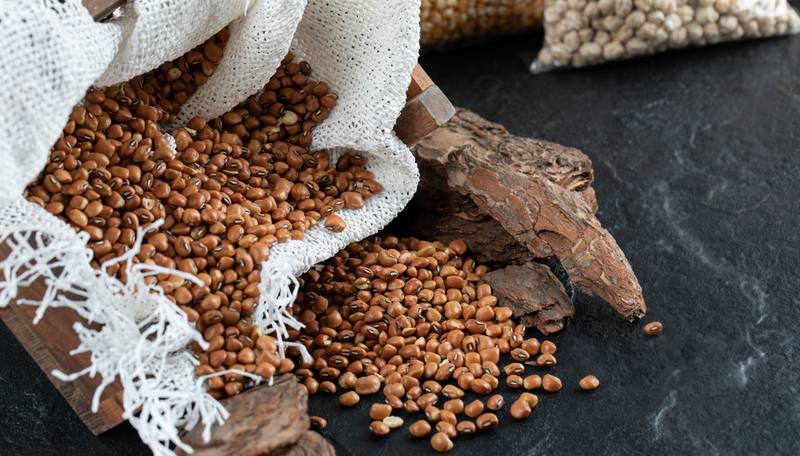
Step 7. Container - It's also part of the quality of delivery.
The schema separates the question:
Do I need to process the container before loading the grain?
The answer depends on the specific delivery and the requirements of the destination country, but for an export operation, a container cannot be treated simply as an "empty grain box."
It is necessary to check:
- cleanliness of the container;
- absence of residues of previous cargoes;
- the need for fumigation or disinsection;
- the requirements of the destination country for processing;
- the need for a sanitary passport or other supporting document;
- Preparation of the container.
This is especially important when supplying countries with strict phytosanitary requirements.
Container handling should be built into the process before loading, rather than being recalled at the last minute.
Step 8. Phytosanitary certificate - the final part of the system, not the formality
For the export of quarantine products, phytosanitary requirements must be taken into account in advance.
The Rosselkhoznadzor provides for a state service for issuing a phytosanitary certificate; the relevant administrative regulations were approved by the order of the Rosselkhoznadzor No. 1287 of October 22, 2020.
At the same time, the specific procedure depends on the product, the country of destination and the applicable requirements.
Therefore, it is important to find out in advance:
At what stage will the participation of the Rosselkhoznadzor be required, when sampling is carried out and what documents should be ready by this time.
The scheme separately noted the need to apply in advance through the Argus-Fito system.
The practical meaning here is simple:
Do not bring the organization of phytosanitary control to the moment when the grain is already under loading.
Time for approval and control should be set in the delivery schedule in advance.
What is checked by the party itself
When preparing international supplies, it is not enough to have one indicator of “grain quality”.
It is more convenient to divide control into several blocks.
1. Physical indicators
- humidity
- nature;
- weed impurity;
- grain admixture;
- contamination;
- The presence of damaged grain.
2. Security
Depending on the culture and requirements of the destination countries, it may be important:
- pesticide residues;
- Mycotoxins;
- toxic elements;
- GMOs;
- Other controlled pollutants.
3. Phytosanitary risks
The presence of quarantine organisms and other objects that may be critical for the importing country is checked.
And here it is especially important to remember:
The list of controlled objects cannot be compiled from memory.
It should be tailored to a specific destination country and culture.
Why you can’t just do a check at the end
Imagine a standard situation.
The company found a good grain.
The price is fine.
The elevator is ready to ship.
The contract is almost signed.
Only then does it become clear that:
- Additional analysis is required;
- the specific indicator does not meet the requirements of the buyer;
- processing is necessary;
- The container needs to be prepared differently.
- an additional document is required for registration;
- Sampling times do not coincide with the loading schedule.
What happens next?
There are simple, load transfer, additional costs, logistics changes and negotiations with the buyer.
This is why the control should be built as a sequence, not as a final check before sending.
What the correct sequence looks like
If you combine the whole scheme into one working logic, you get:
- Determine the requirements of the buyer and destination countries
- Form the specification of grain
- Choose an elevator and check its capabilities
- Check the actual quality of the party
- Involve an independent expert
- Verify the results with the requirements of the buyer
- Fixing parameters in contracts
- We specify in advance the procedure of phytosanitary control
- Preparing containers and documents
- We carry out the necessary sampling and analysis
- Submerge, declare and ship
What a grain agent should control
If there is an agent or organizer of the delivery between a foreign buyer and a Russian elevator, its value is precisely that. not only in the search for grain.
A good agent manages the whole bunch:
buyer → requirements → grain → elevator → laboratory → Rosselkhoznadzor → container → documents → logistics.
It is at the joints between these participants that most of the operational risks arise.
Therefore, it is useful for an agent to have his own. checklistIt is not just about writing and individual files.
Checklist before conclusion of the transaction
Before confirming the game, it is worth answering at least the following questions:
The grain.
- The actual figures of the party are known.
- Understand the humidity, nature and impurities.
- Checked for infection.
- Necessary laboratory tests have been identified.
- The results are compared with the requirements of the destination country.
Elevator.
- Capacity checked.
- Equipment status checked.
- Understand the performance of cleaning and drying.
- It is possible to provide the necessary shipping schedule.
- Control of temperature, humidity and grain condition is organized.
Documents
- Specification agreed.
- Contractual parties have been identified.
- Sampling procedures have been determined.
- It is clear what documents are needed for delivery.
- The procedure for issuing a phytosanitary certificate has been checked.
By container.
- The container is clean.
- Remains of previous cargo are excluded.
- The need for processing has been verified.
- The necessary documents for container preparation have been determined.
Country of destination
- Current requirements have been verified.
- The list of quarantine objects is known.
- Tolerable levels of pollutants are defined.
- The processing requirements are clear.
- The requirements of the buyer are reflected in the contract specification.
Mainstream
The international grain supply is not a chain of two operations. "Buyed, shipped.".
This is a system in which the quality of grain, the capabilities of the elevator, the requirements of a foreign buyer, phytosanitary control, container preparation and documents must coincide. before the actual shipment.
The most reliable strategy is to move risk control as close as possible to the beginning of the transaction.
First, the requirements of the country and the buyer.
Then the spec.
Then the grain and the elevator.
And only after that. - contract, container, loading and dispatch.
This allows the problem to be detected when it can still be corrected, not when the party is already on the border or on the way.
Important statutory clause
For practical work with a specific delivery, this article cannot be used as a substitute for checking the current requirements of the destination country and current regulatory documents.
In particular, GOST 13586.3-83 has already been replaced by GOST 13586.3-2015Sampling procedures should therefore focus on current regulatory requirements for a particular operation.
Export requirements may also vary by country and product type, so they must be checked separately before each shipment. Rosselkhoznadzor publishes relevant information on export areas.
Template of technical specification of grain for international contract