How to properly organize a warehouse from scratch: a practical guide to launching an effective warehouse system

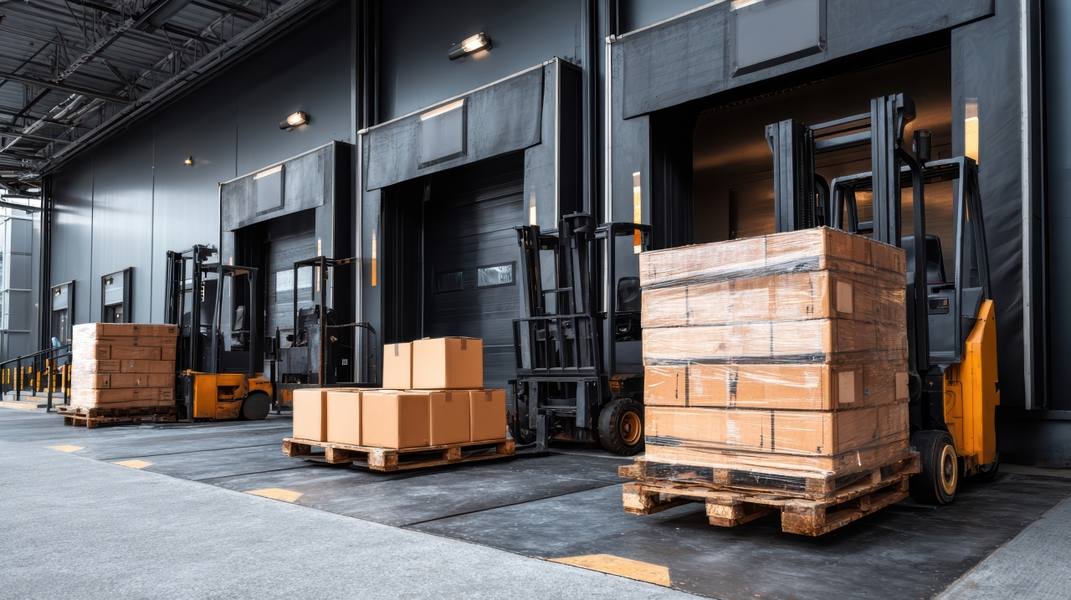
An effective warehouse is not expensive racks, not modern equipment and not a large room.
For many entrepreneurs, a warehouse is just a room where goods are stored. But in practice, it is the warehouse that often becomes the source of the most expensive business mistakes.
Lost goods, reclassification, constant shortages, long assemblies of orders, idle employees, unhappy customers – all this is almost always associated not with people, but with improperly built processes.
The good news is that an effective warehouse does not appear by accident. It can be designed in advance.
If you properly organize the work before the launch, the warehouse will become not an expense, but a tool that accelerates sales, reduces costs and helps the business to scale.
Let’s take a step-by-step look at how to build a warehouse system that really works.
Step 1. Start not with shelving, but with processes.
The main mistake of most companies is to first rent a room, arrange racks, and only then think how everything will work.
The correct sequence looks the opposite.
First, you need to describe the entire path of the product:
- from the supplier;
- before acceptance;
- accommodation;
- storage;
- configuration;
- packaging;
- shipment;
- return.
If the process is not described on paper, employees will invent it themselves.
And everyone will do it in their own way.
Step 2. Calculate the future load
Before launching, it is important to understand the real volumes.
Answer a few questions:
- How much SKU will be stored?
- What's the average balance?
- How many deliveries come daily?
- How many orders are collected per day?
- Is there seasonality?
- How fast is the range growing?
Very often, entrepreneurs design a warehouse for today, and after six months it turns out that there is no space.
It is better to immediately provide a reserve of at least 25-30%.
Step 3. Correctly divide the warehouse into zones
In a good warehouse, the goods do not lie chaotic.
It follows a strictly defined route.
The minimum set of zones looks like this:
- acceptance
- quarantine (goods without inspection)
- quality control
- storage
- bulk-zone
- small-market
- placement
- configuration
- packaging
- expedition
- return
The less the flows of goods intersect, the faster the warehouse works.
Step 4. Consider an addressable storage system
The most expensive mistake is to store the goods “from memory”.
Any employee should find the right position without the help of colleagues.
Therefore, address storage is created.
For example:
A-03-05-02
where:
- A - row;
- 3 - section;
- 05 - level;
- 02 to place.
This principle is used by almost all modern logistics complexes of the world.
Step 5. Place the goods on the principle of ABC
Not all products are sold equally.
Generally:
Group A
20% of goods account for about 80% of all shipments.
They should be as close to the complete area as possible.
Group B
Average turnover.
Stored a little further.
Group C
Rare sales.
Such positions can be placed on the upper levels or in distant sections.
Proper placement reduces order assembly time sometimes by half.
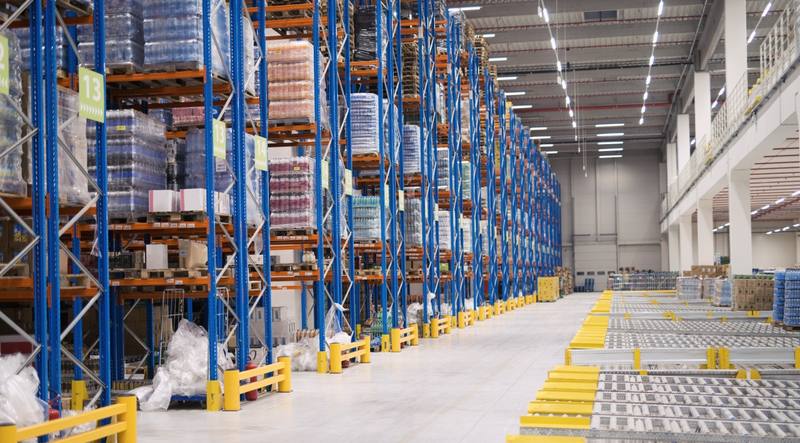
Step 6. Set up acceptance.
Most of the mistakes appear here.
When receiving goods, it is necessary to check:
- quantity;
- quality;
- documents;
- marking;
- packaging;
- serial numbers;
- expiration date.
Only after inspection the goods are stored.
Never place the goods immediately after unloading.
Step 7. Automate accounting
Excel is only suitable for the smallest warehouses.
With the growth of the business, you will need WMS (Warehouse Management System).
It allows:
- See the remains online;
- manage address storage;
- supervise employees;
- build the routes of the recruiters;
- carry out an inventory;
- track errors.
Automation pays off much faster than most entrepreneurs expect.
Step 8. Describe the regulations
Even a perfect system doesn’t work without rules.
Instructions for each operation are required:
- acceptance;
- accommodation;
- selection of goods;
- packaging;
- shipment;
- returns;
- recounting;
- inventory.
When the process is described, the new employee begins to work much faster.
Step 9. Minimize unnecessary movements
In most warehouses, employees walk tens of miles every day.
Each additional movement is a waste of time.
See how the employee is moving:
Supplier → acceptance → storage → configuration → packaging → expedition.
If the routes intersect or you have to constantly return, the layout must be changed.
Modern warehouses are designed so that the goods move only forward.
Step 10. Organize a control system
You cannot control what cannot be measured.
Key warehouse indicators:
- speed
- speed
- error
- percentage
- returns
- time-search
- turnover
- footprint
These indicators allow you to quickly see the weaknesses.
Frequent errors when starting a warehouse
Practice shows that most problems arise from the same causes.
The most common mistakes are:
- lack of address storage;
- Storage "as it happens";
- absence of a quarantine zone;
- acceptance without verification;
- too wide passages;
- incorrect height of shelving;
- lack of marking;
- manual accounting;
- lack of regulations;
- Inventory only “when a problem occurs.”
Almost all of them lead to loss of money.
What to Automate in the First Place
You don’t have to buy expensive equipment right away.
The maximum effect is usually given by:
- data collection terminals;
- barcoding;
- QR markings;
- mobile workplaces;
- electronic assignments to employees;
- automatic printing of documents;
- Online residue control.
Even small automation reduces the number of errors.
How to understand that the warehouse is working effectively
A good warehouse is almost invisible to business.
The goods are fast.
Mistakes are becoming minimal.
Customers receive orders on time.
The inventory goes without panic.
The manager knows the real remains at any time.
And employees work according to clear rules, not “as usual”.
This is what a warehouse looks like to help a business make money.
Outcomes
An effective warehouse is not expensive racks, not modern equipment and not a large room.
First of all, it is a well-organized system.
The sooner a company begins to design processes, implement addressable storage, automate accounting and describe regulations, the easier it will be to scale without loss, chaos and constant arrears.
Modern logistics shows a simple pattern: not those companies that have the largest warehouse win, but those that have it organized most efficiently. That is why a competent start-up of a warehouse is an investment that begins to pay off from the first months of work.