How to classify goods and cargoes: a professional system for logistics, foreign trade and commodity flow management
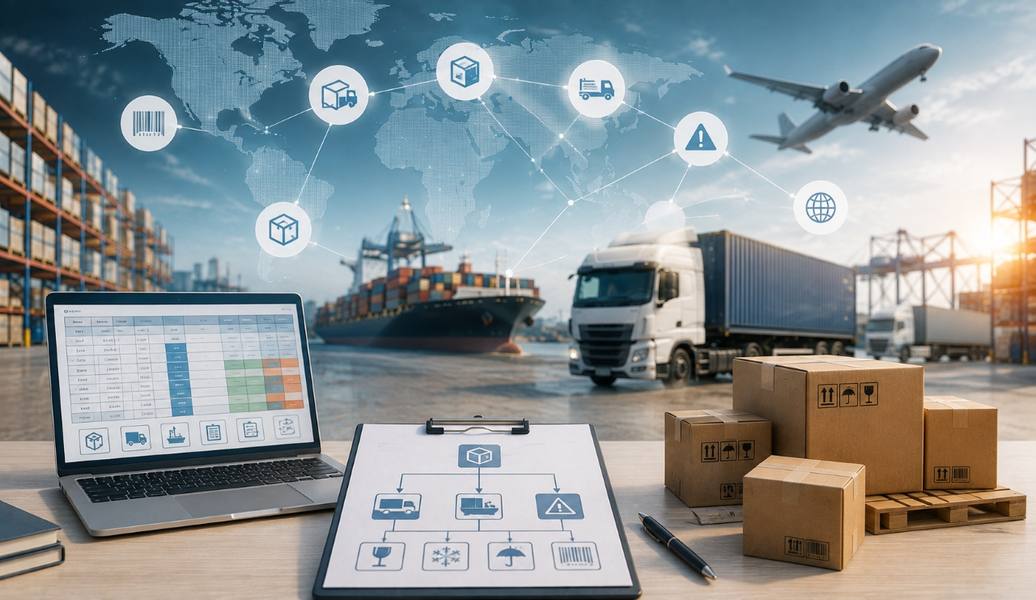
What exactly do we transport and what properties of this product will affect the entire supply chain?
In logistics, foreign trade, procurement and management of commodity flows, the word “cargo” often sounds too simplistic.
If you have a product, you need to move it from point A to point B.
In practice, this is where one of the most difficult management tasks begins.
The same object can be described simultaneously as:
- raw materials;
- industrial equipment;
- consumer goods;
- goods of short-term use;
- products of plant origin;
- dangerous goods;
- goods of a certain HS code;
- an object requiring special packaging, temperature or permits.
And all these characteristics can be true at the same time.
Therefore, professional work with goods does not begin with the choice of transport and not even with the calculation of the rate. It begins with an answer to the fundamental question:
What exactly do we transport and what properties of this product will affect the entire supply chain?
Below is a systematic model of classification of goods and goods, which allows you to look at products not from one side, but through several professional filters: scope, purpose, degree of processing, duration of use, origin, composition and customs classification.
It is this approach that turns a chaotic list of “cargo types” into a working decision-making system.
Goods. - It's not just a load.
For a warehouse, goods can be a storage unit.
For the buyer - the object of delivery.
For sales, it's a product.
For a customs specialist - a commodity position with a certain code HS.
For the logistician – the object of transportation with specific physical, technical and legal characteristics.
This is why professional classification should be multidimensional.
The mistake of many companies is that they try to define a product with one characteristic.
For example: "We are carrying equipment."
But the word "equipment" can hide dozens of fundamentally different logistics scenarios.
The equipment may be:
- compact or oversized;
- new or used;
- complete or consisting of several parts;
- requiring disassembly;
- sensitive to temperature;
- containing batteries;
- requiring special certification;
- supplied as a single product or as a set of components.
And in each case, it changes:
- route;
- type of transport;
- packaging;
- anchorage requirements;
- insurance;
- customs clearance;
- documents;
- deadlines;
- cost of transportation;
- risks.
Therefore, the correct wording looks different:
To properly organize transportation, the goods must be classified according to several parameters.
Six levels of professional classification of goods
The presented system allows you to consider any goods or cargo in several directions at once:
- Scope of application
- By appointment
- Degree of processing
- Duration of use
- By origin
- By composition
A separate level above the entire system classificationIt connects goods with international trade, customs regulation and licensing requirements.
This can be described as a kind of “passport of goods”.
For example: Industrial pump
may be simultaneously:
- goods of production purpose;
- machinery or equipment;
- finished product;
- goods of long-term use;
- product of artificial origin;
- complex in composition;
- the object of a certain commodity position HS.
It is the combination of these characteristics that allows you to build a correct logistics model.
Classification by scope: where the product exists in the economy
The first level answers the question: In what area is this product used?
Four major areas can be identified within this model.
Production sector
These include:
- raw materials;
- semi-finished products;
- components;
- industrial goods;
- machines;
- equipment;
- manufacturing machinery.
These are goods that participate in the creation of other products or provide a production process.
For example, rolled metal, industrial machine and electronic component can be in completely different product groups, but from the point of view of economic function they belong to the production sector.
Construction sector
A separate direction that unites:
- construction materials;
- construction;
- engineering elements;
- finishing materials;
- construction equipment.
The peculiarity of construction cargo is the high dependence of logistics on physical characteristics.
This is particularly important:
- dimensions;
- weight
- fragility;
- method of stacking;
- requirements for protection from moisture;
- Possibility of transportation in large quantities.
Transport sector
This group includes:
- vehicles;
- spare parts;
- components;
- specialized machinery.
Such products often require separate analysis not only on physical parameters, but also on legal status.
For example, a car, engine, spare part and industrial battery may have completely different design and transportation requirements.
Medical field
These include:
- medical equipment;
- tools;
- consumables;
- specialized equipment;
- certain categories of products requiring special handling conditions.
For such products, it is important to:
- safety;
- packaging;
- documentation;
- certification;
- conditions of transportation.
Classification by purpose: why the product is needed
The next level is one of the most important.
He answers the question: For whom and for what purposes is the product intended?
There are three main directions.
Products
They are used for:
- production;
- recycling;
- creation of other products;
- ensuring technological processes.
Examples:
- industrial equipment;
- raw materials;
- components;
- machine tools;
- production lines.
Consumer goods
These are products intended for final use.
These include:
- food products;
- clothing;
- household appliances;
- cosmetics;
- household goods;
- children's goods;
- shoes.
From a logistics point of view, consumer goods often have a large range and require high precision management of the nomenclature.
One container may contain hundreds of SKUs, different from:
- size;
- color;
- composition;
- country of origin;
- cost;
- code HS.
That is why the error in the product description stage can scale to the entire delivery.
Investment goods
A separate category is goods that are purchased for long-term use in the company’s activities.
For example:
- production equipment;
- technological lines;
- specialized equipment;
- big cars.
Logistics becomes part of the investment project.
It is important to consider not only delivery, but also:
- production schedule;
- site readiness;
- Editing;
- delivery of components;
- sequence of arrival of equipment.
Classification by degree of processing: at what stage is the goods
This level is especially important for production chains.
There are four main groups.
Raw materials
These are materials that are used for further production.
For example:
- grain;
- metals;
- wood;
- chemical raw materials;
- mineral raw materials.
Raw materials are often transported in large quantities, so critical:
- the cost of a tonne-kilometer;
- Possibility of consolidation;
- type of transport;
- seasonality;
- Terminal infrastructure.
Semi-finished products
This is a product that has already undergone certain processing, but has not yet become a final product.
For example:
- metal blanks;
- textile materials;
- chemical components;
- elements for further assembly.
The peculiarity of semi-finished products is their deep dependence on the production schedule of the recipient.
Delayed delivery can stop the next stage of production.
Finished products
These are products ready for use or sale.
For example:
- household appliances;
- furniture;
- clothing;
- equipment;
- consumer goods.
Here, logistics directly affects the commercial outcome.
The finished product often already has:
- packaging;
- marking;
- the final cost;
- a specific buyer.
Damage or delay in this case means not just a transportation problem, but a potential loss of revenue.
Components
A separate category that requires special attention.
Components can be small in size and cost, but critical to the operation of the entire system.
A classic example: One small component can stop expensive equipment from running.
Therefore, the cost of cargo and its criticality for business are not the same.
Classification by duration of use
At first glance, this parameter may seem secondary to logistics.
In practice, it affects the entire supply economy.
Disposable goods
They are used once or have a very short life cycle.
Short-term use
This group includes products with a relatively fast consumption cycle.
For logistics, it is especially important:
- speed of rotation;
- demand forecasting;
- frequency of supply;
- warehouse remains.
Long-term use
These include:
- equipment;
- technique;
- furniture;
- vehicles;
- industrial products.
Such deliveries often require more careful preparation as the error can be costly and difficult to fix.
Reusable use
This category is particularly interesting in terms of modern logistics.
This may include:
- return packagings;
- containers;
- specialized packaging;
- equipment that moves between objects.
Here there is a separate task – not just deliver the object, but manage its life cycle.
Classification by origin
The origin of the product affects not only the marketing description of the product.
For FEA, this is one of the fundamental parameters.
Within the framework of the system, it is possible to distinguish:
Products of plant origin
For example:
- grain;
- vegetables;
- fruit;
- wood;
- vegetable raw materials.
For such goods may be important:
- seasonality;
- phytosanitary requirements;
- storage conditions;
- humidity
- temperature control.
Goods of animal origin
There may be special requirements for:
- veterinary control;
- temperature;
- documents;
- storage conditions.
Mineral origin
For example:
- ores;
- minerals;
- petroleum products;
- raw materials.
Such cargoes are often characterized by large volumes and high dependence on infrastructure.
Artificial origin
This category includes a huge array of modern industrial products.
Mixed origin
A particularly complex group.
Modern goods can consist of:
- natural materials;
- synthetic components;
- metals;
- electronics;
- chemical elements.
And it is the composition that later becomes important for the correct classification.
Classification by composition
The last level answers the question: How complex is a commodity as a physical object?
It can be distinguished:
Homogeneous goods
Consisting mainly of one material or substance.
Complex goods
Containing several components.
For example:
- electronics;
- household appliances;
- equipment;
- furniture;
- combined products.
Integrated goods
This is not just a product of several materials, but a system of interrelated components.
For example:
- production line;
- technological complex;
- set of equipment;
- automation system.
It is particularly important to define:
- whether the goods are transported as a single object;
- Is it supplied in parts?
- Whether each component has its own product classification;
- How will the installation take place?
Goods containing hazardous components
This is a separate level of responsibility.
Even if the product itself looks like a regular consumer product, individual components can affect shipping requirements.
For example:
- lithium batteries;
- chemicals;
- aerosols;
- flammable components.
That is why the description of “normal goods” for professional logistics is not enough.
HS: a system that links goods, logistics and customs
Above all this classification is the system of commodity codes HS.
It allows you to determine the place of goods in a single commodity nomenclature.
Simplified product sections can be viewed through large blocks:
- products of animal origin;
- products of plant origin;
- fats and oils;
- prepared food products;
- mineral products;
- products of the chemical industry;
- plastics and rubber;
- leather, fur and articles;
- wood and its products;
- paper and printing products;
- textiles and textile products;
- shoes and headgear;
- products of stone, ceramics and glass;
- Precious metals and products;
- base metals;
- machinery and equipment;
- vehicles;
- optical and medical devices;
- other industrial products.
But it's important to understand:
Code TN VED - It's not just a set of numbers that you need to put in a declaration.
It may depend on:
- rate of customs duty;
- VAT;
- the need for certification;
- permits;
- non-tariff regulation measures;
- marking requirements;
- statistical accounting;
- restrictions on import or export.
Therefore, the classification of goods must occur before it is already in transit.
The Biggest Mistake of Business: Buy First, Then Deal
A very common scenario looks like this:
- The company is finding a supplier.
- Negotiating the goods.
- Pays for production.
- Goods ready.
- Only then does the question begin: "How do you get it right now?"
This is where the problems come in.
It turns out that:
- the goods require certification;
- The HS code was different.
- the rate of duty higher than expected;
- packaging is not suitable for the selected transport;
- the goods contain components that require special conditions of carriage;
- the consignment is not placed in the planned container;
- Supplier documents are not sufficient for registration.
The professional approach works in the opposite direction.
First, a delivery passport is formed.
And only after that is chosen:
- supplier;
- terms of the contract;
- route;
- transport;
- packaging;
- terminal;
- customs clearance scheme.
Practical model: how to classify any product before shipping
It is useful to go through eight questions before delivery.
1. What is this product?
The most accurate commercial and technical description.
2. What is it used for?
Production, final consumption, investment project, resale.
3. What stage of processing is it in?
Raw materials, semi-finished, finished product, component.
4. What is it made of?
One material, several components, complex equipment, dangerous elements.
5. What are his physical characteristics?
- weight
- dimensions;
- density;
- fragility;
- temperature sensitivity;
- Stackability.
6. Are there special transportation requirements?
- temperature conditions;
- protection against moisture;
- special attachment;
- hazardous properties;
- special packaging.
7. What HS code is applicable?
This is where much of the future customs and regulatory requirements are determined.
8. What logistics model does the product require?
After passing the previous stages, you can already professionally choose:
- car;
- railway;
- sea;
- aviation;
- a multimodal scheme;
- Container or specialized transportation.
Why this is so important for international logistics
In one country, errors in product description can sometimes be corrected relatively quickly.
In the international chain, the cost of error is much higher.
The product passes through many participants:
- producer;
- exporter;
- carrier;
- terminal;
- freight forwarder;
- customs representative;
- importer;
- warehouse
- the final recipient.
And if at the start different participants understand, what exactly is being transportedThe problem begins to spread throughout the chain.
One incorrectly described product can lead to:
- delay at the border;
- additional costs;
- adjustment of documents;
- idle transport;
- storage at the terminal;
- recalculation of customs payments;
- disruption of the production schedule.
Therefore, modern logistics is not just transport management.
This is product information management.
The information should be accurate before the cargo starts moving.
Classification of goods - risk classification
The most valuable thing about such a system is that it allows you to see the risks in advance.
For example, goods are classified as:
- equipment;
- investment goods;
- finished product;
- long-term use;
- complex composition;
- containing electronic components.
Already at this stage, a list of control issues can be formed.
We need to check.
- whether certification is required;
- Is it possible to transport the goods in assembled form;
- What dimensions?
- Whether special attachment is required;
- how individual components are classified;
- Are there batteries?
- Are there any restrictions on the country of origin?
- What documents should the manufacturer provide?
Thus, classification becomes a tool. Risk management prior to shipment.
The future of logistics - not just transport, but understand the goods
The market is gradually moving away from a universal approach: "We transport everything."
Professional logistics is becoming more specialized.
Transporting food and industrial equipment are different competencies.
Working with chemical raw materials and textiles are different processes.
Organize the supply of construction materials and high-precision equipment - different risk management systems.
And the more complex international supply chains are, the greater the value of a company that understands more than just the route.
And commodity.
His:
- appointment;
- origin;
- composition;
- physical properties;
- degree of processing;
- term of use;
- place in the HS system;
- Document requirements;
- potential risks.
Bottom Line: A Good Logistics Project Starts with the Right Classification
The product cannot be professionally described in one word.
“Equipment”, “products”, “chemistry” or “building materials” are too broad a definition to effectively manage international supply.
Proper work begins with multi-layer classification.
The scope of application.
As intended.
The degree of processing.
Duration of use.
By birth.
Composition.
According to HS.
Only then will it be possible to build a truly efficient logistics.
The route is not just between Russia and another country.
The route is selected for a specific product.
Under his properties.
At his risk.
Under his economy.
His papers.
The time in which it should be at the end point.
In professional logistics, one of the most important questions is not: "Where do I have to deliver the cargo?"
And much earlier: "What exactly are we carrying?"
Because the more accurately a company understands its product, the more accurately it can manage it. Cost, timing, risks and the entire supply chain.