Virtual exhibition formats
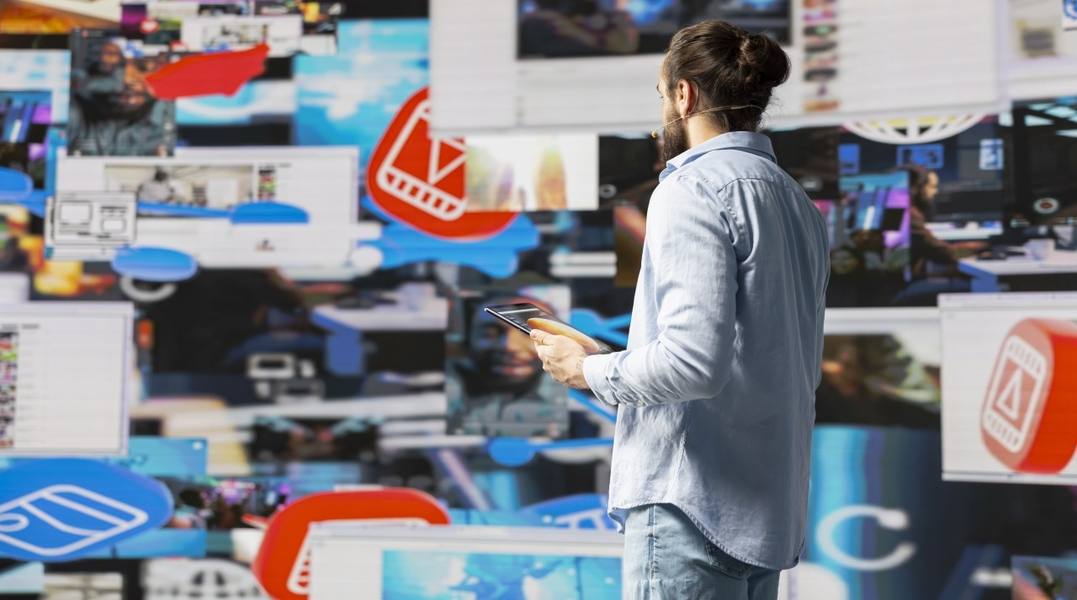
The exhibition becomes interactive and personalized, where everyone gets relevant content and contacts.
The 2020 pandemic has become a bifurcation point for the global exhibition industry. As physical marketplaces closed, businesses around the world were forced to look for new ways to communicate with partners, customers, and markets. So I was born. New Era of Virtual Exhibitions Digital platforms that allow business events to take place without geographical or physical constraints.
Five years later, in 2025, we can confidently assess which of these formats proved effective and which remained a temporary compromise during the crisis period.
How the Pandemic Changed the Exhibition Industry
Until 2020, exhibitions were associated with crowded pavilions, live communication and the opportunity to “touch the product with your hands”. However, lockdowns and closed borders forced the organizers and the company. go online urgently.
Global giants such as Canton Fair (China Import and Export Fair). CES and Hannover MesseFor the first time, the event was fully digital.
Organizers implemented:
- virtual And 3D spaces.
- videochats and webinars Instead of personal negotiations;
- Automated partner selection systems (matchmaking)
- behavioural analysis on the platform.
For many companies, these innovations have been an unexpected but rewarding experience.
Experience of 2020-2022: advantages and limitations of online formats
Advantages
The transition to online exhibitions opened up new opportunities:
- Global accessibilityparticipation without visas, flights and logistics costs;
- Budget savings: the cost of a virtual stand is several times lower than the physical;
- Analytics and point marketingYou can see who visited the booth, which asked how long the person interacted with the content.
- Extending the "life" of the exhibition Webinars and presentations are available weeks after the event.
For small and medium-sized businesses, this has become A real chance to reach the international level without massive investment.
Limitations and disappointments
However, a year later it became clear that the online format Cannot completely replace live communication.
Main problems:
- Lack of personal contact and emotional involvement;
- Difficulty of establishing trust relationships The most important element of B2B communication;
- "Digital fatigue" participants from permanent videoconferencing;
- Technical failures and time zone differencesPrevent synchronous participation.
By 2022, the market began to look Balance between digital convenience and real communication.
2023–2025: the emergence of a hybrid model
The gradual lifting of restrictions and the return of offline events did not destroy virtual solutions, on the contrary, they became more and more popular. natural complement of the physical format.
Hybrid – The New Golden Ratio
Modern exhibitions work according to the model "online + offline"The two channels reinforce each other:
- Offline creates trust and emotions;
- Online expands coverage, allows you to keep statistics and work with the audience after the event.
An example is Canton Fair 2024The virtual platform allowed foreign buyers to visit the exhibition remotely, and exhibitors could negotiate both online and on-site.
Technologies that have remained and are developing
By 2025, the following digital tools have been established in the industry:
- 3D stands and virtual showroomsallowing you to “walk” through the exposure with the effect of presence;
- AI chatbots and voice assistants for instant communication with visitors;
- VR/AR technologies To demonstrate complex equipment, logistics processes and production chains;
- blockchain registration participants and contracts – for transparency and data protection;
- cross-cutting: tracking contacts, leads, views and ROI events.
Thus, virtual exhibitions have ceased to be a “forced substitute”, becoming a virtual exhibition. An accurate digital marketing tool.

What is left in 2025 from the era of virtual exhibitions
Online as an integral part of communication
In 2025. No major event is complete without an online component. Even traditional offline formats – transport, pharmaceutical and industrial exhibitions – include virtual platforms for:
- remote meetings;
- broadcasting conferences;
- Online registration and statistics.
Participants no longer see virtuality as a substitute. New Standard of Business Communication.
Increased value of data
The main value of virtual exhibitions data.
Organizers collect and analyze:
- which stands were visited more often;
- What interested the participants;
- Which products were most responsive?
This data allows companies to build deep marketing funnelsWe work with clients after the exhibition.
Personalization and automation
Artificial intelligence systems now:
- Select participants for business meetings;
- automatically create a schedule;
- Help the visitor not to get lost among hundreds of stands.
The exhibition becomes interactive and personalizedWhere everyone gets relevant content and contacts.
Forecast for the future: where is the format going
By 2030, the market, according to analysts, finally moves to Digital Event Ecosystems.
That means:
- permanent online platformsbetween offline activities;
- integration of social networks, CRM and marketing tools in exhibition areas;
- virtual metaversesExhibitors will be able to showcase products in an interactive environment.
The exhibition of the future is three-dayeh long-term communication platformIt brings together business, technology and audience.
The experience of 2020 changed the exhibition industry forever. At first, virtual formats were perceived as a temporary measure, but in 2025 they became a temporary measure. an integral part of the business ecosystem.
The main result is not “replacing offline with online”, but symbiosisDigital tools amplify physical events, making communications more flexible, accessible and measurable.
The exhibition of the future is not a place. digital platformThe boundaries between the virtual and the real world are blurred, but the value of communication remains.
See also: Calendar of exhibitions in China in 2026