Artificial intelligence accompanied by
AI allows you to organize the escort 24/7 without the need for human participation. This is critical for global companies and organizations with a large number of users.
Artificial intelligence (AI) is increasingly being introduced into various fields of activity, including the support of business processes, client operations and the implementation of complex projects. Automating routine tasks, predicting potential risks, and optimizing processes are all made possible by the use of AI technologies.
What is an escort?
Maintenance is the process of supporting and ensuring the effective execution of tasks or projects. Depending on the field, escort may include:
- Technical support (IT systems);
- legal support;
- Project management;
- customer support.
AI is able to transform these processes, making them faster, more accurate, and more result-oriented.
How is AI used in escort?
1. Automation of routine tasks
AI can take on repetitive tasks such as:
- processing customer requests;
- preparation of reports and documentation;
- monitoring the performance of tasks.
Example: AI chatbots answer typical customer questions, freeing up specialist time for more complex tasks.
2. Data analysis and forecasting
Modern AI systems can collect, process and analyze large amounts of data to:
- predict risks;
- Find optimal solutions;
- Improve the quality of service.
Example: Machine learning algorithms analyze project data to identify possible delays and suggest measures to prevent them.
3. Project and process management
AI helps optimize resource planning and management, including:
- distribution of tasks among employees;
- monitoring the status of project implementation;
- Adaptation of plans in real time.
Example: AI-based platforms can automatically redistribute resources if priorities or force majeure change.
4. Personalization of escort
AI is able to take into account the characteristics of each client or project to create an individual approach. This is especially true in areas such as:
- customer service;
- legal support;
- risk management.
Example: AI systems in online stores offer personalized recommendations and customer support at all stages of the purchase.
5. Round-the-clock support
AI allows you to organize the escort 24/7 without the need for human participation. This is critical for global companies and organizations with a large number of users.
AI and translators, accompanying foreign exhibitions
International exhibitions are an opportunity for businesses to present their products and services in new markets. However, language barriers and cultural differences can be a major obstacle. AI offers solutions that make the process of accompanying such events more efficient.
1. Automatic translation
AI technologies such as neural machine translators provide high-quality translation of texts, presentations and documentation. This allows:
- Quickly prepare materials for international exhibitions;
- Translate product catalogs;
- Communicate with customers in their language in real time.
Example: Using translation applications such as Google Translate or DeepL for instant translation during negotiations.
2. Voice assistants
AI voice assistants can translate conversations in real time, which is especially convenient for talks on a booth or informal communication with potential partners.
Example: devices or applications equipped with the function of simultaneous interpretation, help to communicate with visitors of the stand without the involvement of an interpreter.
3. Cultural adaptation
AI algorithms can analyze the cultural characteristics of the audience and provide recommendations for behavior and communication. It helps:
- Avoid cultural misunderstandings;
- better understand customer expectations;
- Adapt presentations to the specifics of the market.
4. Virtual guides and assistants
On the stands, virtual assistants are increasingly used, which are able to:
- answer questions from visitors;
- demonstrate video materials and presentations;
- Collect contact information for subsequent interaction.
Example: Using holograms or AI screens that respond to visitor requests and provide product information.

Advantages of using AI in support
- Saving time. Automating routine tasks allows teams to focus on strategic issues.
- Cost reduction. Fewer human resources are required to perform standard operations.
- Improving quality. AI provides high accuracy and minimizes the likelihood of errors.
- Availability and scalability. AI systems easily adapt to the growth of workload.
- Increase customer experience. Quick answers, an individual approach and round-the-clock support make the service more comfortable.
Applications of AI accompanied by
1. Technical support
AI is actively used in IT for monitoring, diagnosing and troubleshooting.
- Automatic identification of problems in systems.
- Recommendations for updating and optimization.
- Prevent failures through forecasting.
2. Legal support
AI algorithms help:
- Analyze treaties and legal documents;
- identify risks and inconsistencies;
- Automate the regulatory review.
3. Client escort
Chatbots and voice assistants with AI handle user requests, answer frequently asked questions, help solve problems.
4. Logistics and cargo escort
AI optimizes delivery routes, monitors cargo status in real time, and predicts possible delays.
5. Education and training
AI-based systems accompany students in the learning process, providing course recommendations, teaching materials and analyzing progress.
Challenges and constraints
Despite the numerous advantages, the use of AI accompanied by faces a number of difficulties:
- Difficulty implementing. Switching to AI systems takes time, resources and staff training.
- Ethical issues. There must be transparency of AI and protection of user data.
- Data dependency. AI works effectively only when high-quality and relevant data are available.
- The human factor. Not all tasks can be fully automated, especially those that require empathy and creativity.
The future of AI accompanied
AI continues to evolve, and its application will become even more widespread in the future. Key perspectives:
- integration with the blockchain for transparent transaction support;
- Enhancing predictive analytics capabilities;
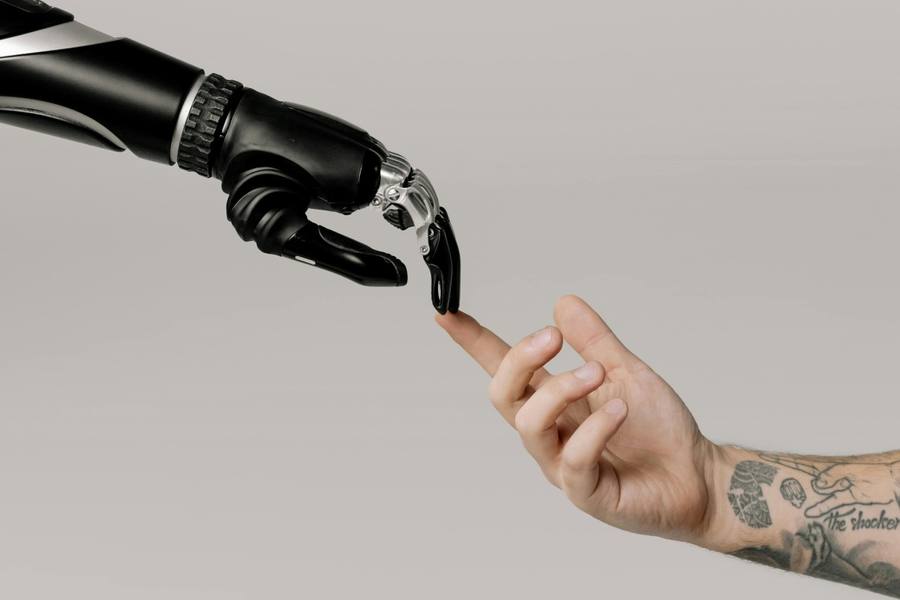
- Create hybrid systems where AI and humans work in tandem.
The use of artificial intelligence in support allows businesses and organizations to become more efficient, flexible and customer-oriented. This is not just a trend, but a necessity in a rapidly changing world.