Digital labeling of products: who will be affected by the new requirements
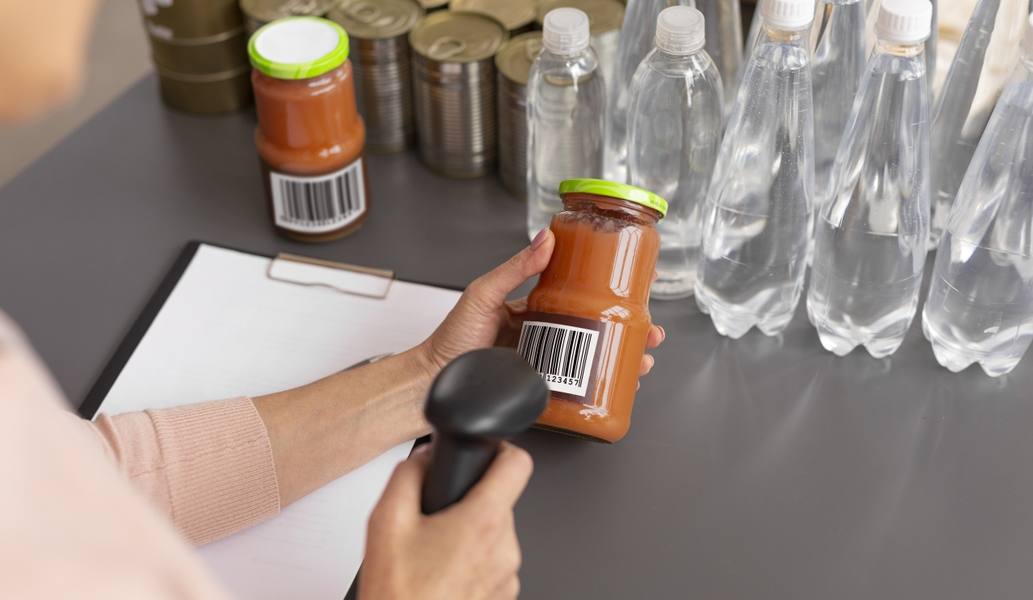
Digital labeling is gradually becoming a standard part of the product market.
Digital labeling is gradually becoming a mandatory part of commodity turnover in Russia. For manufacturers, importers, wholesalers, marketplaces and retail stores, this means that it is not enough just to bring the goods, issue documents and put them in stock.
For many categories, another mandatory stage must be considered. application of means of identification and transfer of information about the goods to the state marking system.
In 2025-2026, the list of commodity groups continues to expand, and traceability requirements become more detailed.
We will find out who the new rules concern, what products are in the spotlight and what business needs to do now.
What is Digital Labeling?
Digital labeling is a system for identifying individual goods. A special code is applied to the product, which allows you to track its movement in the product chain.
The simplified product path looks like this:
manufacturer or importer → putting into circulation → wholesale supply → retail store → selling to the buyer.
At different stages, participants of the turnover transfer information to the state monitoring system.
The main idea of labeling is to make the movement of goods more transparent and reduce the share of illegal products.
For businesses, this means that labeling does not become a separate sticker on the package, but a part of the whole process.
- procurement;
- production;
- imports;
- warehouse processing;
- accounting;
- wholesale trade;
- retail sales.
Who will be affected by the claims
The new rules may affect almost all participants in commodity circulation.
Producers
The manufacturer must determine whether his products are included in the list of labeled goods.
If it does, it will be required:
- register in the system;
- description of the goods;
- obtain marking codes;
- put them on products;
- transfer information about the introduction of goods into circulation.
It is especially important for businesses to think ahead. At what stage of production will the marking be applied.
Importers
For importers, labelling is particularly important.
It is not enough just to find a product abroad and arrange delivery to Russia. It is necessary to understand in advance:
- whether the goods are subject to mandatory marking;
- Whether codes are required;
- where the marking will be carried out;
- what information should be transmitted;
- How the labeling will be related to the import supply.
An error at this stage can lead to the fact that the goods have already arrived, and the preparation for its legal commissioning was incomplete.
Therefore, it is necessary to check the marking before the purchase and shipment of goods.
Wholesale companies and distributors
Labeling is not just about manufacturers.
If a company accepts a labeled product and transfers it to the next participant in the chain, it is necessary to correctly consider the movement of products.
This is particularly important:
- correct data in the documents;
- code accounting;
- correct acceptance;
- Transmission of information during shipment.
The larger the range and quantity of SKU, the higher the value of automation.
Retail stores
For retail labeling is primarily associated with the acceptance and sale of goods.
Depending on the product category and applicable requirements, the seller must take into account the code when selling.
Separate development of the system - checkoutThe system can verify the possibility of selling a particular product.
In 2026, the development of control mechanisms continues, including new grounds for banning the sale of certain goods in case of non-compliance with the data of the labeling system.
Which product categories are especially important to check in 2026
The list of labeled products is already quite wide, so there is no universal answer “all goods are labeled”.
You need to check the specific product, its code and characteristics.
Radioelectronic products
One of the important directions of 2026 is the introduction of mandatory labeling of certain types of electronic products.
According to the approved rules, the registration of participants in the turnover of the relevant products begins with March 1, 2026. Transitional periods and special terms for imported and already in circulation products are provided for individual stages.
This is especially important for companies that import:
- electronics;
- separate radio-electronic devices;
- components and equipment included in the established lists.
Here you can not focus only on the household name of the product. Need to be checked specific code and conformity of products to the approved list.
Goods for children
Labeling continues to affect certain categories of children's products.
Specifically, rules have been introduced for certain games and toys for children under 14. There are exceptions and transition periods for product residues.
Importers and sellers of children's goods should check in advance:
- the exact purpose of the products;
- age category;
- HS code;
- availability of goods on the list;
- timing of claims.
Cosmetics, household chemicals and hygiene products
These categories are also subject to mandatory labelling.
Particular attention during the transition period should be paid to the residues of goods and products imported before the onset of certain mandatory stages.
For some hygiene products, there are special terms for marking residues and the transition period for the turnover of unlabeled products.
What categories are currently in the experimental stage
It is important to understand the difference between experiment and mandatory marking.
If a product participates in an experiment, this does not always mean that its labeling is already mandatory for all market participants.
Experiments continue in 2026, including in the following areas:
Home and interior goods
The experiment includes certain types:
- dishes;
- kitchen and household items;
- cleaning products;
- objects of decor;
- individual goods for the interior.
The experiment is designed to 31 August 2026.
Economic and sanitary products
A separate experiment applies to some household and sanitary goods and toiletries. It is also planned to be held before 31 August 2026.
Polymer pipe products
Experiment on labeling of certain types of polymer pipe products extended to 31 August 2026.
For business, participation in an experiment is a signal: This category should be considered when planning future purchases and supplies..

Why importers need to think about labeling before buying a product
One of the common mistakes is to first buy a product, and then find out what requirements apply when importing and selling it.
The correct sequence looks different:
1. Identify the goods
We need to understand:
- exact name;
- appointment;
- composition;
- material;
- model;
- technical specifications.
2. Check classification
It is necessary to determine the HS code and compare the goods with the current requirements.
3. Check the need for marking
It is important to establish:
- whether the goods are in the mandatory category;
- whether the transition period is in effect;
- Are there exceptions?
- Is the category in the experiment?
4. Consider the location of the code.
Marking may require a separate process.
It is necessary to decide in advance:
- who codes;
- where it happens;
- how the quality of the application will be monitored;
- How the product will be packaged after labeling.
5. Harmonize data across the chain
The information should coincide between:
- goods;
- marking;
- commercial documents;
- logistic data;
- the accounting system.
The biggest mistake - Consider labeling a task "for later"
For small shipments, it may seem that the marking can be solved after the arrival of the cargo.
But with regular imports, this quickly becomes a problem.
Questions arise:
- where to store the goods;
- who codes;
- How to count each unit;
- How to conduct acceptance;
- How to transfer the goods to the buyer;
- How to avoid mistakes when selling.
Therefore, it is better to include the marking in the logistics scheme at the stage of order formation.
What Businesses Need to Do Now
If you produce or import goods, use a simple checklist:
- Determine the exact product and its characteristics.
- Check the HS code.
- Find out if the product is in the labeled category.
- Check the current deadlines and transition periods.
- Identify who is going to be marking.
- Prepare accounting and storage processes.
- Check the work with documents and transfer of information.
- Do not plan delivery without checking the requirements for a specific product.
Digital labeling is gradually becoming a standard part of the product market.
For manufacturers, this is a change in the production process.
For importers – an additional stage of delivery preparation.
For warehouses, it is necessary to take into account the movement of each unit.
For stores – changing the processes of acceptance and sale.
The main rule for business in 2026:
First determine the exact characteristics of the product and the requirements for it, then buy and build logistics.
Checking the marking after the cargo is in transit is much more difficult and expensive.