Customs clearance of goods from China to Russia: how the customs department works and what you need for successful clearance
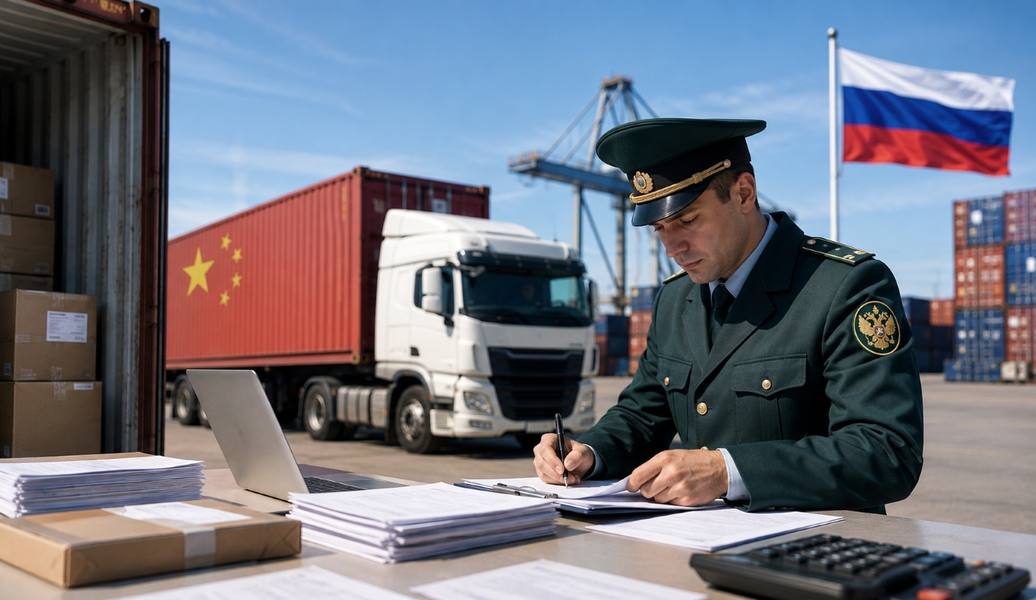
In working with Chinese suppliers, the coordinated work of Chinese and Russian customs brokers is especially important.
Imports from China are not only the delivery of goods from point A to point B. Before the release of the cargo, it is necessary to prepare documents, determine the code of the HS, calculate customs payments, submit a declaration and pass customs control.
That is why working with Chinese suppliers is especially important. Chinese and Russian Customs Brokers. In practice, an error at one stage can lead to additional requests, cost adjustments, delayed releases, or the need to correct documents.
Below we will discuss how the process of customs clearance of goods from China to Russia.
How the customs department is organized
The customs process can be divided into several blocks:
- broker Works with documents and procedures on the side of China;
- broker - is responsible for the clearance of cargo when importing into Russia;
- document form the basis for the declaration and confirm the characteristics of the transaction and the goods;
- planner determines customs payments and prepares data for payment.
This division allows you to allocate responsibility between specialists and check the information that will be needed in the next stage.
What a customs broker does in China
The work of the Chinese side begins even before the actual shipment.
Preparation of documents
The broker checks information about the goods and prepares the necessary set of documents for export clearance.
Depending on the transaction, in particular:
- contract;
- commercial invoice;
- packing sheet;
- information on the number and weight;
- description of the goods;
- data on the sender and recipient;
- transport documents.
The main task is to make sure that the information in the documents corresponds to the actual cargo.
Filing of export documents
After preparing the information, the documents are submitted for registration in China. At this stage, it is important to identify inconsistencies in the name, quantity, cost or packaging in advance.
Issue of customs declaration
After passing the necessary procedures, the Chinese side gets the opportunity to take the goods out of the country.
Preparation of documents for the Russian broker
This is one of the most important stages of interaction.
The information necessary for further registration is transmitted to the Russian broker in advance: description of the goods, cost, quantity, weight, packaging, delivery conditions and other data.
The earlier the Russian side receives the documents, the more time remains for verification before the arrival of the cargo.
What does a customs broker do in Russia
After the shipment, the work goes to the Russian side.
A Russian broker checks documents and prepares data for customs declaration.
Main objectives:
- Paperwork.
- Definition and verification of the HS code.
- Calculation of customs payments.
- Preparation of a declaration for goods.
- Submission of the declaration to the customs authority.
- Interaction with customs before release of goods.
- Provide additional documents and explanations if necessary.
CN FEA EAEU is used not only for statistical accounting. The classification of goods depends on the measures of customs and tariff regulation, prohibitions and restrictions and a number of other requirements.
What documents are required
The basic set of documents for commercial imports from China usually includes:
1. Treaty
The contract fixes the parties to the transaction, the terms of delivery, the description of the goods, the price and other essential conditions.
2. Payment documents
They allow you to confirm the payment for the goods and, if necessary, justify its declared value.
3. Packaging sheet
Contains information on:
- number of seats;
- weight
- packaging;
- quantity of goods;
- distribution of goods to places.
4. invoice
It indicates the commercial characteristics of the transaction: goods, quantity, price, total value and other information.
5. Characteristics of cargo
For the classification of goods, a much more detailed description may be required:
- material;
- appointment;
- composition;
- principle of operation;
- technical specifications;
- model;
- producer;
- complete.
6. Purpose of goods
Sometimes a commercial name is not enough. For example, the wording “electronic device” says almost nothing about its customs classification.
7. Code TN VED
The code is used when declaring goods and is associated with applicable duty rates and regulatory measures.
Important: The specific list of documents depends on the nature of the goods, the terms of delivery and the requirements applicable to it. For certain categories, permits, certificates, declarations of conformity and other confirmations may be required.
How the HS code is defined
One of the most important tasks when importing is to correctly classify the product.
CN FEA EAEU is a coding system of goods based on the international Harmonized system.
When determining the code, the specialist analyzes not only the name of the product, but also its objective characteristics.
For example, for technical equipment may be important:
- appointment;
- principle of operation;
- construction;
- material;
- technical parameters;
- method of use;
- the presence of certain components;
- Delivery kit.
Why you can't just take a code from a Chinese invoice
The code used in the documents of the Chinese exporter should not be automatically transferred to the Russian declaration.
For Russian registration is applied HS EAEUTherefore, the classification should be checked taking into account the requirements of the EAEU.
Incorrect code can affect:
- fee;
- the need for permits;
- application of prohibitions and restrictions;
- the amount of customs payments;
- passing through customs control.

How customs payments are calculated
Before submitting the declaration, it is necessary to determine the amount of payments.
In general, when importing from China, there may be:
- importation;
- VAT;
- exciseif the goods are excisable;
- customs and other payments in cases provided for by law.
The amount of import duty depends, among other things, on the classification of goods according to the CN FEA EAEU. The single customs tariff of the EAEU contains the rates of import duties for goods coming from third countries.
Customs value
When calculating payments, the customs value is of great importance.
It is not always equal to the sum indicated in the invoice. When determining the customs value, the elements of the transaction provided for by law and the costs related to the delivery of goods to the appropriate place are taken into account. Therefore, the terms of delivery and transportation costs should be analyzed in advance.
VAT
When importing goods into Russia, VAT is calculated in accordance with the rules of the Tax Code. The tax base for import includes the customs value and the customs duty payable, and for excisable goods - also the corresponding excise duty.
For companies entitled to a tax deduction, VAT paid when importing can be deducted in prescribed cases.
Therefore, it is better to make a preliminary calculation of the cost of goods before the purchase, rather than after the arrival of the cargo.
How the declaration is filed
After preparing documents, classifying goods and calculating payments, the broker forms a declaration for goods.
The simplified process looks like this:
Goods → documents → check → HS code → customs value → calculation of payments → declaration → customs control → release.
After submitting the declaration, the customs authority may:
- verify the declared information;
- request additional documents;
- check the cost;
- Check the correctness of the classification;
- verify compliance with prohibitions and restrictions;
- order a customs inspection or inspection in the prescribed cases.
If there are no questions and the necessary conditions are met, the goods are released.
Where errors and delays often occur
In practice, problems most often arise not because of the filing of the declaration, but because of unprepared information.
Document inconsistency
For example:
- the invoice indicates one amount, and in fact another;
- the weight is different from the packaging sheet;
- product description is too general;
- The data in different documents do not match.
Wrong HS code
An error in classification may lead to the need to adjust the declaration or provide additional documents.
Insufficient description of the goods
Phrases such as “parts,” “equipment,” “electronics,” or “accessories” are often insufficient for full classification.
Unconfirmed cost
If the customs authority has questions about the declared value, additional documents and explanations may be required.
Absence of permits
For individual goods, it is necessary to determine in advance whether certificates, declarations of conformity, licenses or other documents are needed.
The papers came too late.
If the Russian broker receives a full set only after the arrival of the cargo, the opportunity to prepare for registration is significantly reduced.
Why coordination between China and Russia is important
Customs clearance is a single chain in which the documents of one party become the basis for the work of the other.
Therefore, it is not enough for a Chinese broker to make a good export and a Russian broker to make a good return.
The information between them must match.
For example:
The Chinese broker transfers the description of the goods → the Russian broker checks the characteristics → the HS code is determined → payments are calculated → the declaration is prepared → the goods pass customs control.
If an error appears at one of the stages, it can move to the next stage and be detected directly during the Russian registration.
How to organize the process without unnecessary delay
The optimal scheme of work is as follows:
Before buying.
- Get a complete description of the goods from the supplier.
- Request an invoice and packing list or their project.
- Check the characteristics of the goods.
- Pre-determine the code of HS.
- Check the need for permits.
- Calculate approximate customs payments.
- Calculate the final cost of the goods.
Before dispatch.
- Check the documents of a Chinese broker.
- Transfer information to a Russian broker.
- Check the conformity of the quantity, weight, cost and description.
- Make sure that the documents are ready by the time the cargo arrives.
Upon arrival
- File a declaration.
- Pay the necessary payments.
- Consider possible customs requests.
- Get merchandise release.
- Transfer the cargo to further logistics.
What is especially important when working with China
With regular imports, it is better not to consider customs clearance as a separate operation after delivery.
It should be included. still-procurement.
Before agreeing on the price with the supplier, it is desirable to understand:
- what HS code will be used;
- what rate of duty is assumed;
- what documents will be required;
- whether there are import restrictions;
- What characteristics should be obtained from the manufacturer;
- what customs value will be obtained, taking into account the terms of delivery and logistics;
- How much will be the estimated cost of registration.
This allows you to assess the real cost of goods in advance and avoid a situation where a profitable purchase price turns into expensive imports.
Outcome
Customs clearance of cargo from China to Russia is consistent work of several participants.
Chinese broker ensures correct export registration and preparation of documents.
Russian broker checks information, determines the classification of goods, prepares a declaration and interacts with the customs authority.
Settlement block determines customs payments.
The quality of the entire process depends on how well all parties work together.
The basic principle is simple: Customs must begin to pass before the cargo is shipped from China. The earlier the documents, the FEA code, the cost and requirements for the goods are checked, the less likely the delays in the release.
The material is informational in nature. The specific procedure for registration and the composition of documents depend on the type of goods, the terms of the transaction and the current requirements of the legislation of the EAEU and the Russian Federation.