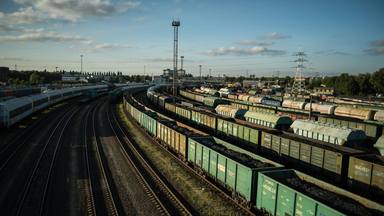
Railway tariff: how it is formed
We understand what the cost of rail transportation is – from the shoulder of the route to allowances and coefficients.
Railway transportation is one of the most popular types of transportation in Russia and abroad.
They combine. reliability, safety and relatively low costEspecially over long distances.
But for most entrepreneurs, it remains unclear: Why is the same cargo on different routes different?
Where does the railway fare come from, who sets it and what factors influence the final price?
What is the railway fare
Rail fare - this is the established cost of freight transportation by rail, including payment:
- for the use of infrastructure (paths, stations, signals, energy);
- for rolling stock (cars, locomotives);
- for services for processing, supply and cleaning of wagons;
- for related services (security, downtime, shunting operations, etc.).
In Russia, tariffs are regulated OAO RZD and approved Federal Antimonopoly Service (FAS).
Some areas are working on tariff-netpart by part contract-rate nEspecially for international and private transportation.
Main components of the tariff
The formation of the price for rail transportation consists of several key elements:
1. Basic tariff
That's the cost of transportation. 1 ton of cargo per 1 km of track.
The basic tariff depends on:
- type of cargo (mass, bulk, container, etc.);
- cargo class (dangerous, perishable, oversized);
- type of car (covered, platform, tank, gondola car).
2. Distance of carriage
The longer the route, the higher the total cost.
However, it does work. the effect of reducing the rate on long-distance transportation The longer the path, the cheaper 1 km.
For example: transportation for 200 km can cost 20 rubles / ton km, and for 2000 km - already 10 rubles / ton km.
3. Weight and volume of cargo
The rate is directly dependent on mass and density.
- Heavy loads (coal, ore, metal) are considered by weight.
- Light, but bulky (furniture, plastic) - by volume.
4. Type of rolling stock
The cost of renting a car is a significant part of the tariff.
Typical rates (approximately):
- Half-car - for bulk goods;
- Platform - for containers, machinery, building materials;
- Covered car for goods requiring protection from precipitation;
- Tank - for liquid and liquid cargoes.
If used own-carThe base rate of RZD is reduced.
5. Additional charges
To the basic tariff are added:
- charge delivery;
- maneuvering at the station;
- plain-load;
- overload at the junction of roads (especially for international transportation);
- security.
These fees may be up to 30-40% of total value transportation.
International transport and currency ratios
For transportation between countries, the tariff is calculated by international n - for example, SMGS fare (Agreement on International Railway Transport).
Features:
- calculation Swiss francs (CHF) or dollar;
- add on currency-rate;
- when crossing borders are taken into account customs and terminal charges.
For example, the route China-Kazakhstan-Russia cost is calculated on the basis of tariffs of each country and their conversion into rubles at the exchange rate.
Impact of cargo type
Cargo class is one of the main price factors.
Type of cargo Features of the tariffMass (coal, grain)Minimum rate, stable streamsContainersHigh cost due to processing and storageDangerous goodsIncreasing coefficients + additional requirementsHigh speed, special conditions, surchargesIndividual calculation of route and permits
Container transportation is often used flat-rate — for example, from Moscow to Vladivostok, Chongqing, Manchuria, etc.
Coefficients and allowances
To flexibly regulate tariffs, RZD applies factor, affecting the price.
Major:
- Seasonal coefficient - in summer and in peak months, tariffs rise;
- Routing factor Discount for large, permanent shipments;
- Backload factor If the car is returned empty, the fare is higher;
- Direction coefficient In popular areas (for example, Eastern) the rate is higher.
Who and how the tariff is approved
At the state level, tariffs are approved Federal Antimonopoly Service (FAS Russia) presentationally Ministry of Transport and Russian Railways.
The regulation of tariffs is called Tariff Guide No. 10 (TR-10).
It prescribes all basic rates, classes of cargo, coefficients and calculation formulas.
Private operators and logistics companies may establish contract-ratebut always within acceptable limits.
Example of calculation
Example: transportation of 60 tons of grain over a distance of 1500 km in a covered car.
- The base rate of Russian Railways: 2.5 rubles / t·km
- Multiply: 60 t × 1500 km × 2.5 rub = 225,000 rubles.
- Add feeding and cleaning - 15 000 rubles.
- We take into account downtime and shunting operations - another 10,000 rubles.
Total estimated cost: ~ 250,000 rubles.
If you use your own car or the route is regular - a decrease of 10-20% is possible.
How to save on the railway tariff
Routing Send large batches at once;
Own or leased rolling stock - reduces the rate;
Container shipments Often more profitable with mixed logistics;
Load planning Avoid downtime and fines;
Working with the logistics operator Professionals know how to optimize rates.
The rail fare is not a fixed figure, but calculationIt depends on dozens of parameters: distance, type of cargo, route, season, availability of wagons and international agreements.
Understanding the structure of the tariff allows Plan costs more accurately, choose the best routes and avoid overpayments.
For businesses working with China, Kazakhstan, Europe or the Far East, competent management of railway tariffs becomes Key factor of competitiveness.