How to Reach Minimum Cost in Logistics: 15 Practices That Save Millions

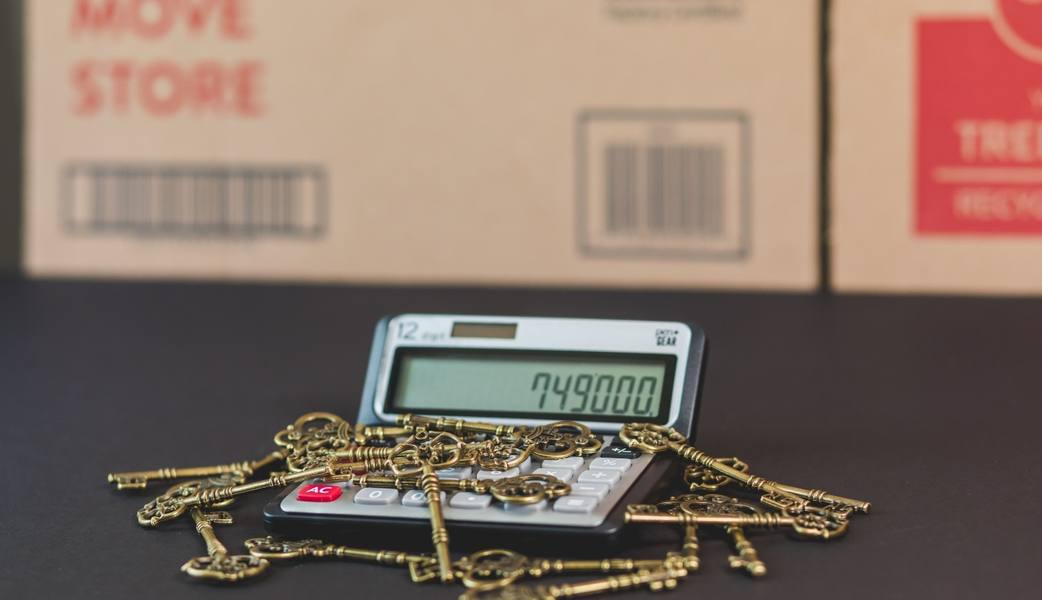
It is a systematic approach that allows large companies to save millions of rubles annually.
Logistics has long ceased to be simply the transportation of goods from point A to point B. Today, it often determines the final cost of goods, the speed of capital turnover and the competitiveness of the business.
A few years ago, entrepreneurs could compensate for expensive logistics with high margins. Now the situation has changed. Competition is growing, the cost of transportation is constantly fluctuating, and the buyer chooses the one who offers the best ratio of price, quality and timing.
The main question today is not: How to find a cheaper carrier?eh How to build a logistics system with a minimum cost?
It is a systematic approach that allows large companies to save millions of rubles annually.
Let us examine the practical principles used by professional logisticians.
What is the cost of logistics
Most entrepreneurs consider only the cost of transportation.
In practice, it consists of dozens of factors.
It includes:
- international transportation;
- domestic delivery;
- storage;
- packaging;
- insurance;
- customs clearance;
- simple transport;
- preparation of documents;
- returns;
- financial costs;
- wasting time.
Freight is often only 40-60% of the total cost of logistics.
Everything else is a hidden expense that gradually eats away at profits.
Mistake #1. Finding the cheapest transportation
This is the most common mistake.
The entrepreneur receives three commercial offers.
One is $4,300.
The second is 4700.
The third is 5100.
Picks the first.
A month later, it turns out:
- The container stood for a week;
- the documents have been issued incorrectly;
- Additional storage was required;
- the goods were detained at customs;
- The client refused to wait.
As a result, “cheap transportation” was the most expensive.
Professionals do not consider the cost of delivery.
They think Total Logistics Cost (Total Logistics Cost)
Lifehack #1. Consider the cost of one day.
Many people do not consider the cost of time.
Suppose:
The cost of the goods is 30 million rubles.
Marginality is 25%.
Each additional day of delay means:
- frozen money;
- late start of sales;
- Later purchase of the next batch.
Sometimes the carrier is more expensive by 5%, but faster by two weeks.
This option is much more profitable.
Lifehack 2. Plan transportation for at least a month
The most expensive transportation is urgent.
Professional logisticians almost never work on the principle of:
"We have to send it tomorrow."
They book seats in advance.
This allows:
- Get better rates;
- select carriers;
- Avoid seasonal price spikes;
- Get guaranteed seats.
Lifehack 3. Use cargo consolidation
If you regularly buy small batches from different manufacturers, it is not necessary to send each separately.
It is much more profitable to collect all goods in one warehouse in China and send them in one batch.
The savings are:
- 15-40% for international transportation;
- 20-30% on paperwork;
- up to 50% on domestic transportation.
Lifehack 4. Choose the Right Incoterms
Many companies automatically operate under EXW or FOB conditions without even analyzing the consequences.
Sometimes switching to FCA, CIF or DDP can significantly reduce costs.
Each option distributes responsibility, risk and cost differently between the seller and the buyer.
The choice of delivery terms should depend on the particular transaction, not on habit.
Lifehack 5. Load the container as efficiently as possible.
A half-empty container is one of the most expensive mistakes.
Sometimes it is enough to change the packaging of the goods.
For example:
- replace the boxes;
- change the height of the pallets;
- use vacuum packaging;
- Recalculate the layout.
Even an increase in container load by 10-15% significantly reduces the cost of each unit of production.
Lifehack 6. Work with regular carriers
It seems logical to look for the cheapest offer every time.
But professional logisticians do things differently.
They build long-term relationships.
Why?
Permanent partners:
- solve problems faster;
- give priority in case of shortage of seats;
- provide discounts;
- Preliminary warning of rate increases.
In a crisis, it is regular customers who get the best conditions.
Lifehack 7. Reduce the amount of overload
Every overload is:
- extra money;
- risk of damage to the goods;
- extension of time;
- probability of error.
Sometimes a longer route with one congestion is more profitable than a short one with four.
Lifehack 8. Optimize the packaging
Many consider packaging a secondary task.
In fact, it is what affects:
- volume of transportation;
- storage cost;
- the amount of damage;
- loading speed.
Competent packaging reduces logistics costs by 5-15%.
Lifehack 9. Use multiple routes simultaneously
Do not depend on just one direction.
Today, professional companies calculate several options in advance:
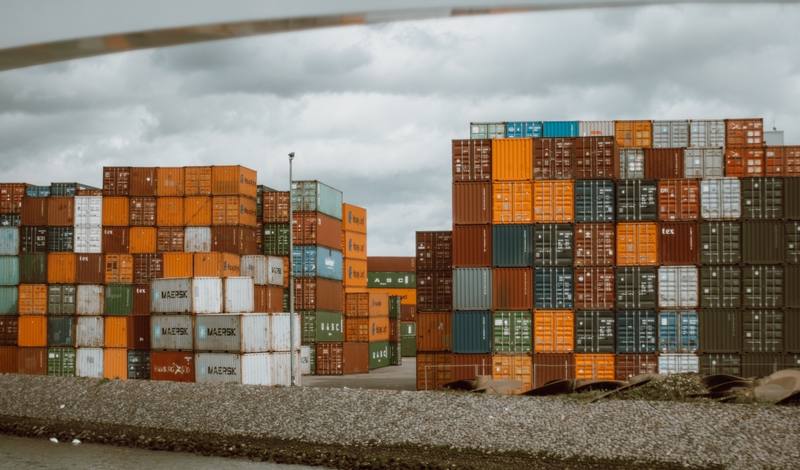
- maritime transport;
- railway;
- motor vehicles;
- Multimodal routes.
If one route is overloaded, there is always a backup.
This is how sustainable business works.
Lifehack 10. Watch for seasonality
The cost of transportation is never the same.
Every year there are peaks:
- before the Chinese New Year;
- before Christmas;
- in autumn;
- before the big global sales.
During these periods, prices can double.
Those who buy in advance save tens of percent.
Lifehack 11. Automate document management
Mistakes in documents are very expensive.
One incorrectly stated figure can lead to:
- delay of the container;
- additional checks;
- fines;
- Re-registration of documents.
The use of digital templates, CRM and logistics platforms significantly reduces errors and speeds up work.
Lifehack 12. Analyze each shipment
Most companies do not review completed deliveries.
This is where the growth points are hidden.
After each delivery, it is useful to answer a few questions:
- Where did the delays occur?
- What expenses were unplanned?
- What can be ruled out next time?
- Which stages took the most time?
This regular analysis allows you to gradually reduce the cost of each new delivery.
Lifehack 13. Don’t skimp on quality control
Inspection of goods at the factory is much cheaper than the return of a defective batch.
Checking before sending avoids:
- Reverse logistics costs;
- Compensation to customers;
- reputational losses;
- re-production.
Quality control is not an additional expense, but an investment in reducing future losses.
Lifehack 14. Work with a demand forecast
One of the most expensive mistakes is to transport goods in a mode of constant urgency.
If a company is able to forecast sales at least 2-3 months in advance, it gets the opportunity to:
- book transport in advance;
- purchase raw materials at better prices;
- Avoid expensive express delivery;
- evenly load the warehouses.
The more accurate the forecast, the lower the logistics cost.
Lifehack 15. Look at logistics as a strategy, not an expense.
Leadership companies have long ceased to perceive logistics as an auxiliary function.
For them, it is a profit management tool.
They invest in analytics, digitalization, partnerships and process optimization, realizing that even a small reduction in logistics costs with large volumes of supplies turns into millions of rubles of additional profit.
That is why the winner is not the one who once found the cheapest carrier, but the one who built the efficient system.
Outcomes
It is impossible to achieve a minimum cost in logistics through one solution. This is the result of dozens of small improvements: competent planning, the right choice of routes, optimal packaging, process automation, reliable partnerships and constant analysis of each delivery.
Modern logistics is no longer just the delivery of goods. This is one of the key tools for managing the cost of the product, the speed of capital turnover and the competitiveness of the business.
Companies that learn to calculate not only the price of transportation, but also the full cost of the logistics chain, get a serious advantage in the market. It is they that scale faster, pass crises more easily and retain profits even in the face of rising transportation costs.