Special equipment of ports and terminals: types of equipment and role in modern logistics

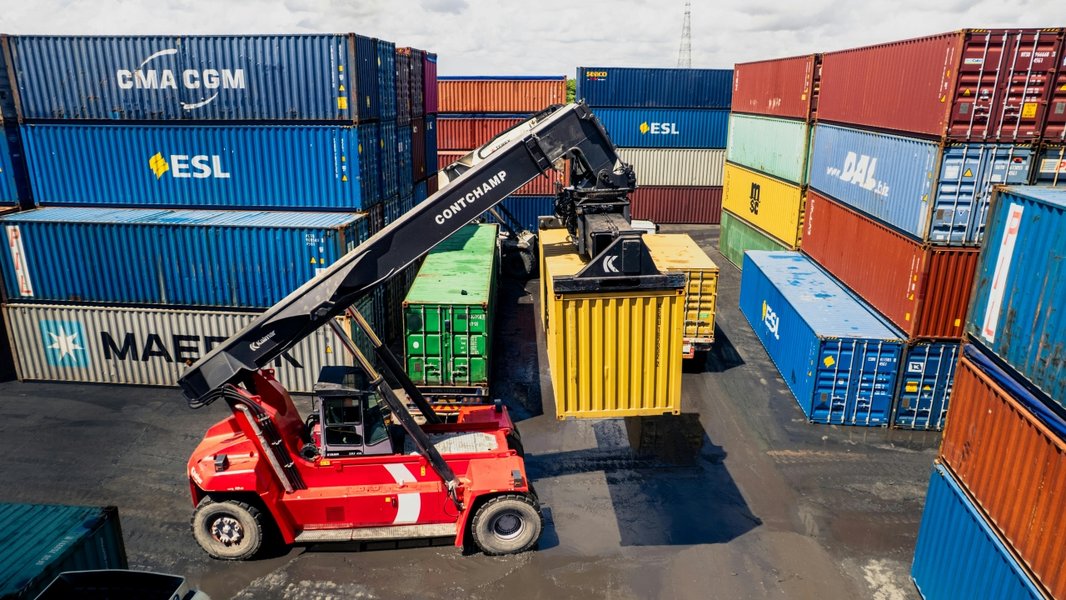
The faster the equipment overloads the container between the train, warehouse and vehicles, the more efficiently the whole system works.
A modern port or container terminal has long ceased to be just a storage area for containers. Today, it is a complex infrastructure system where the speed of cargo handling directly affects the transportation economy, logistics costs and the sustainability of the entire supply chain.
When a business faces container delays, terminal congestion, or increased delivery times, the cause is often not at sea or in rail. The main load falls on the internal operation of the terminal. - And here the key role is played by special equipment.
In fact, it controls the rhythm of modern world trade.
Why technology has become the basis of modern logistics
Containerization completely changed the approach to cargo handling. If earlier it was enough for the port to unload the ship, today the terminal works as a huge distribution mechanism, where each action is calculated in time.
Thousands of containers, dozens of trains and hundreds of cars pass through major terminals every day. Any delay quickly turns into a financial loss. - for both carriers and cargo owners.
That is why the efficiency of the terminal today is measured not only by the size, but also by how quickly the equipment is able to move containers inside the system.
In logistics, there is even an indicator of dwell time. - The time of the container on the site. The lower it is, the faster the terminal works and the cheaper the transportation costs.
The main symbol of the port is the container crane
When talking about a marine terminal, most imagine huge portal cranes at the pier. And it really is the central element of the entire infrastructure.
It is these cranes that unload ships, move containers between the board and the terminal and determine the speed of processing the vessel. For shipping lines, time - critical factor. Extra hours of downtime at the pier can be very expensive, so modern cranes have long been part of the digital terminal management system.
Today, they are equipped with automation, positioning systems and integrated with software that distributes the load between sites and equipment.
There's a whole ecosystem of machines inside the terminal.
After unloading, the container begins to move inside the terminal. Here comes another technique, without which modern logistics would simply stop.
One of the most sought-after machines became richstackers - Mobile container loaders that can quickly move containers between rows and stacks. They are especially used at railway terminals, in dry ports and inland container hubs.
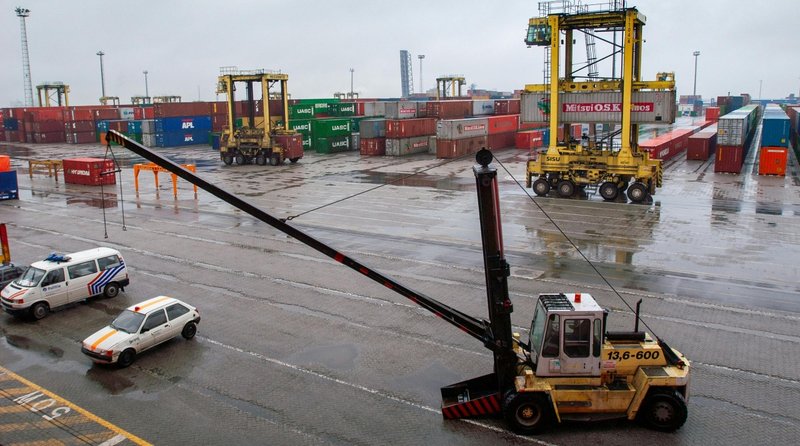
Terminal tractors play an equally important role. They ensure the constant movement of containers between the pier, storage areas and loading areas. From the outside, their work seems imperceptible, but without these machines, the terminal would literally turn into a congested area with chaotic movement of containers in a few hours.
At large sites, special container cranes RTG and RMG are also used. They are responsible for the formation of container rows, work with railway platforms and the organization of cargo storage. In fact, these systems allow the terminal to operate in high-density containers.
Railway terminals become a new growth point
In Russia, the role of terminal special equipment has grown especially against the background of the development of container transportation by rail. Today, a huge load falls on the Moscow transport region, the Far East, Siberia and export routes to China.
The railway terminal can no longer be perceived as a normal congestion site. This is a full-fledged logistics hub, where the speed of container processing directly affects the loading of the Russian Railways network and the sustainability of export flows.
The faster the equipment overloads the container between the train, warehouse and vehicles, the more efficiently the whole system works.
Why Automation Has Become a Major Development Area
Global logistics is gradually moving to the model of smart terminals. Today, special equipment is increasingly connected with digital platforms, analytics systems and automatic flow management.
Terminals are implementing:
• electronic slotting of transport
• Automatic distribution of containers
• Digital control of site loading
• AI algorithms for flow management
The main task - Reduce downtime and remove unnecessary operations.
In fact, a modern container terminal is turning into a single digital ecosystem, where machinery, warehouses, railway and port work as one mechanism.
The shortage of technology has become a new problem in the market
Since the change in global logistics routes, many terminals have faced equipment shortages. This was especially acute at the Eastern polygon and in the Far Eastern ports.
When technology is scarce, the consequences quickly become apparent:
queues are growing, container storage time is increasing, sites are overloaded and logistics is becoming more expensive.
During such periods, even a few additional units of equipment can significantly change the speed of the terminal.
That is why the largest logistics operators are actively investing in fleet renewal and process automation.
The Future of Ports: Autonomous Terminals
Next stage of industry development - robotic logistics. The world’s largest ports are already testing unmanned tractors, automatic container cranes and artificial intelligence-based control systems.
Main objective - create a terminal where most operations are performed without human intervention, and all container movements are calculated by the system in advance.
Modern competition in logistics - This is no longer a battle between countries or ports. It's a speed fight.
Special equipment has become the foundation of all container logistics. It determines how fast the cargo moves, how export corridors work and how much the business will pay for transportation.
Modern terminal - This is not just a port site, but a high-tech system where each machine is built into a common digital process.
And the higher the level of automation and technical equipment, the stronger the position of the terminal in the global logistics system.