Afghanistan's rail boom
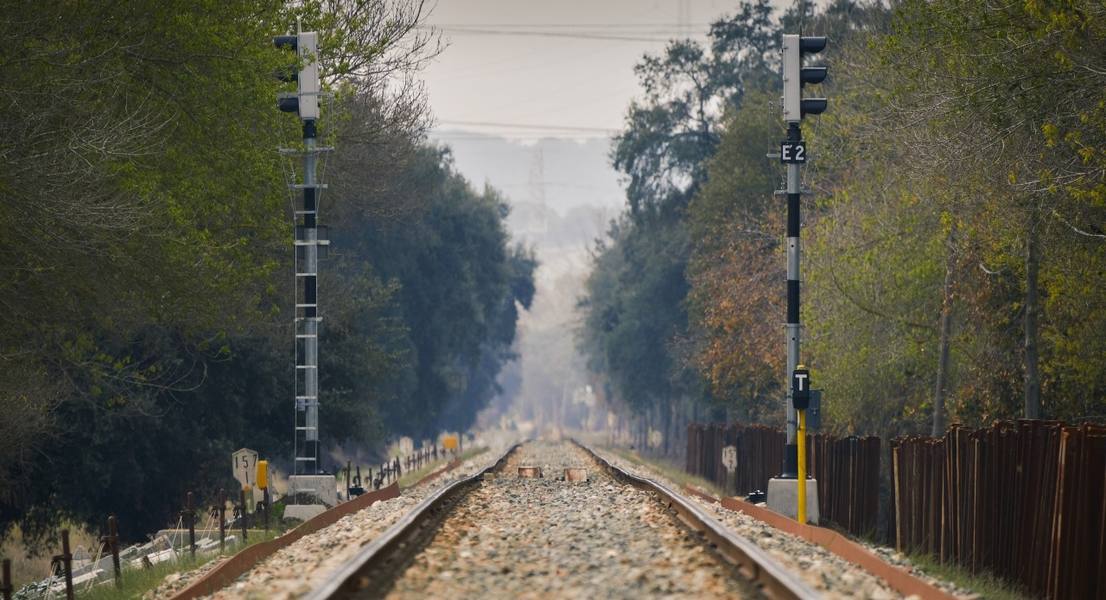
Afghanistan’s rail boom is not just a construction project, but a symbol of a new economic era.
Afghanistan, long one of the least developed countries in terms of transport, is experiencing a real railway breakthrough.
After decades of conflict and isolation, the country is banking on infrastructure, seeing railways as the basis for future economic growth and integration with neighboring powers.
In 2024-2025, the implementation of several large-scale projects began, which can turn Afghanistan from a deadlock into a dead end. transit hub between Central and South Asia, China, Iran and Russia.
Prerequisites for railway development
Until recently, Afghanistan’s rail network was extremely limited.
The landlocked country has historically depended on motor vehicles and caravan routes.
As of 2020, there were less than 300 km of railways operating, and they served mainly sections of the railway:
- Khairaton – Mazar-i-Sharif (in the north, connection with Uzbekistan);
- Turkmenabad – Akina – Andkhoy (with Turkmenistan);
- Haf-Herat (with Iran, partially completed)
However, the growth of trade between the countries of the region, the interest of China, Russia and Iran in the new land corridor, and the participation of Afghanistan in projects such as: Trans-Afghan Railway They changed the priorities of the government.
Large-scale construction projects
Trans-Afghan Railway (Mazar-i-Sharif – Kabul – Peshawar)
One of the key projects implemented with the support of Uzbekistan, Pakistan and Qatar.
The route is about 760 km long and will connect northern Afghanistan with the Pakistani port of Karachi via Peshawar.
This will allow Central Asian countries to gain direct access to the Arabian Sea, and Afghanistan to become a transit link for regional trade.
Continuation of the Haf-Herat-Herat-Kandahar line
The project is being implemented jointly with Iran.
The first part, the railway from the Iranian city of Haf to Herat, has already been put into operation.
It is planned to extend to Kandahar and further to the Pakistani border.
This line will be part of the international transport route. Iran - Afghanistan - Pakistan - IndiaOpening the way to the Indian Ocean.
Northern railway corridor
Turkmenistan is actively promoting the idea of connecting its network with the Mazar-i-Sharif-Akina-Turkmenabad line.
In the future, this will create a direct message. China - Central Asia - Afghanistan - IranThis will give a strong impetus to regional logistics.
Sources of funding and participants
Construction funding comes from several sources:
- public investment and provincial budgets;
- support from Uzbekistan, Qatar, Iran and China;
- participation of private companies, including contractors from Turkey and India.
China sees Afghanistan as part of its strategy "One Belt, One Road" He has already sent specialists to assess the technical feasibility of laying lines through mountainous areas.
Uzbekistan and Pakistan are interested in the speedy completion of the Trans-Afghan Road, as it reduces the route of cargo delivery by 600-800 km compared to the current routes through Iran or the Caucasus.
The Geopolitical Importance of the Railway Boom
The new transport architecture can change the balance of power in the region.
Afghanistan as a transit bridge
Connecting Central Asia, South Asia and the Middle East, the country becomes a strategic hub where the interests of Russia, China, Iran, India and Pakistan intersect.
Control of transit means influencing trade flows, tariffs and policy decisions.
The growing role of regional unions
Construction of railways strengthens cooperation within the framework of the SCO and BRICS+.
These organizations see Afghanistan as an important link in the Eurasian transport corridor linking China and Russia with the Indian Ocean.
Economic stabilization of the country
Infrastructure creates jobs, increases tax revenues and contributes to the recovery of industry.
Along the future routes, it is planned to build logistics terminals, industrial parks and warehouses, which will give the regions a new impetus to development.
Technical and infrastructure challenges
Despite progress, the project faces a number of challenges:
- complex mountain terrain requires the construction of tunnels and bridges;
- lack of qualified engineers and equipment;
- high level of seismic activity in certain areas;
- security issues, especially in the south.
In addition, the problem of standardization of the track remains unsolved: some lines are built on the basis of wide (1520 mm), used in the CIS countries, part of the narrow (1676 mm)as applied in Pakistan.
In the future, it is planned to create combined terminals for changing trolleys and transshipment of goods.
Economic prospects
According to estimates of the Ministry of Public Works of Afghanistan, the total length of the country's railways by 2030 may exceed 3,500 km.
This will allow:
- increase transit revenues 3-4 times;
- reduce the cost of transportation of goods by 30-40%;
- strengthen ties with neighbors and stimulate exports of minerals (copper, lithium, iron ore).
Afghanistan also expects to participate in the formation of International North-South Transport Corridorconnecting Russia, Iran, India and the countries of Central Asia.
Prospects of participation of foreign companies
Despite political risks, construction and engineering companies from China, Turkey, Uzbekistan and Iran are showing interest in the projects.
They offer assistance in the construction of tunnels, bridges and stations, as well as the supply of rolling stock.
Some experts say China's involvement in Afghan railways could be a step toward expansion. China-Afghan Free Trade Area and strengthening the integration of the region into the global network of land routes.
Afghanistan’s rail boom is not just a construction project, but a symbol of a new economic era.
For a country that has lived in isolation for decades, railways have become a tool for reconstruction, a source of income and political influence.
If the stated plans are implemented, Afghanistan may turn from a self-contained state into a key link in the next ten years. Eurasian transport network of the XXI centuryconnecting China, Russia, India, Iran and Pakistan.