Railway logistics in China + freight terminals
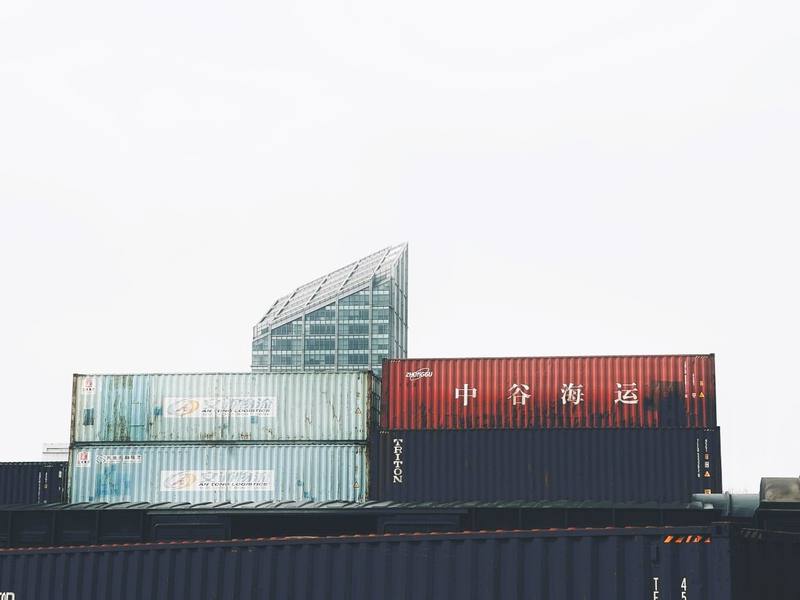
China’s rail logistics industry continues to grow rapidly, offering new opportunities for international transportation.
China occupies a leading position in the world in the development of rail transport. Due to large-scale investments in infrastructure, technological innovations and strategic location, railway logistics in the country plays a key role in international trade. In this article, we will consider the features of railway transportation, the main routes, types of cargo, the advantages and disadvantages of this type of transportation, as well as the list of the largest cargo terminals in China.
Development of railway logistics in China
China has one of the most extensive railway networks in the world. The total length of the country's railways exceeds 150,000 km, of which 40,000 km are high-speed highways. The development of railway transport is part of the Belt and Road program aimed at integrating China into the global economy.
Main stages of development:
- 2000s Modernization and digitalization of the railway sector.
- 2010s Active construction of high-speed and freight routes, the launch of the first container trains to Europe.
- 2020s development of multimodal transportation, introduction of unmanned trains, expansion of port capacity.
Rail transport actively competes with sea and road transport, providing a balance between cost and speed of delivery of goods.
Main railway routes of China
The Chinese railway network connects the largest economic centers of the country with Europe, Russia, Central Asia and Southeast Asia.
- Domestic railway routes
Railway logistics within the country covers:
- Southern route It connects coastal cities (Shanghai, Shenzhen, Guangzhou) with industrial centers in central China.
- Western route - connects Tibet, Xinjiang and Gansu with megacities on the east coast.
- Northern route - provides transportation between Beijing, Tianjin, Harbin and Mongolia.
- International rail routes
- China – Europe (Sino-European Express Trains)
Length: 10,000 - 12,000 km
Main cities of departure: Chongqing, Chengdu, Yiwu, Zhengzhou, Wuhan
Travel time: 14-18 days
Popular destinations: Duisburg (Germany), Warsaw (Poland), Moscow (Russia)
- China-Russia
Major border crossings: Manchuria – Zabaikalsk, Eren-Hoto – Naushki, Suifenhe – Grodekovo
Cargoes: cars, building materials, household appliances, chemical products
- China – Central Asia
Countries: Kazakhstan, Uzbekistan, Turkmenistan
Main point of departure: Lianyungang (port hub)
Cargoes: engineering products, agricultural machinery, textiles
Main types of goods transported by rail
Railway transportation is in demand for transportation of various categories of goods.
Container transport
Container trains carry:
- Electronics and household appliances
- Clothing and textiles
- Engineering products
- Vehicle parts
Bulk and bulk goods
Chinese railways transport:
- Coal and ore
- Petroleum products and chemicals
- Grain and agricultural products
Perishable goods
Thanks to refrigerated containers, transportation is possible:
- Fruits and vegetables
- seafood
- Medications
Advantages and disadvantages of rail transport
Advantages
- Speed. Faster sea transport, cheaper than aviation
- Economy - favorable balance of price and time
- Stability Independence from weather conditions
- Environmental friendliness Lower CO2 emissions compared to road transport
Deficiencies
- Limited flexibility of routes - rigid infrastructure
- Border delays - the need to reload to the European gauge
- Limited transport volumes - inferior to sea transport
China's Largest Freight Railway Terminals
Railway terminals play a key role in cargo handling, container transshipment and international supply.
Top 10 largest cargo terminals in China:
- Chongqing Tuangzetsung ()人))
Address: No.8, Tuanjie Village, Yuzhong District, Chongqing
Description: One of the largest container terminals, sending trains to Europe.
- Yiwu Railway Freight Terminal (ой人ой)
Address: Beiyuan Street, Yiwu, Zhejiang
Description: Container Export Centre for Small and Medium-Sized Goods.
- Chengdu Railway Port (лез国лез)
Address: Qingbaijiang District, Chengdu, Sichuan
Description: The largest terminal in Western China, connecting Asia with Europe.
- Zhengzhou International Container Center (ный国ный)
Address: Zhengzhou Economic and Technological Development Zone, Henan
Description: The main logistics hub on the China-Europe route.
- Wuhan Railroad Logistics Center (й国й人)
Address: Qingshan District, Wuhan, Hubei
Description: One of the largest railway junctions in central China.
- Lianyungang Railway Port (е人е)
Address: Lianyungang, Jiangsu
Description: The link between sea and rail transport.
- Xi'an International Terminal ()国))
Address: Xixian New Area, Xi’an, Shaanxi
Description: An important point of the Sino-European railway routes.
- Tianjin Railway Terminal (лез人)
Address: Binhai New Area, Tianjin
Description: It serves exports from northern China.
- Manchuria Cargo Terminal (ой)
Address: Manzhouli, Inner Mongolia
Description: The largest border terminal on the border with Russia.
- Eren Hoto Railway Hub (лез人лез)
Address: Erlianhaote, Inner Mongolia
Description: The main route for transportation to Mongolia.
China’s rail logistics industry continues to grow rapidly, offering new opportunities for international transportation.