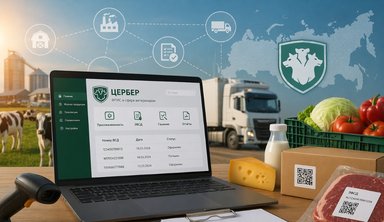
Tougher inspections at the border between Kazakhstan and China
Why Cargo Routes Are No Longer a Quick Solution
Road routes through Kazakhstan have long been considered a compromise: faster than the sea, more flexible than the railway, easier to manage.
But this model is actually ends its existence in its former form..
From the end of 2025 to the beginning of 2026, systemic tightening of control is recorded on the Russian border. This is not about random checks, but about Fully one hundred percent inspections of certain categories of cargo. It changes the whole economics of the route.
What's changed?
The key difference in the current situation Lack of predictability.
If earlier inspection was a risk, now for a number of product groups it has become a risk. guaranteed.
Cargoes are opened, recalculated, checked with documents, checked for compliance with the declared codes and destinations. Checks are not formal, but according to the full scheme. - with physical inspection and fixation.
As a result, the road route ceases to be "fast" and turns into "fast". the most unstable element of the supply chain.
Which categories fall under one hundred percent inspections
In practice, goods that traditionally went in cargo format and were used to optimize terms and customs procedures fall under increased control.
These are primarily:
- footwear
- textiles and textile products
- accessories and goods of light industry
- equipment
- components, components and spare parts
- goods at risk of reclassification according to HS
It's important to understand: list expandsIt is not recorded in one document. The decision to inspect is increasingly made on the basis of not formal signs, but a combination of factors. - type of goods, route, sender and design scheme.
Why is this happening at the system level?
Strengthened control - It is not a local initiative or a temporary campaign.
This is part of a broader logic:
First, there is a fight against gray schemes and understatement of customs value.
Secondly, the control of transit and re-export is being strengthened.
Third, the state returns the controllability of the flows that have long existed in the penumbra.
Cargo through Kazakhstan has historically been perceived as least transparent channelThis is why they were the first to come under tight control.
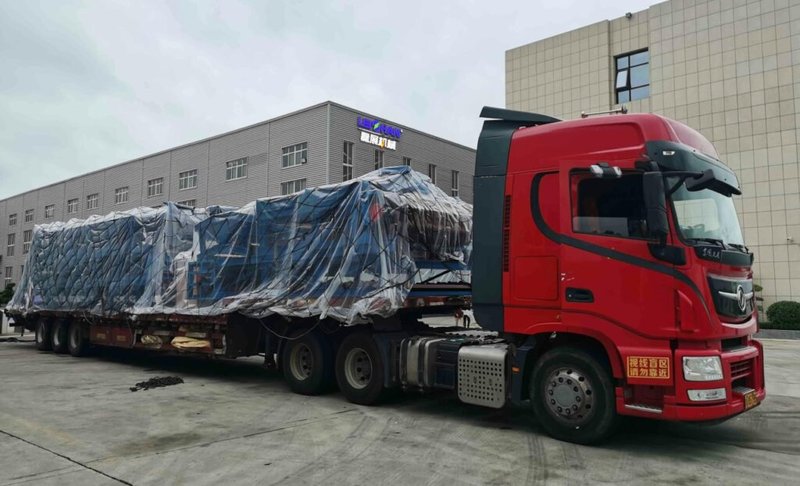
What this means for business in practice
The main effect Breaking the logic of timing.
When the inspection is one hundred percent, it is impossible to guarantee 5 days, 10 or 15. The machine can stand at the border indefinitely, and all calculations under the contract cease to work.
Second moment. - Increased indirect costs.
Downtime, additional operations, reassembly of lots, correction of documents- All this falls on the business, even if formally “nothing is broken.”
And the third, most painful effect. - reputational risks.
Disruptions in deliveries, delays in front of customers, inability to fulfill obligations on terms.
Why this is actually the end of the usual cargo
A car route makes sense when it:
fast
steerable
predictable
With one hundred percent inspections, it does not meet any of these criteria.
Technically, the route remains, but Economically and operationally, it makes no sense. for mass commodity flows.
A car through Kazakhstan ceases to be a universal solution and turns into a car. highly specializedApplicable only in certain scenarios.
What alternatives remain
Business is increasingly shifting:
- railway
- More transparent design schemes
- party consolidation
- Revision of logistics for real, not "marketing" terms
It's not faster or cheaper at the start, but steady-for-long.
We do not see a tightening “for a time”, but gameplay.
Cargo through Kazakhstan in its former form no longer works as a reliable delivery channel.
For businesses, this is a moment of rethinking strategies rather than trying to “sit over.”
Those who continue to view this route as fast and easy are taking risks that are no longer manageable.