Russian Airports: Role in Economy and Trade
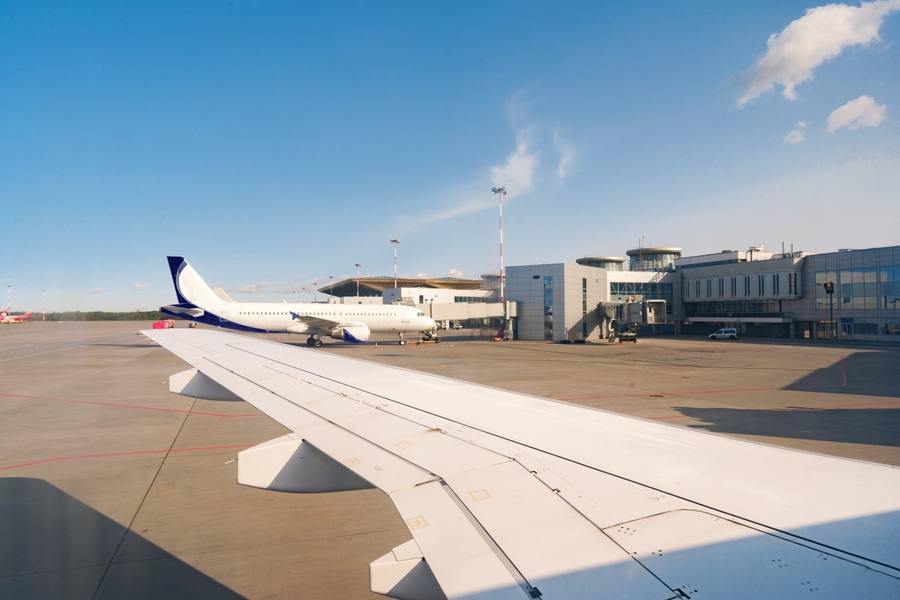
Russia actively uses airports for economic development and international trade
Russian airports are key transport infrastructure facilities that connect the country with the rest of the world. Due to its unique geographical location and significant investments in infrastructure, Russia is actively using airports for economic development and international trade. Below we will consider the most important airports, their features and contribution to the transport system of the country.
The importance of airports for the Russian economy
Airports perform the most important functions:
- provide international transportation of passengers and goods;
- stimulate regional development;
- increase exports of high-tech products;
- speed up the delivery of perishable goods.
In 2022, Russian airports carried more than 1.2 billion tons of cargo, making them an important link in global transport chains. They play a special role in ensuring the prompt delivery of goods between Europe, Asia and other regions.
Classification of Russian airports
- International hubs
These airports connect Russia with the largest economic centers of the world.
- Regional nodes
Airports connecting Russian regions with each other.
- Air cargo hubs
Airports specializing in freight traffic, especially transit between Europe and Asia.
Central region: global hubs
Sheremetyevo (Moscow)
Sheremetyevo is the largest airport in Russia by cargo traffic. It goes through more every year. 340 tons of cargoincluding perishable goods, pharmaceutical products and electronics. The airport has a modern cargo terminal with a total area 47,000 m2equipped with temperature control systems.
Features:
- The main hub for Aeroflot.
- Direct flights to 40+ countries of the world.
- Specialization in high-tech cargo.
Domodedovo (Moscow)
Domodedovo is the second largest airport of the Moscow air hub. It serves more than one year 30 million passengers near 200 tons of cargo. There are modern cargo terminals with a total area. 43 thousand m2.
Features:
- Node for international charter flights.
- Logistics center for large cargo carriers.
- Focus on the export of agricultural products.
Vnukovo (Moscow)
Vnukovo specializes in business aviation and cargo transportation. The airport handles around 150 tons of cargo annually and is actively used for export of goods to Europe and Asia.
Features:
- Modern terminals for high-speed cargo handling.
- Developed network of routes for business aviation.
Southern Region: Gateway to the Middle East and Europe
Pulkovo (St. Petersburg)
Pulkovo is the largest airport in northwestern Russia. He's processing around. 25 million passengers and 45,000 tons of cargo annually.
Features:
- Convenient location for trade with Europe.
- Specialization in the delivery of pharmaceutical products and light industry goods.
- Modern terminal with an area of 23 thousand m2.
Platov (Rostov-on-Don)
Platov is a modern airport in southern Russia. It provides transportation of agricultural products and goods of the oil and gas sector.
Features:
- Processing up to 5 million passengers per year.
- Transshipment of agricultural products and goods for industry.
Siberia and the Far East: Windows to Asia
Tolmachevo (Novosibirsk)
Tolmachevo is the largest cargo airport in Siberia. It passes through it to 150 tons of cargo a year. The airport is actively used for transit of goods between Europe and Asia.
Features:
- Direct flights to China, Japan and Southeast Asia.
- The largest logistics center of Siberia with modern terminals.
Khabarovsk (New)
Khabarovsk Airport is the main air hub in the Far East. He serves up to 2 million passengers near 35 thousand tons cargoes annually.
Features:
- Specialization in fish, seafood and light industry products.
- Convenient location for trade with Japan and South Korea.
Vladivostok
Vladivostok Airport plays a key role in trade with Asian countries. It is processed annually to 20,000 tons of cargo It is the main hub for the delivery of cars and equipment.
Features:
- It is actively used to transport goods from Japan, Korea and China.
- Modern terminals for cargo handling.
Challenges and prospects
Problems:
Depreciation of infrastructure, lack of qualified personnel, dependence on international sanctions.
Prospects:
Development of regional aviation, increase of freight traffic through Eastern Siberia, digitalization and modernization of equipment.
The development of Russian airports is a strategic task that helps to strengthen the country’s position in the global transport market.
Airport addresses and contacts are listed below!
Addresses and contacts of key airports
- Sheremetyevo (Moscow)
Address: Moscow region, Khimki, Sheremetyevo highway, 28
Contact: +7 (495) 578-65-65
- Domodedovo (Moscow)
Address: Moscow region, Domodedovo district, Domodedovo airport
Contact: +7 (495) 933-66-66
- Vnukovo (Moscow)
Address: Moscow, Vnukovskoye highway, 1
Contact: +7 (495) 937-55-55
- Pulkovo (St. Petersburg)
Address: St. Petersburg, Pulkovskoye Highway, 41
Contact: +7 (812) 337-38-22
- Platov (Rostov-on-Don)
Address: Rostov region, Aksai district, H. Grushevsky
Contact: +7 (863) 333-11-11
- Tolmachevo (Novosibirsk)
Address: Novosibirsk region, Ob, St. Tolmachevo, 10
Contact: +7 (383) 216-98-00
- Khabarovsk (New)
Address: Khabarovsk, Matveevskoye highway, 6
Contact: +7 (4212) 26-90-90
- Vladivostok
Address: Primorsky Krai, Artem, St. Knevich, 47
Contact: +7 (423) 230-69-09