Eurasia’s New Logistic Routes: How China Is Rebuilding the Map of Global Trade
For Russian business, this means the emergence of new opportunities for organizing supplies through Central Asia.
ООО "ТМП"

The section is devoted to international and global logistics: how transportation and supply chains work in different countries. Here we analyze the features of international transport logistics and the practice of organizing international transportation.
For Russian business, this means the emergence of new opportunities for organizing supplies through Central Asia.
ООО "ТМП"


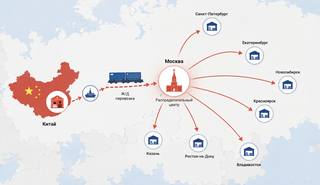
Many federal companies buy goods centrally and only then distribute them between branches.

Now the eastern direction is considered one of the busiest sections of the transport system of the country.

Why Logistics Control Means Regional Control

Companies that work with a large number of intermediaries or in highly competitive segments are particularly vulnerable.

Problems of Transitions of Zabaikalsk / Manchuria and Erlian / Arlenhote

If the Trans-Siberian is the artery of the country, then Novosibirsk is its strategic valve.

How the logic of decisions within the railway system is changing

Why Cargo Routes Are No Longer a Quick Solution

Why a narrow strip of water affects prices, timing and entire economies
International logistics is always about adapting to local rules, infrastructure and business culture. In this section, we compare how supply chains work in different regions: which routes are considered basic, where sea or rail solutions are strong, how ports, terminals and the last mile are arranged. We explain why the same product can travel differently depending on the country of departure and destination - and how this affects the timing and budget.
We also consider international container logistics and modern approaches to supply management: digital services, monitoring, chain transparency, risk management and route sustainability. The materials are useful for those who work with import/export and want to better understand global logistics in the modern world: from strategic trends to applied nuances that affect the outcome of the transaction.