The right to content created by AI: who is the copyright holder in 2026
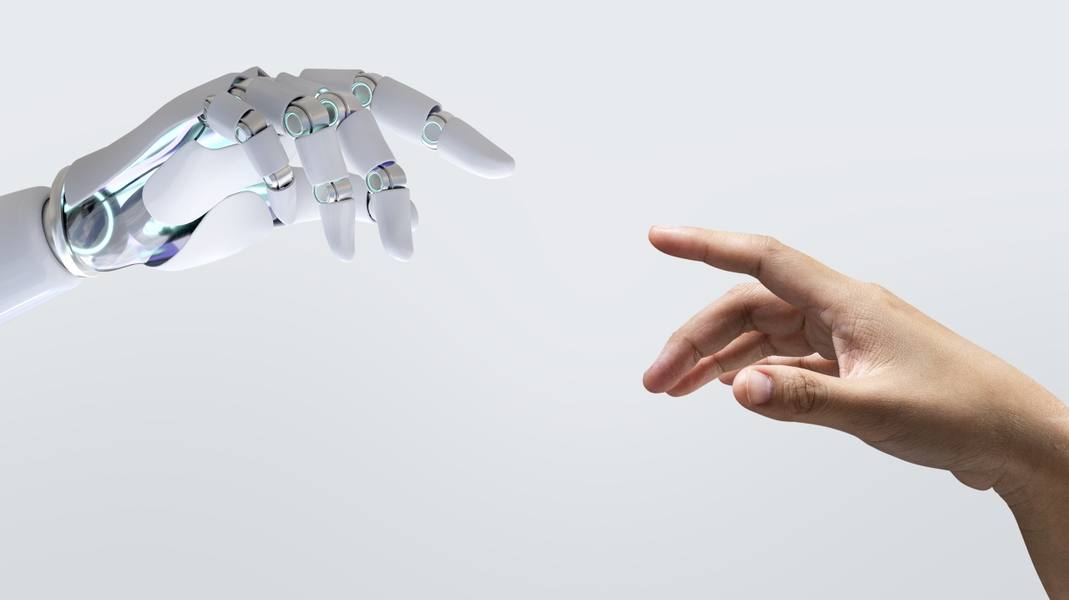
Almost all leading developers of artificial intelligence prescribe the terms of use of the results of generation in user agreements.
Artificial Intelligence as a Tool: A Revolution with Legal Issues
A few years ago, artificial intelligence was perceived as the technology of the future. Today, neural networks create texts, images, music, program code, marketing strategies, business plans and even architectural projects.
Companies are actively implementing AI in their workflows, cutting costs and speeding up content production. However, along with the new opportunities, a natural question arises:
Who owns the rights to the result of artificial intelligence?
Can a neural network be considered an author? Do you have the rights to the created product? And how can businesses protect the results they get from AI?
Let's get into that.
Can artificial intelligence be the author?
Today, in almost all countries of the world, the answer is unequivocal: no.
Copyright has historically been built around the concept of human creativity. The author of the work can only be an individual who has made his own creative contribution to the creation of the result.
Artificial intelligence has no legal personality. He may not own property, sign contracts, be liable or participate in civil relations.
Therefore, even if the neural network independently created a picture, article or musical composition, legally it cannot be considered the author of the work.
What does Russian law say?
Russian legislation assumes that the object of copyright arises exclusively as a result of human creative activity.
The Civil Code of the Russian Federation does not provide for the possibility of recognizing artificial intelligence as the author of the work.
This means that:
- The neural network cannot have copyright;
- AI cannot transfer rights to third parties;
- AI cannot be the right holder.
Only a person or organization can become a right holder if there are legal grounds for the emergence of such rights.
Who owns the rights to AI-generated content?
This is where the fun starts.
Lawyers have identified several possible scenarios.
Scenario 1. Humans use AI as a tool
For example, a designer creates an advertising banner using a neural network.
He formulates a technical task, selects stylistics, edits the result, finalizes the composition and makes creative decisions.
In this case, the neural network acts as an analogue of a graphic editor or other working tool.
The author of the result is considered a person.
It is he who has the rights to the final product.
Scenario 2. Content fully generated automatically
For example, the user enters a short request:
"Draw a sunset over the ocean."
The neural network produces a finished image without further human involvement.
In such a situation, the issue becomes much more complicated.
Many lawyers believe that in the absence of a significant creative contribution of a person, the object may not fall under classical copyright protection.
That is, the rights to such a result may be limited or completely absent.
Scenario 3. Content created by an employee of the company using AI
For example, a marketer creates an advertising campaign using neural networks as part of his work duties.
In this case, the standard rules of service works apply.
The author will be an employee, and exclusive rights may belong to the employer in accordance with the employment contract and internal documents of the company.
Who owns the rights to training data?
This is another major challenge for the modern AI industry.
Most neural networks are trained on huge amounts of information:
- texts;
- photographs;
- videos;
- musical works;
- software code.
That is why lawsuits are taking place around the world between rights holders and AI developers.
The authors ask a logical question:
If the neural network was trained on my works, does this violate my rights?
There are no uniform international rules yet. Legislation of different countries is developing at different speeds, and judicial practice is only being formed.
What do the biggest AI platforms say?
Almost all leading developers of artificial intelligence prescribe the terms of use of the results of generation in user agreements.
In most cases, the user is granted rights to the created content, but there are restrictions:
- rights of third parties cannot be violated;
- results cannot be used for prohibited purposes;
- Some services may retain certain rights to use materials to train models.
That is why it is important for businesses to carefully review the licensing agreements of the platforms used.
Risks for business
The use of AI significantly speeds up work, but at the same time creates new legal risks.
Among the main ones:
Copyright infringement
A neural network may inadvertently reproduce elements of existing works.
Problems with registration of intellectual property
In some cases, there may be a question about the availability of sufficient creative human input.
Uncertainty of legislation
Legal norms in the field of artificial intelligence continue to develop actively.
What is considered acceptable today may be regulated differently in a few years.
How can businesses safely use AI?
Experts recommend following several rules.
Record human participation
It is important to maintain confirmation that the final result was created under the supervision of a specialist.
Check the uniqueness of the materials
Especially when it comes to commercial use of content.
Explore platform user agreements
Each service sets its own rules for the use of generation results.
Use AI as an assistant, not a full-fledged author
This approach significantly reduces legal risks.
The future of copyright in the age of artificial intelligence
Technology is advancing faster than legislation.
Today, neural networks are able to create materials that are difficult to distinguish from human work. However, the law remains on the side of the traditional approach: the author can only be a person.
In the coming years, new laws, judicial precedents and international agreements will shape the rules of interaction between business, authors and artificial intelligence.
But one thing is already clear: AI is not becoming an independent rights holder, but a powerful tool that helps people create new products, ideas and business models.
It is the person who remains a key figure in matters of authorship, responsibility and ownership of intellectual property.