Logistics in China: Efficiency and Innovation
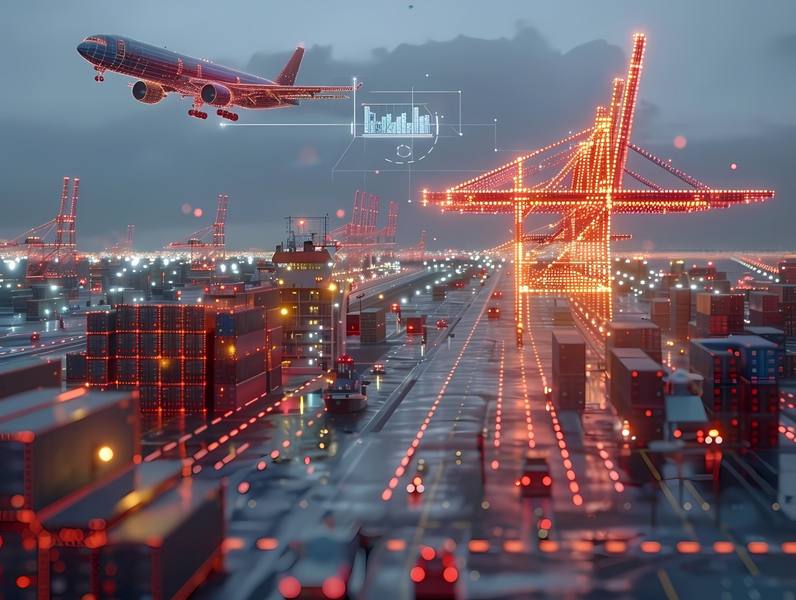
Logistics in China is a highly developed system that plays a key role in the country’s economy and its integration into global supply chains. With efficient transport infrastructure, modern technology and strict regulations, China is a unique logistics hub. In this article, we will look at the key organizational points, distinctive features, advantages and challenges of the Chinese logistics system.
Transport infrastructure
- Road transport
China’s highway network, which is more than 5.1 million kilometers long, includes more than 160,000 kilometers of highways. The efficiency of road transport is due to:
- Developed highways: The main routes link key economic zones, which significantly speeds up delivery.
- Monitoring systems: Using GPS and traffic control systems helps optimize routes and reduce congestion.
- Rail transport
China’s railway network, one of the largest in the world, is over 77,000 kilometers. Main advantages:
- High speed trains: On high-speed lines, the speed reaches 350 km/h, which reduces the delivery time between major cities.
- Freight railways: Special cargo trains efficiently transport large volumes of goods over long distances.
- Maritime and air transport
Chinese ports, such as the port of Shanghai, handle more than 14 billion tons of cargo per year, making them among the busiest in the world. Advantages of sea and air transport:
- Access to international markets: Ports provide access to global markets, and aviation provides fast delivery of small and urgent cargo.
- Quality and safety: Modern technologies of monitoring and protection allow to minimize risks during transportation.
Technology in logistics
- Innovation and automation
China is actively implementing innovative technologies to optimize logistics. Examples include:
- Warehouse Management Systems (WMS): Allow effective inventory management, reducing the time of cargo handling in warehouses.
- Automated transportation systems: Using drones and robots to deliver goods within cities.
- Blockchain and Big Data Analytics
- Blockchain: Increases supply chain transparency and reduces the likelihood of fraud. The implementation of blockchain is already actively used in sectors such as pharmaceuticals and the food industry.
- Big data analytics: Companies use data to forecast demand and optimize routes, saving time and money.
Legal aspects
- Regulation of the logistics industry
Chinese regulations regulate logistics companies. Key documents:
The Logistics Act (2017): It establishes the rights and obligations of all participants in the logistics process and creates a legal basis for the development of the sector.
Agreement on International Logistics: Provides a legal framework for international transport, taking into account the interests of all parties.
- Customs procedures
Customs regulations in China are quite strict. However, recent changes, such as the introduction of the Single Window system, have greatly simplified the process:
Processing speed: The waiting time at the borders has been reduced by 30%.
Electronic declarations: They allow you to speed up the process of cargo clearance and reduce the likelihood of errors.
Distinctive features and advantages
- Scale and speed
- Wide network: China has one of the largest logistics networks in the world, which allows you to quickly solve delivery tasks.
- Delivery speed: High-speed trains and modern technologies reduce transportation time, providing competitive advantages.
- Flexibility and adaptability
- Adaptation to change: Chinese logistics companies are quick to respond to changes in demand and market environment by introducing new technologies and processes.
- Diversity of services: Logistics companies offer a wide range of services, from warehousing to international transportation.
- Investment in technology
- Government programmes: China is actively investing in the modernization of logistics infrastructure and technology, which contributes to increased efficiency.
- Private initiatives: A host of startups and large companies like Alibaba and JD.com are innovating in logistics, including automation and drone delivery.
Challenges in logistics
- Infrastructure problems
Despite the extensive network, congestion of roads and ports remains a serious problem. According to the World Bank, congestion levels in China’s major cities were high in 2021, increasing delivery times and costs.
- Environmental aspects
With the increase in freight traffic, there is a need to solve environmental problems. Projections suggest that by 2030, CO2 emissions from logistics could rise by 30%. To solve this problem, businesses start:
Transition to electric vehicles: Many companies are investing in clean transportation.
Route optimization: Data analytics systems help reduce distances and emissions.
Logistics within China is a complex, multifaceted system that is actively developing and adapting to new challenges. Given the powerful transport infrastructure, the introduction of advanced technologies and strict regulation, Chinese logistics has a number of advantages that make it unique in a global context. However, to sustain this success, it is necessary to overcome existing challenges and move towards more sustainable and effective development.