China’s Export Subsidies: How Government Support Affects World Trade
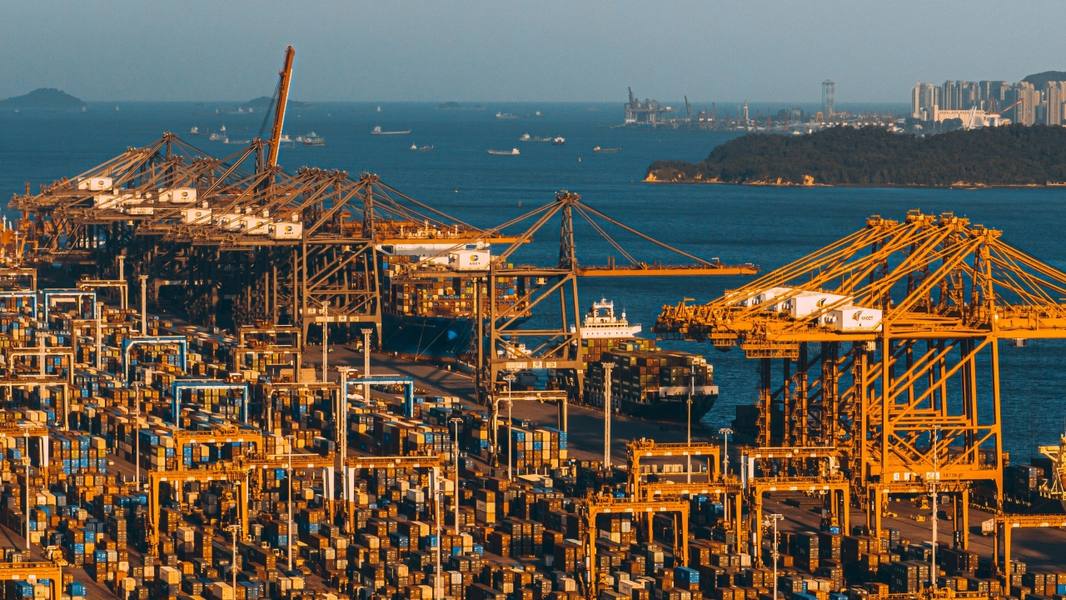
State financial institutions play a major role in supporting exports
Twenty years ago, “Made in China” was often associated with low-cost mass-market products. Today, China exports high-speed trains, electric cars, solar panels, industrial equipment, telecommunications technology and sophisticated electronics.
In recent years, China remains the largest exporter of goods in the world, and its share in world trade continues to influence almost all sectors of the global economy.
However, this result did not occur by itself.
China’s export success has been underpinned by decades of state policy, with export subsidies and producer support programs at the forefront.
Why is China helping exporters so much? What tools are used to promote goods to world markets? How does this affect international competition?
We're going through this.
Why exports are so important to China
For many years, the Chinese economic model was built around industrial production and foreign trade.
For a country with a population of more than 1.4 billion people, exports have become not just a source of foreign exchange earnings, but a tool for solving several strategic tasks:
- creation of jobs;
- loading of production capacities;
- development of technologies;
- attraction of investments;
- strengthening international influence.
In fact, exports have become one of the key engines of the country’s economic growth.
What are Export Subsidies?
Export subsidies are measures of state support for companies that supply products to foreign markets.
They can take various forms:
- tax benefits;
- VAT refund;
- preferential lending;
- compensation of logistics costs;
- insurance of export contracts;
- financing of participation in international exhibitions;
- grants to promote products abroad.
The main goal of such measures is to make domestic products more competitive compared to the products of foreign producers.
VAT refund as one of the main support tools
One of the most well-known mechanisms for supporting Chinese exports is the export VAT refund system.
When a company produces a product domestically, it pays taxes at various stages of production.
When exporting, a significant portion of these taxes can be refunded by the state.
As a result:
- the cost of production is reduced;
- increasing competitiveness in foreign markets;
- Opportunities for international trade are increasing.
For many Chinese manufacturers, VAT refunds are an important part of their export strategy.
Export credit and insurance
State financial institutions play a major role in supporting exports.
Chinese banks are actively financing:
- export contracts;
- construction of production abroad;
- infrastructure projects;
- International investment programs.
In addition, state insurance mechanisms allow exporters to reduce the risk of non-payment by foreign buyers.
This is particularly important when dealing with emerging markets in Asia, Africa and Latin America.
Logistics as part of export policy
One of the features of China is an integrated approach to export development.
The state invests not only in production, but also in infrastructure.
In recent decades, there have been:
- the largest seaports in the world;
- developed railway network;
- modern cargo aviation hubs;
- Large-scale logistics centers.
All this significantly reduces transport costs and accelerates the supply of goods around the world.
One Belt Initiative - one way
A special place is occupied by China’s international infrastructure program, known as “One Belt, One Road”.
The project covers dozens of countries in Europe, Asia, the Middle East and Africa.
Its goal is the development of transport corridors, logistics routes and trade relations.
For Chinese manufacturers, this means:
- new sales markets;
- reduction of logistics costs;
- strengthening export positions.
Why Other Countries Are Criticizing China’s Export Policy
The success of the Chinese model is not only admirable, but also controversial.
Many states believe that large-scale state support creates unequal conditions for competition.
The most frequent criticism concerns:
- metallurgy;
- solar energy;
- automotive industry;
- production of batteries;
- high-tech electronics.
According to some countries, subsidies allow Chinese companies to offer products at prices that are difficult for private businesses from other countries to compete with.
That is why trade disputes, anti-dumping investigations and additional import duties periodically arise.
Export subsidies and technological leadership
It is important to understand that China is not only using subsidies to increase supply.
Today, government support is increasingly directed to the development of high-tech industries:
- electric vehicles;
- artificial intelligence;
- robotics;
- microelectronics;
- renewable energy;
- biotechnology.
Thus, exports become an instrument not only of economic growth, but also of technological development of the country.
What this means for Russian business
For Russian entrepreneurs, China’s export policy is of dual importance.
On the one hand, high competition from Chinese manufacturers is putting pressure on many industries.
On the other hand, thanks to state support, China remains one of the largest suppliers of equipment, technology and industrial solutions.
In addition, the development of trade relations between Russia and China opens up new opportunities for:
- importers;
- logistics companies;
- distributors;
- joint ventures;
- Export-oriented business.
The future of export subsidies
Despite the rise of trade conflicts and increased protectionism in the world, China is unlikely to abandon its policy of supporting exports.
On the contrary, as global competition increases, governments continue to invest in technology, infrastructure, and international trade projects.
At the same time, the emphasis is gradually shifting from a simple increase in supply volumes to the development of products with high added value.
Today, China competes not only in price but also in technology.
Export subsidies have become one of the most important factors in China’s economic growth and its transformation into the world’s largest industrial power.
Government support for producers, well-developed logistics, affordable financing and long-term strategic planning have created a unique export ecosystem that continues to influence global trade.
For businesses around the world, understanding these mechanisms is not just a matter of economic theory, but a prerequisite for global competition.
China shows that in the modern economy, export success is determined not only by the quality of products, but also by the ability of the state to create conditions for the promotion of its companies in world markets.