How China Holds Up Raw Material Prices and Supports Its Manufacturers
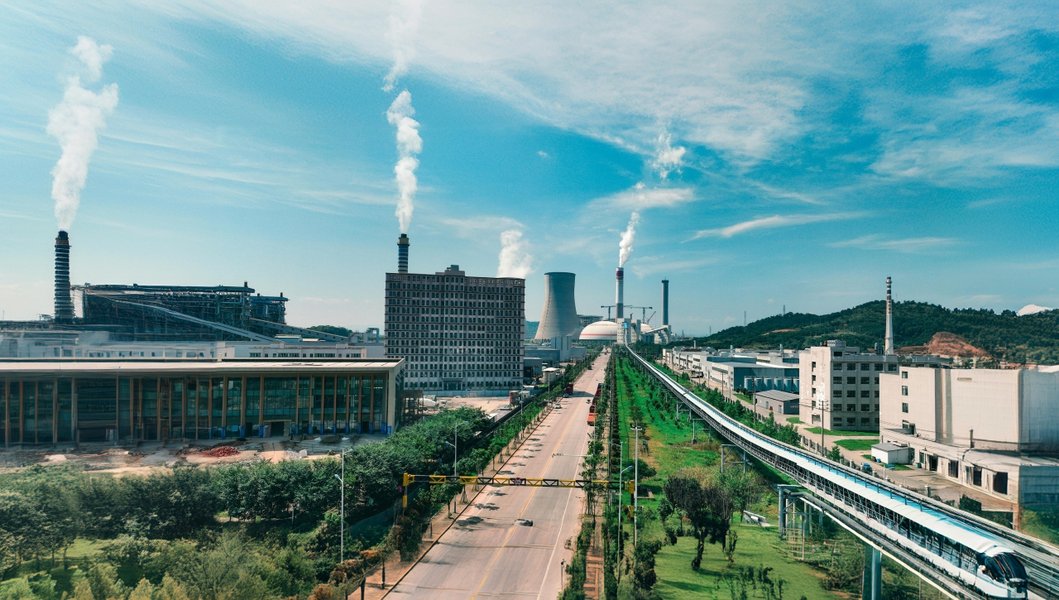
The answer lies in the model of economic governance that China has built for decades.
China has long since ceased to be a “world factory.” Today, it is one of the few countries that systematically manages the industrial economy, affecting not only production, but also the cost of raw materials, energy, exports and domestic supply chains.
That’s why many companies around the world still don’t understand the paradox of why Chinese producers continue to hold competitive prices even as oil, logistics, metals, and chemical raw materials rise globally.
The answer lies in the model of economic governance that China has built for decades.
Manufacturing for China is a matter of national sustainability
For Beijing, industry - It's not just business. It is the foundation of economic stability, employment and global influence.
That is why the government considers the support of producers as a strategic task.
This is especially evident in industries related to:
• metallurgical
• Chemical industry
• mechanical engineering n
• Plastic production
• export production
China is well aware that as long as it controls production, it retains influence over global trade.
How China Holds Domestic Prices
The main feature of the Chinese model is that the state tries to prevent sharp jumps in the cost of production within the country.
In many economies, rising oil or gas costs automatically lead to higher prices. In China, the authorities are trying to smooth out such processes through a system of industrial support.
This is not only achieved by direct price regulation. The state influences the economy through:
• concessional lending
subsidy
• Controlling export flows
• logistics support
• Regulation of the energy sector
As a result, Chinese enterprises have significantly more sustainable working conditions even in times of global instability.
Why Chinese goods remain cheap
Many global manufacturers are facing a situation where their cost continues to rise, and Chinese companies still maintain lower prices.
The reason is that China often deliberately supports the industrial sector, even at the expense of short-term profits.
The logic is simple:
It is better to temporarily reduce the profitability of the commodity sector than to lose the competitiveness of the entire industry.
That is why Chinese factories can continue to operate with minimal margins, while maintaining export and production load.
Supporting Manufacturers is Part of China’s Global Strategy
For China, industry - It is an instrument of economic influence.
The more countries depend on Chinese goods, equipment and components, the stronger Beijing’s position in the global economy.
That is why the state actively supports industries related to:
• exported
• High technology
• industrial processing
• Production of equipment
This allows Chinese companies to scale faster and compete more aggressively in the global market.
Why this is causing tension in the global economy
Many countries see this as a hidden form of economic protectionism.
The problem is that enterprises in other countries operate under conditions of full-fledged market pricing, while Chinese manufacturers receive state support.
This is particularly felt in:
• metallurgy
• Chemical industry
• electronics
• mechanical engineering
Because of this, trade conflicts and anti-dumping investigations regularly arise around China.
China Prepares for Long Global Turbulence
Another important feature of the Chinese model - Work for long-term sustainability.
While many economies react to crises after rising prices or deficits, China is trying to keep key industries stable in advance.
This is particularly important in the context of:
- increasing the cost of energy resources,
- restructuring of global logistics,
- geopolitical conflicts,
- pressure on global trade.
Under such conditions, China is not relying on a free market, but on a managed industrial system.
Why free markets are not a priority for China
The Western economic model is built around the idea of free pricing. China follows a different logic.
For Beijing, the priority is not the maximum profit of individual companies, but the sustainability of the entire industrial chain.
This is why the government regularly intervenes:
- c the cost of energy,
- logistics,
- credit,
- export restrictions,
- commodity flows.
In fact, China is building an economy where the market exists but is under constant state control.
How it affects Russia and the global market
For Russia, the Chinese model creates both opportunities and risks.
On the one hand, China remains the largest consumer of raw materials, fertilizers, metals and agricultural products.
Another - It is becoming increasingly difficult for Russian manufacturers to compete with Chinese products in the segments of processing and finished goods.
This is especially true in the industry, where:
- speed of production,
- access to cheap raw materials,
- government support,
- scale of enterprises.
The world is entering an era of managed industrial economy
The main takeaway of recent years is that the era of a fully free global market is slowly coming to an end.
The world’s largest economies are starting to:
• Protect your manufacturers
• Control of raw materials
• subsidize industry
• Manage logistics chains
And China today. - One of the most striking examples of such a model.
That is why domestic support for producers and the retention of commodity prices are not a temporary measure, but part of a long-term strategy of China’s economic influence on the world market.