Chinese cosmetics in every home: why demand is growing and what importers need to know
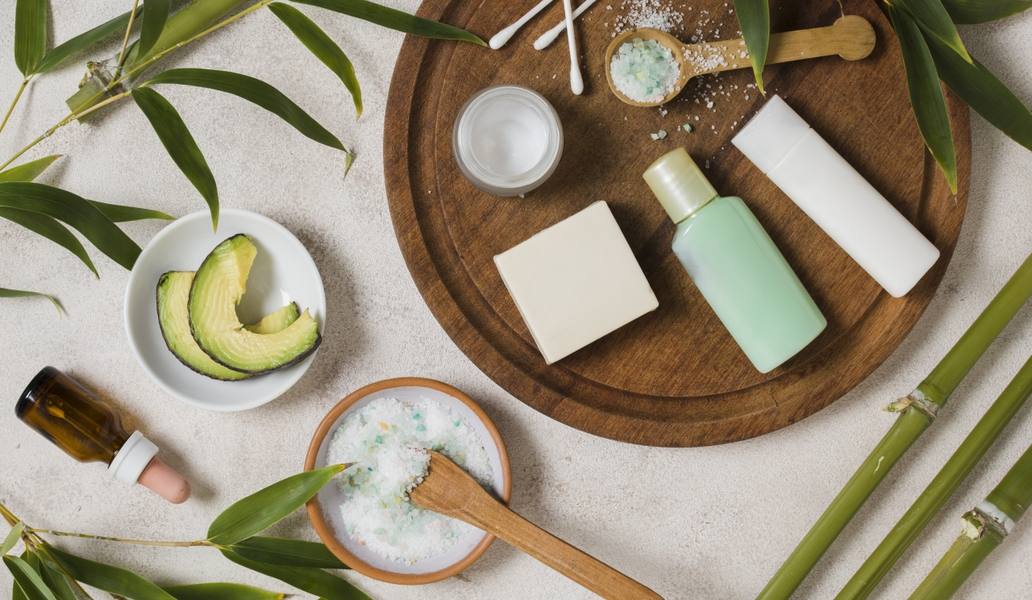
Chinese factories actively offer the production of cosmetics under the brand name of the customer
Chinese cosmetics quickly cease to be exotic in the Russian market. Consumers are increasingly turning to Asian brands, and entrepreneurs are seeing China as a source of affordable products and an opportunity to launch their own cosmetics brand. But behind the attractive economy lurks the complex side of business: requirements for compositions, security confirmation and customs clearance.
We will understand why Chinese cosmetics are gaining popularity and what risks should be considered for those who plan to enter this market in 2026-2027.
Record import: Russian market opens doors to Chinese cosmetics
In September 2026, the export of cosmetic products from China to Russia reached $33.6 million. This is 2.2 times more than in the same month last year.
In January-September, the volume of deliveries amounted to $191.4 million, which is 1.7 times higher than in the same period of 2025. Russia became the third largest buyer of Chinese cosmetics after the United States and the United Kingdom.
The basis of supplies are care products and decorative cosmetics. Only cosmetics and tonal products in September accounted for $18.5 million.
These figures show that we are not talking about one-time interest in individual products. Chinese cosmetics are increasingly prominent in international trade, and the Russian market is becoming an important export destination.
The statistics reflect the cost of supply in dollars, not just the physical quantity of output. The dynamics could be affected by volumes and prices.
C-beauty: China is no longer associated with cheap copies
Until recently, Chinese products in cosmetics were often perceived as a budget alternative to well-known brands. Today, this image is noticeably outdated.
China has its own cosmetics industry, C-beauty. Its development is based on a large production base, a highly competitive domestic market, local developments and active promotion through digital platforms.
Chinese manufacturers offer a wide range: from basic care and makeup products to products with complex formulas and modern packaging. Many factories work not only with ready-made lines, but also produce products under the brands of customers.
For the Russian buyer, a combination of price, design and variety is important. Against the background of rising prices of many foreign brands, Chinese cosmetics can become an affordable alternative in the mass and medium segments.
However, a low purchase price alone does not guarantee quality or safety. They need to be checked separately, especially when it comes to products under their own brand.
Own brand: why the offer of the factory is not yet ready business
Chinese factories actively offer the production of cosmetics under the brand name of the customer. The entrepreneur can choose a product category, coordinate the packaging and design, discuss the recipe and order a batch.
At first glance, the scheme looks simple: find a factory, agree on the product, bring the goods and start selling. But cosmetics belongs to the categories for which there are special requirements of technical regulation.
The main document for the EAEU market is the technical regulation TR CU 009/2011 “On the safety of perfumery and cosmetic products”. Before the release of products into circulation, it is necessary to pass a conformity assessment. Depending on the type of means, this will be a declaration of conformity or state registration.
State registration is subject to certain categories of products from the list of regulations. For the rest, a declaration is applied. Therefore, first you need to determine the exact type of goods, its purpose, composition and applicable procedure, and then plan the delivery.
Samples and tests: not only paper is important, but also the origin of products
Laboratory testing of samples may be required to confirm the safety of cosmetics. At the same time, it is important to properly organize their selection and documentation.
You can't just get a few jars from a factory, send them to a lab, and then assume that the results automatically apply to any future batch. The identity of the products, the composition, the manufacturer's documents and the connection of the tested samples with the goods that are planned to be put into circulation must be confirmed.
For individual procedures, the regulations provide for sampling at the warehouse of the manufacturer, applicant, temporary storage or customs warehouse. The specific procedure depends on the form of conformity assessment and the scheme used.
Therefore, the route of samples must be agreed in advance with the certification body, laboratory and customs representative. An error at this stage can lead to repeated tests, registration delays and additional costs.
Composition under control: Chinese norms do not replace the requirements of the EAEU
Another serious risk is the formulation of the product.
The factory can offer a ready-made composition or develop a formula according to the technical task of the customer. But the responsibility for the compliance of cosmetics with the requirements of the EAEU market cannot be shifted to the promises of the manufacturer.
The technical regulations establish restrictions and conditions for the use of individual ingredients, including preservatives, dyes and other substances. A component that is acceptable for use in one market is not necessarily suitable for putting products into circulation in the EAEU.
Before starting production, it is necessary to obtain a complete formulation specification with the names of ingredients and their concentrations where required. Documents should be checked for compliance with the requirements of the regulations, and the declared properties of the product - for the presence of the necessary justification.
It is especially risky to order a large batch without checking the final formulation. If a factory changes its composition after testing, the test results may no longer apply to the new version of the product. In this case, the business risks receiving goods that cannot be legally sold without additional procedures.
White Logistics Begins Before Party Order
Customs clearance of cosmetics should not be left at the time when the goods have already been produced and shipped. Preparation should begin before placing the order.
Before paying the consignment, it is important for the importer:
- determine the HS code and check the applicable requirements for the goods;
- receive from the factory specification, information about the manufacturer and documents for the products;
- check the composition and labeling for compliance with the requirements of the EAEU;
- determine whether a state registration or declaration of conformity is required;
- agree on the procedure for selection and delivery of samples for testing;
- Check what documents are required for customs declaration;
- stipulate in the contract the obligation of the factory to notify about changes in the formulation, raw materials and production process.
Special attention should be paid to labeling. Information on consumer packaging must comply with the requirements of the regulations and contain the necessary information in the language of the state where the goods will be sold.
If these issues are not addressed in advance, border delays and re-registration costs could completely change the supply economy.
Chinese cosmetics in 2026-2027: an opportunity for a prepared business
The growth of imports shows that the Russian market is already interested in cosmetic products from China. For entrepreneurs, this is an opportunity to work with a growing category, develop their own brands and look for manufacturers with the right technology and price.
But entering this niche only on the basis of low purchase cost is a risky decision. In the cosmetics business, it’s not just packaging design and marketing that matter. It is necessary to control the composition, confirm security, properly execute documents and build a legal supply chain.
Manufacturing audit of the factory, check of formulation, correct work with samples and white logistics should be part of the project from the beginning.
Chinese cosmetics can become a common commodity in Russian homes. But for the importer, the path to this result does not begin with ordering a container, but with checking the product and preparing documents.