Contract manufacturing: how to produce your own goods without building a plant
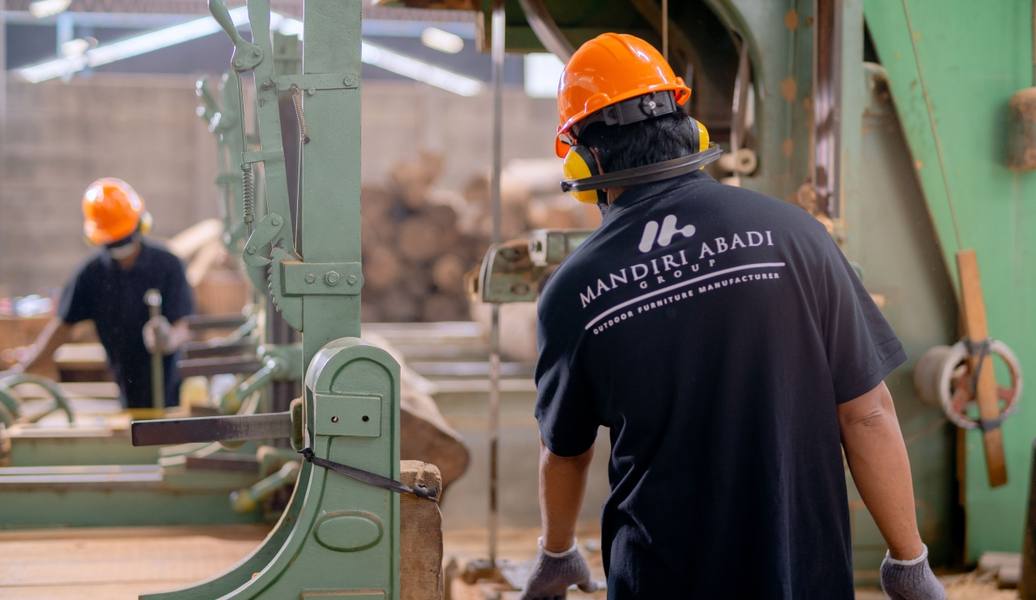
Many companies, whose products we see on store shelves every day, do not produce anything themselves.
Today, more and more entrepreneurs come to the same idea: to create your own brand, it is not necessary to build a plant, buy expensive equipment and hire hundreds of employees. The modern market offers a more flexible model – contract production.
It is under this scheme that thousands of famous brands around the world work. Many companies, whose products we see on store shelves every day, do not produce anything themselves. They develop a product, create a brand, deal with sales and marketing, and the manufacture is transferred to professional manufacturing enterprises.
This model became especially popular when working with China, where the largest production facilities in the world are concentrated. However, contract manufacturing is not only an advantage. It has its own risks, which it is important for an entrepreneur to know in advance.
We will understand how this model works, who it is suitable for and how to avoid the most common mistakes.
What is Contract Production?
Contract production is the production of products by a third-party manufacturer according to the technical task of the customer.
Simply put, an entrepreneur orders the manufacture of goods at an existing enterprise under his own brand.
The manufacturer undertakes:
- manufacture of products;
- purchase of raw materials;
- quality control;
- packaging;
- marking;
- preparation for shipment.
The client shall:
- developing an idea;
- customer search;
- promotion of the brand;
- sales;
- business development.
This is why contract manufacturing is often cited as the fastest way to get to market with your own product.
What goods are most often produced under the contract
Today, almost any product is produced under this scheme.
The most popular categories are:
- cosmetics;
- household chemicals;
- food products;
- BADs;
- sports nutrition;
- clothing;
- shoes;
- furniture;
- household appliances;
- electronics;
- packaging;
- plastic products;
- agricultural products;
- household goods;
- Building materials.
China is the world leader in contract manufacturing thanks to a huge number of specialized plants.
How Contract Production Works
The process is usually as follows.
Step 1. Creating an idea
The company determines what product it wants to bring to market.
For example:
- household chemicals;
- own brand of coffee;
- agricultural equipment;
- water filters;
- clothes under their own brand.
Step 2. Producer search
After preparing the technical specification, the search for an enterprise that has the necessary capacities begins.
Evaluated:
- experience;
- equipment;
- availability of certificates;
- productivity;
- export experience;
- quality control system.
Step 3. Development of a sample
Before launching the batch, a test sample is made.
At this stage, check:
- quality;
- characteristics;
- packaging;
- Compliance with market requirements.
Practice shows that this is where the main adjustments are made.
Step 4. Production
After approval of the sample, mass production shall be started.
Most often, the customer receives:
- photographs;
- video production;
- inspectors' reports;
- results of laboratory tests.
Step 5. Quality control
A final check is carried out before sending.
When working with China, most large customers additionally involve independent inspection companies.
This greatly reduces the likelihood of getting married.
Advantages of contract production
Minimum investment
The main advantage is that there is no need to build your own production.
No need to purchase:
- equipment;
- production premises;
- machine tools;
- packing lines;
- raw materials warehouses.
This significantly reduces the initial investment.
Quick business start-up
While the construction of its own plant takes years, contract production allows you to bring the product to the market in a few months.
This is especially important for fast-growing niches.
Use of manufacturer's experience
The manufacturer already knows:
- technology;
- quality standards;
- Features of raw materials;
- requirements of different countries;
- packaging standards.
Entrepreneurs do not have to go this way on their own.
Scalability
With an increase in demand, you can quickly increase output without buying new equipment.
This is especially important for young brands.
Opportunity to focus on sales
Instead of solving production issues, an entrepreneur can:
- marketing;
- customer search;
- product development;
- export;
- Building a dealer network.
Disadvantages of contract production
Despite the obvious advantages, there are also risks.
Dependence on manufacturer
If the factory:
- delays delivery;
- raises prices;
- changes conditions;
- stops working,
This directly affects the customer’s business.
Therefore, it is desirable to have backup producers.
Limited control of production
Even with constant monitoring, the customer does not directly manage the process.
That is why it is necessary:
- regular inspections;
- audit of production;
- control of each party.
The risk of copying products
Especially important when working with foreign factories.
Without legal protection, the manufacturer can begin to produce a similar product on its own.
It is therefore recommended in advance:
- register the trademark;
- conclude NDAs;
- sign agreements on intellectual property protection;
- fix the design rights.
Minimum order volumes
Most factories operate with minimal batches.
For a small business, this can be an obstacle.
However, many Chinese enterprises are now ready to work with relatively small orders.
Difficulty communicating
Working with foreign manufacturers requires:
- language skills;
- understanding of local legislation;
- knowledge of business culture.
Therefore, many companies attract professional representatives in China.
How to Choose a Reliable Manufacturer
When choosing a partner, it is important to pay attention not only to the price.
Much more important to check:
- registration of the enterprise;
- export history;
- availability of certificates;
- real production capacity;
- customer reviews;
- financial sustainability;
- quality of communication;
- willingness to provide samples.
It is advisable to visit the plant in person or conduct an independent audit.
What mistakes entrepreneurs make
In practice, the following mistakes are most common:
- Selection of the supplier only at the minimum price;
- lack of technical assignment;
- refusal of quality control;
- absence of a contract;
- ignoring the protection of intellectual property;
- ordering too large a batch without market testing;
- There is no backup manufacturer.
Each of these mistakes can lead to serious financial losses.
When contract manufacturing is really profitable
This model is especially effective if the company:
- launches a new brand;
- Entering a new market;
- wants to test demand;
- Not ready to invest in your own plant;
- Plans to scale quickly;
- He works in international trade.
If production is a key competence of the company and requires unique technologies, own capacity may be a more justified solution.
Conclusion
Contract manufacturing has long ceased to be a temporary solution for small businesses. Today, this is a full-fledged strategy used by both young start-ups and the largest global brands.
With a competent choice of a partner, careful preparation of technical specifications and system quality control, this model allows you to significantly reduce investment, quickly enter the market and focus on brand development and sales.
China remains a particularly attractive destination, a country with the largest industrial infrastructure, a high level of technological development and extensive experience in working with international customers. But success here depends not only on the choice of the factory, but on the correct organization of the entire process: from the inspection of the manufacturer to the protection of intellectual property and control of each batch of goods.
Contract manufacturing is not just a way to save money. This is a tool that, when used correctly, can become the foundation for creating a successful and scalable business.