Manufacturing without people: reality or the near future?
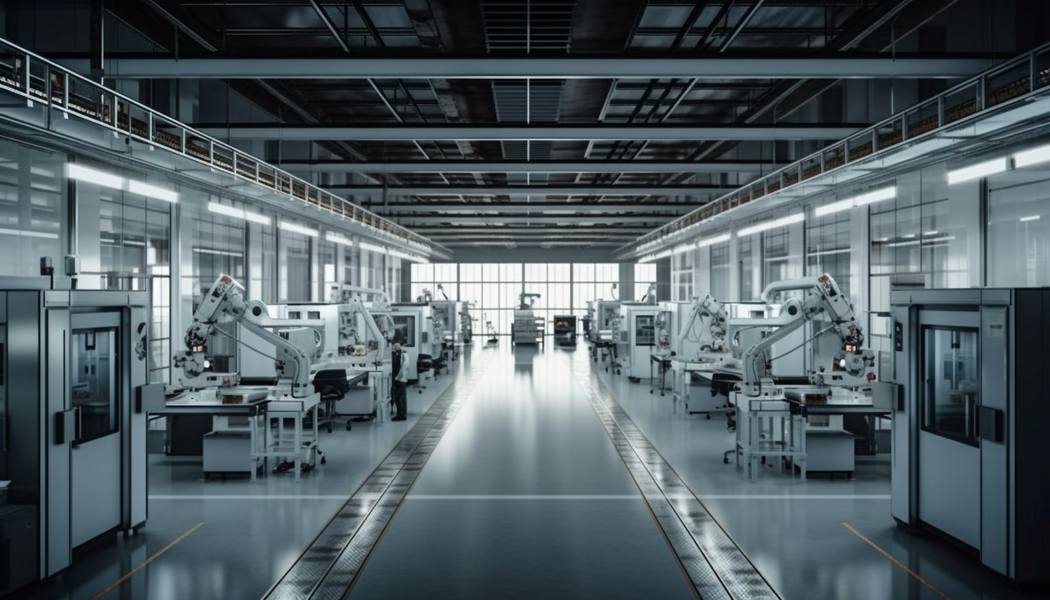
At some modern enterprises, the staff decreased several times, and the volume of products increased
A decade ago, a fully automated factory seemed like the plot of a science fiction movie. Today, such enterprises are already operating in China, Japan, South Korea, Germany and the United States. Robots independently assemble cars, sort products, control quality and move goods through warehouses, and a person increasingly becomes not a performer, but an operator of a complex digital system.
The world is rapidly moving towards a new industrial revolution, where the main resource is not workers, but technology, data and artificial intelligence. This process is particularly evident in China today.
We will understand how real production without people, what technologies are already working and what this means for business.
The Fourth Industrial Revolution has already begun.
If previously the competitive advantage was cheap labor resources, today the main factor is productivity.
Rising wages, staff shortages, an aging population and high competition are forcing businesses to look for ways to produce more at less.
That is why the world’s largest manufacturing economies are investing heavily in automation.
Today, robotics is developing in several directions at once:
- industrial robots;
- artificial intelligence;
- computer vision;
- Digital twins of enterprises;
- Autonomous internal logistics;
- unmanned warehouses;
- Automatic quality control lines.
As a result, many processes are already performed without human intervention.
China - world leader in industrial automation
China is the largest buyer and manufacturer of industrial robots.
The reason is simple.
The country can no longer build an economy solely on cheap labor. Average wages are rising, the population is aging, and demand for products is increasing.
Therefore, the state program Made in China It is based on intellectual production.
Today in China you can find companies where:
- Dozens of robots work around the clock;
- Transportation between workshops is carried out automatically;
- products are checked by cameras with artificial intelligence;
- equipment independently informs about the need for repair;
- The warehouses operate almost without human intervention.
At some modern enterprises, the staff decreased several times, and the volume of products increased.
What modern factories already know
Automation has long ceased to be limited to assembly robots.
Today, modern enterprises are able to independently perform almost the entire production cycle.
Production
Robots:
- weld metal;
- collect products;
- apply coatings;
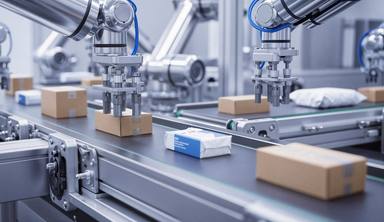
- carry out packaging;
- They label products.
All operations are performed with high accuracy and without fatigue.
Quality control
If before the control was carried out by the staff of the department of OTC, today high-resolution cameras together with artificial intelligence detect defects faster than a person.
The system is able to see:
- microcracks;
- scratches;
- deviations in size;
- wrong assembly;
- defects in coloration.
The probability of error is much lower than human error.
Internal logistics
In modern production, the cargo is no longer carried by employees on forklifts.
Autonomous transport platforms (AGV and AMR) move around the enterprise, which independently:
- constructing a route;
- Get around obstacles;
- delivering components;
- replenishment of production lines;
- Deliver the finished products to the warehouse.
Warehouses
Modern warehouses are gradually turning into fully automated complexes.
The robots themselves:
- accept the goods;
- Place it at storage addresses;
- complete orders;
- submit products for shipment;
- They're doing an inventory.
Man only controls the process through the information system.
Artificial intelligence is changing production
Previously, the robot simply performed pre-programmed actions, but today artificial intelligence allows the equipment to make decisions independently.
For example:
- predict the breakdown of equipment;
- optimize the loading of production lines;
- reduce energy consumption;
- Analyze the productivity of employees;
- Monitor the quality of products in real time.
In fact, the company begins to optimize its own work.
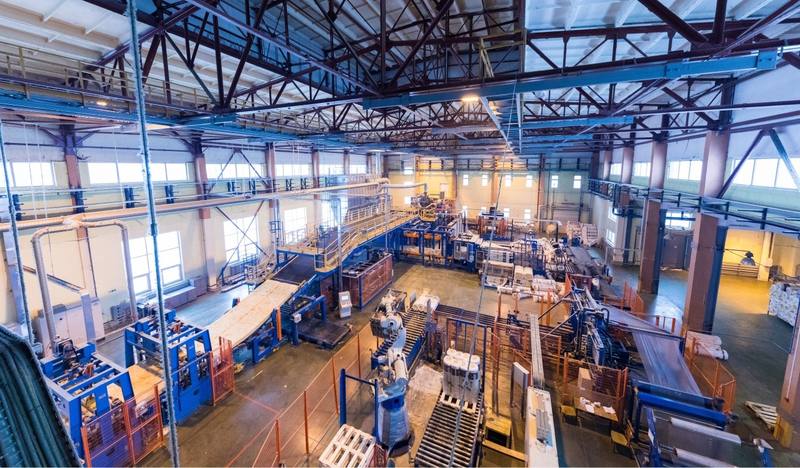
Manufacturing without people already exists.
The most famous example is the so-called Dark Factory ("dark factories").
They got their name because there is almost no lighting required inside.
If there are no people, there is no need for light.
Robots work around the clock, do not go to lunch, do not get sick and do not need a weekend.
Such companies already operate in:
- electronics;
- production of batteries;
- microelectronics;
- automotive industry;
- logistics;
- warehouse infrastructure.
Although not all production facilities are completely without human participation, the number of personnel at such facilities is minimal.
What are the benefits of the business
Automation brings companies several major advantages.
Cost reduction
After the payback of the equipment, production costs are significantly reduced.
Stable quality
The robot performs both the millionth and the first operation.
Work 24/7
Production can operate almost non-stop.
Speed.
Automated lines work much faster than humans.
Minimizing the human factor
Mistakes associated with fatigue, inattention or insufficient qualification of employees are significantly reduced.
Complete Digital Analytics
Each stage of production is recorded in real time.
The manager sees:
- loading of equipment;
- productivity;
- number of marriages;
- staff efficiency;
- expenses;
- execution of plans.
But there are challenges.
Despite the obvious advantages, fully robotic manufacturing is not suitable for every business.
Main limitations:
- high cost of implementation;
- long payback period;
- the need for qualified engineers;
- Difficulty in modernizing old enterprises;
- Dependence on software.
In addition, small-scale production is often more profitable to perform with the participation of people.
What this means for Russian business
Many entrepreneurs see automation as the history of large corporations.
In practice, this has long since been the case.
Today available:
- robotic welding complexes;
- automatic packing lines;
- intelligent warehouses;
- robotic palletizers;
- machine vision systems;
- Program complexes of production management.
Even small businesses are beginning to implement individual automation elements, gradually increasing efficiency without a complete business overhaul.
Who will win in the coming years?
Experts agree that over the next ten years, the market leaders will be companies that will be able to implement digital technologies faster than others.
The advantage will be given to businesses that learn to combine:
- automation;
- artificial intelligence;
- data analytics;
- robotics;
- Digital supply chain management.
Such companies will be able to respond faster to market changes, reduce costs and produce products with higher added value.
Outcomes
Completely desolate production has ceased to be fiction. While they are concentrated in high-tech industries and require serious investments, the direction of development of the world industry is obvious.
China is demonstrating that automation is becoming a new industry standard rather than a competitive advantage. Robots, artificial intelligence, autonomous warehouses and digital control systems are gradually changing the way we think about factories.
For business today, the main question is not “do we need to automate production”, but “when to start doing it”. Companies that adopt modern technologies will be able to significantly improve efficiency, reduce costs and strengthen their market position in the coming years.