Development of own production in Russia
The development of our own production is not a temporary measure, but a long-term course that determines the future of the country.
After 2022, Russia found itself in a new economic reality, where the issue of import substitution and technological sovereignty became central. Restrictions on external supplies of equipment, components and technologies have pushed the country into a major transformation of industrial policy.
Today, the development of domestic production is not just a survival strategy, but a key element of long-term economic growth.
Reasons for the transition to industrial independence
The main reason is the need to reduce dependence on imports. In recent decades, a significant part of Russian industry has focused on foreign components and technologies.
After the departure of a number of foreign companies and sanctions, there was a shortage of equipment, electronics, chemical components and engineering products.
The second factor is the need to protect the internal market and jobs. The development of domestic production allows:
- to strengthen employment in the regions;
- increase tax revenues;
- reduce the outflow of currency abroad;
- Increase the resilience of the economy to external fluctuations.
Government Strategy: Focus on Technological Sovereignty
The Russian government has launched a number of national programs aimed at accelerating localization of production. Main areas:
Import substitution in key industries
Particular attention is paid to mechanical engineering, machine tool building, electronics, pharmaceuticals and light industry.
New production clusters and industrial technology parks are being created, where enterprises receive tax benefits, access to infrastructure and government orders.
Development of scientific and technical base
Cooperation with universities and scientific institutes is an important element.
Collective use centers, engineering companies and design bureaus capable of developing domestic analogues of foreign technologies are being created.
Financial support for enterprises
The Industry Fund, VEB and regional development corporations provide preferential loans, subsidies and grants for equipment modernization and innovation.
Sector-leaders of the new industrial course
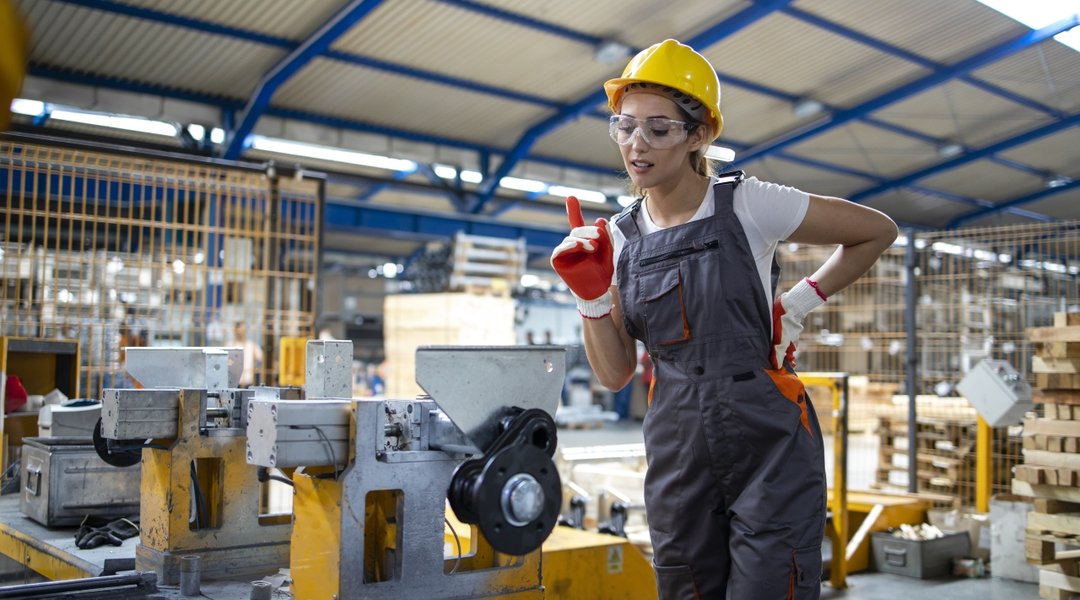
Mechanical and metalworking
The industry is undergoing a massive restructuring.
Foreign machines are replaced by domestic solutions, as well as equipment from Asian and BRICS countries.
Our own design bureaus and digital design centers are developing.
Automotive industry
After the departure of major international brands, Russia intensified the development of national brands and assembly plants.
Joint ventures are being established with China, Iran and the CIS countries.
The main goal is to ensure the production of cars with maximum localization, including engines, transmissions and electronics.
Electronics and Microelectronic Components
The state program on microelectronics aims to meet at least 70% of domestic demand for basic chips, controllers and sensors by 2030.
New factories for the production of semiconductors and printed circuit boards are being built, competencies in the field of robotics and automation are developing.
Agricultural and industrial sectors
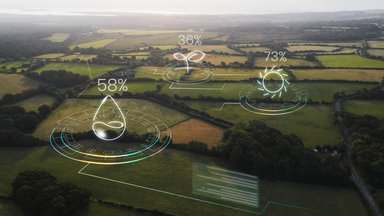
Russia is strengthening its position in the production of agricultural machinery, fertilizers and seeds.
Modern agricultural machines and harvesters of domestic production already compete with foreign analogues.
At the same time, processing is developing - from grain and milk to ready-made food.
International cooperation and new partners
The change in geopolitical orientation has opened up new opportunities for Russia.
Trade and industrial relations with China, India, Turkey, countries of Southeast Asia, Africa and the Middle East are actively developing.
These areas allow:
- receive equipment and technology without political restrictions;
- to organize joint production and exchange of engineering competencies;
- diversify the export of industrial products.
Major Russian companies are already establishing joint assembly lines in China, Iran and Kazakhstan, while inviting foreign partners to localize production in Russia.
Major difficulties and limitations
Despite the successes, the road to full industrial independence remains challenging. Among the key challenges:
- Lack of qualified engineers and technologists;
- dependence on foreign machines and software;
- lack of component base, especially in microelectronics and high-precision devices;
- Long time to start production and certification of new products.
The problem of logistics remains relevant: the delivery of raw materials, components and equipment from friendly countries requires the development of transport corridors and optimization of customs procedures.
Technology Trends and the Future of Industry
The Russian industry is actively implementing digital technologies that allow to accelerate import substitution.
- 3D printing used for manufacturing parts and prototypes;
- digital twin allow to model production processes;
- artificial intelligence are used to predict breakdowns and optimize logistics;
- robotics and automation Increase productivity and reduce dependence on the human factor.
The main trend is the formation of a technological ecosystem, where production, science, education and logistics are combined into a single digital space.
Prospects
Experts predict that by 2030, Russia will be able to increase the share of domestic industrial products in the domestic market to 75%.
The main drivers of growth will be engineering, agro-industry, energy and new materials.
The growth of domestic production will strengthen the national currency, create new jobs and create export flows to Asia, Africa and Latin America.
Russia is entering a new industrial era, where the emphasis is on independence, innovation and strategic partnership.
The development of our own production is not a temporary measure, but a long-term course that determines the future of the country.
The success of this course will determine the competitiveness of Russia in the world market and the stability of its economy in the coming decades.