Expert Where to buy containers for export, import and transportation in Russia: a complete guide for business

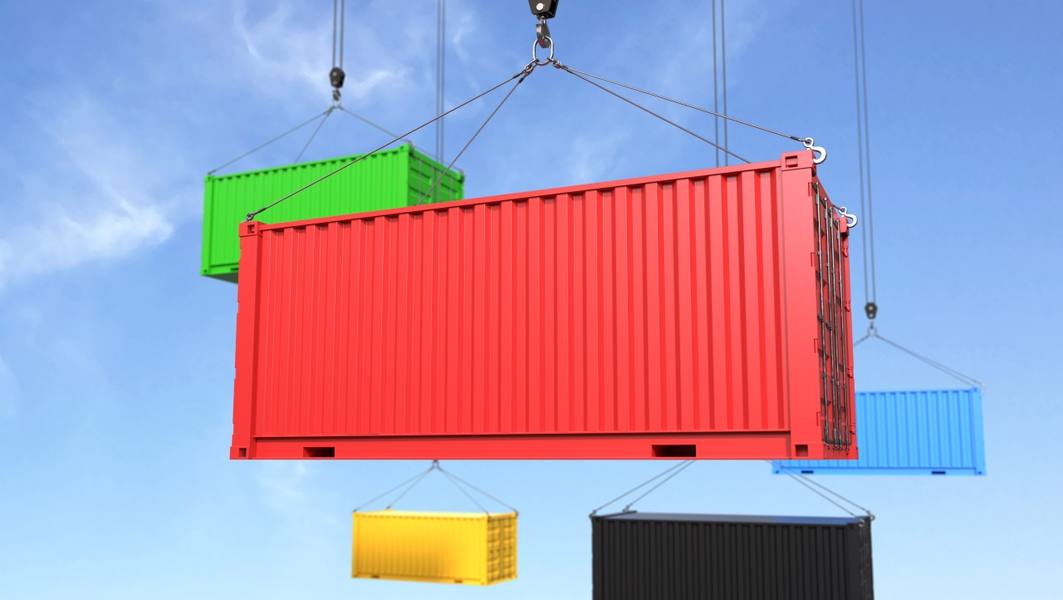
Before searching for a container, it is necessary to understand what type of equipment is required to transport cargo.
Container transportation has long been the basis of world trade. Almost anything from grains and fertilizers to equipment, clothing and food can be transported in standard shipping containers.
However, for many companies, especially those beginning to work with foreign economic activity, the issue of finding containers remains one of the most difficult. Where can I get them? Buy or rent? Who provides containers for export, import and transportation within the country?
In practice, there are several working models, each of which is suitable for certain tasks.
Which containers are used most often?
Before searching for a container, it is necessary to understand what type of equipment is required to transport cargo.
The most common are:
20-foot container (20 DC)
A universal option for most cargoes.
Advantages:
- low cost of transportation;
- ease of loading heavy loads;
- wide availability.
Most commonly used for:
- rolled metal;
- chemical products;
- agricultural products;
- construction materials.
40-foot container (40 DC)
Suitable for medium-density bulk cargoes.
Used for:
- consumer goods;
- furniture;
- packaging;
- equipment.
40 High Cube (40 HC)
High-altitude container.
Particularly in demand for transportation:
- light bulk cargo;
- textiles;
- household appliances;
- finished products.
Refrigerated containers
Designed for cargo with temperature regime.
Used for:
- meat;
- fish;
- fruit;
- vegetables;
- pharmaceuticals.
Option 1. Containers of shipping lines
This is the most common way of organizing international transportation.
Major shipping lines own millions of containers worldwide and provide them to customers as part of shipping.
The diagram looks simple:
- The exporter is booking transportation.
- The line highlights the container.
- The cargo is loading.
- The container is delivered to the port of destination.
Advantages:
- No need to buy a container;
- Minimum organizational costs;
- High level of service.
Disadvantages:
- Dependence on the availability of equipment;
- Possible shortage of containers during peak seasons
- fines for prolonged use.
This option is ideal for most export-import operations.
Option 2. Rental of containers from container operators
If more flexibility is needed, companies turn to specialized container operators.
They shall provide:
- short-term leases;
- long-term lease;
- foreclosure.
This scheme is especially popular for:
- multimodal transport;
- transportation through land corridors;
- domestic logistics.
The advantage is that the container becomes almost the company’s own tool for the entire lease period.
Option 3. Purchase of containers
Large exporters are increasingly forming their own container fleets.
This is especially true for:
- grain traders;
- fertilizer producers;
- timber companies;
- metallurgical enterprises;
- logistic operators.
Pros of buying:
- independence from the rental market;
- No shortage of equipment;
- the possibility of long-term savings.
Cons:
- high initial investment;
- the need for repair and maintenance;
- Storage costs.
Own container fleet becomes profitable for regular transportation of large volumes of cargo.
Where to look for export containers
Three channels are most commonly used for export.
Sea lines
The container is provided with transportation.
Suitable for:
- China;
- India;
- countries of Southeast Asia;
- Middle East;
- Africa.
Freight forwarders
The freight forwarder independently selects the container and organizes the entire logistics chain.
Advantages:
- one service window;
- Solving problems with equipment;
- Flexible routes.
Container terminals
Many terminals have a fleet of free containers and help to select equipment for a specific transportation.
Where to get containers for import
When importing, the container usually belongs to the sea line.
After the arrival of the goods, the importer receives the container for unloading.
It is important to consider the timing of free use.
Most often provided:
- free time at the terminal;
- free time outside the terminal.
After the grace period, additional fees are charged.
Therefore, the effective organization of unloading directly affects the cost of the entire delivery.
Containers for domestic transportation
In recent years, the domestic container market of Russia is developing at a record pace.
Main reasons:
- increase in rail transport;
- development of the East-West international corridor;
- Increased freight traffic between regions.
Containers for domestic transportation provide:
- railway operators;
- container companies;
- logistic holdings;
- regional terminals.
Containerization is especially active on the routes:
- Moscow - Vladivostok;
- St. Petersburg - Yekaterinburg;
- Novosibirsk – Far East;
- Central Russia is Siberia.
New trend: containerization of agricultural exports
Until a few years ago, grain was traditionally transported in bulk.
Things are changing today.
Container shipments are actively growing in the supply of:
- peas;
- lentils;
- chickpea
- flax;
- oilseeds;
- feed products.
Container supplies to China, India and the countries of Southeast Asia are particularly in demand.
For farmers, this allows:
- work with small parties;
- faster shipment of products;
- To reach new customers.
What to look for when choosing a container
Before applying, it is necessary to check:
- technical condition of the container;
- availability of certificates;
- lease terms;
- the amount of fines for downtime;
- cost of return;
- availability of equipment in the right region;
- conditions of international use.
Errors in the container selection phase can result in thousands of dollars in additional costs per shipment.
Main trend of the market
Logistics is gradually moving from simple container rental to comprehensive services.
Today, companies are increasingly buying not a container, but a ready-made solution that includes:
- provision of equipment;
- delivery for loading;
- rail transportation;
- sea freight;
- customs clearance;
- Delivery to the final recipient.
This approach minimizes risks and controls costs throughout the supply chain.
In the context of growing trade turnover between Russia, Asia, the Middle East and the CIS countries, the container is becoming not just a container for transportation, but a strategic tool for international trade and business development.