Expert The house that works for you: how to organize the space of the entrepreneur

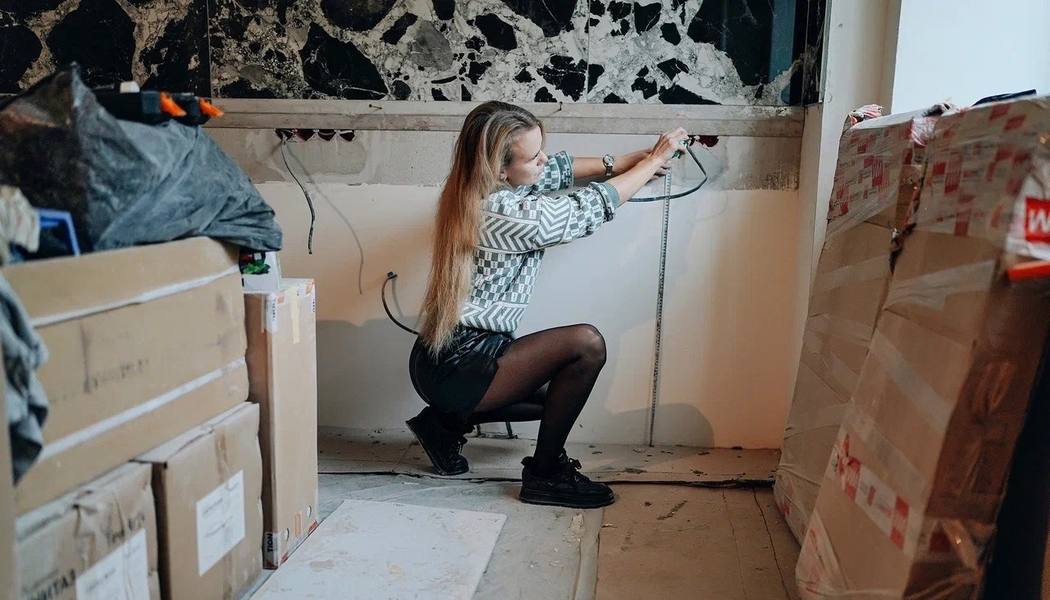
The organization of space should begin not with the question “how many cabinets are needed”, but with an analysis of how a person really lives.
Nice house. - It's not a status demonstration. It is a space that quietly saves time, conserves energy and allows you to switch between work and life faster.
The home of a successful person is often talked about through the prism of the area, location, cost of materials or number of status items. A honed visual, aesthetics of space, a beautiful picture thought out to the smallest detail. But when immersed in this process comes the realization that, no matter how cute it sounds - the entrepreneur is also a person, and the requests for the future interior he, on the one hand, is quite human. And on the other hand, due to the versatile specificity of the activity, additional tasks appear that are much more complex than “do beautifully”. And if you look at housing as a picture, but in general as part of everyday life, the criteria become different.
For an entrepreneur, a home is a space where you have to live, relax, make decisions, sometimes work, spend time with your family and recover from a difficult day.
And the more complex and rich lifestyle, the more important that the house at least does not create additional load. And even better - contributed to the filling, recovery, increase in energy levels, efficiency.
Every day the entrepreneur makes dozens of decisions: work, financial, organizational. Therefore, a well-organized space should relieve it at least partially of minor domestic problems.
- Don't keep looking for things.
- Not to mention unfinished tasks.
- Do not require endlessly something to shift, rearrange and remake.
A good interior in this sense works almost imperceptibly. It supports a person’s habits, takes into account his lifestyle and allows you to spend less energy on household processes.
Planning should reduce the number of household solutions
One of the main tasks of a well-organized home is to make everyday life understandable and predictable.
It sounds simple, but this is where problems often arise even in expensive interiors. The space can be beautiful, thought out visually and filled with quality materials, but at the same time completely uncomfortable for life.
- There's not enough storage.
- There is no separate economic zone.
- Suitcases are constantly looking for different cabinets.
- Sports equipment is in the corner of the bedroom.
- The documents are on the kitchen table.
- Household items gradually begin to occupy free surfaces.
Every little thing seems insignificant in itself. But it is from such trifles that a constant visual and household noise is formed.
Therefore, the organization of space should begin not with the question “how many cabinets are needed”, but with an analysis of how a person really lives.
- How's his usual morning going?
- How often is he on business trips?
- How's your weekend?
- Does she travel with her family?
- Does he play sports?
- Does he have a hobby that requires special equipment?
- How's his working day?
- Which items are used daily and which are used several times a month?
The more accurately the interior answers these questions, the less effort it takes to use it.
Travel should also be part of the planning.
If a person travels frequently for work or travels regularly with family, this should be taken into account in the organization of the home.
Suitcases, travel bags, backpacks and travel accessories should not be in a random place every time. For them, it is better to provide separate storage in advance.
The same applies to things that are used in travel: adapters, road cosmetics, compact equipment, special bags, clothes for different climatic conditions.
When such things have a permanent place, fees cease to become a separate project.
You don’t have to remember where the suitcase went last time. No need to search for travel accessories for several cabinets. There is no need to vacate storage space before each trip.
The house begins to support the way of life of a person, rather than requiring each time to re-adapt the space to the current situation.
Sometimes the argument in favor of a larger area of the future house is precisely the space that residents will not see, but will feel. In this case, additional square meters are not an expense, but an investment in a comfortable life and your calm state.
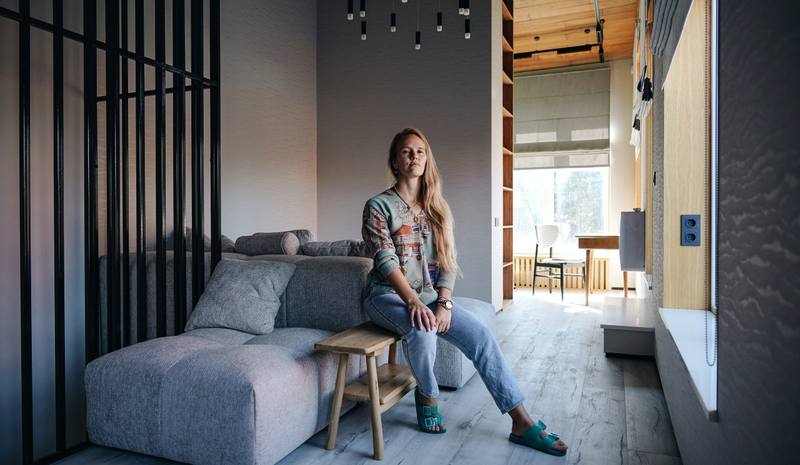
The hobby has its place, too.
Entrepreneurial activities often require high concentration and constant involvement. Therefore, it is especially important to consider in the house not only work, but also what helps a person recover.
Sport, tourism, fishing, photography, music, collecting...
Any fascination that is regularly present in life should be taken into account in the organization of space.
This does not always require a separate room. Sometimes a well-designed storage system and convenient access to the necessary things are enough.
The main thing is that passion does not turn into another problem of the organization.
If in order to get sports equipment, you need to disassemble half the pantry, it becomes more difficult to play sports. If photo equipment has to be searched for different boxes each time, it is used less often. If musical instruments have to be taken out and removed, they gradually cease to be part of everyday life.
Space should take into account not only what a person is doing today, but also what helps them recover and receive energy.
Therefore, it is important to take into account both the regularity of hobbies, and their number, as well as the temperament of a person as a whole - there are those who consistently do one or two favorite things from year to year, and there are those who need to try new things, quit, start something again - and this is a normal story. But she also has a place in the house.
Separate workplace - duty-piece
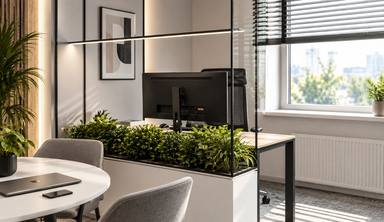
Even if an entrepreneur does not work from home every day, a permanent job in the home is essential.
Not necessarily a large office with a library and a long table. But it should be a fixed space that is always ready to go. The peculiarity of an entrepreneurial schedule is that work rarely ends strictly at a certain time.
- An important call may come in the evening.
- Documents may be needed at night.
- Negotiations could begin early in the morning.
- You may need to quickly connect to a video conference or open work materials.
In such a situation, the workplace should not require training.
- There is no need to empty the dining table.
- Move your laptop from one room to another.
- Look for the charger.
- Remove family items from the surface.
- Distribute the documents and collect them again after work.
- The workspace should be ready at any time.
What to Expect in the Work Zone
First of all – a comfortable workplace, designed not for a few minutes, but for several hours. Nothing is more distracting than a space in which you cannot concentrate and immerse yourself. And you can think that the problem is in your head, and drink nootropics, although in fact the problem is only in ergonomics and space organization:
- Ergonomic table.
- Nice chair.
- Sufficient lighting.
- Preferably natural light.
- Sockets in the right amount and in a convenient location.
- Place for equipment and chargers.
- Storage for documents, diaries and work materials.
Visual order is equally important. Everything that is regularly used for work must have a permanent place.
This is especially true for those who work with a large number of documents or simultaneously conduct several projects. When work materials are constantly moving around the house, the work gradually begins to occupy all the space.
Good solution. - The ability to physically close the work area.
This is especially important in families with children and in homes where work activities may overlap with personal life. The ability to close the door not only reduces the number of external distractions, but also psychologically separate work from home.
If a separate office is not possible, you should at least provide a space that can be visually or physically isolated.
Special attention deserves the background for video calls. Today, negotiations are increasingly online, and the work area must be ready for this without having to search for a neutral wall or rearrange furniture every time.
If possible, it is necessary to provide good noise insulation.
But functionality is not the only criterion.
An entrepreneur’s office should not just be functional. It should be comfortable for several hours in a row.
The workspace should not feel like a temporary technical area. The more pleasant a person is to be in it, the easier it is to stay focused and work without the constant desire to change places. Our favorite aesthetics and visuals come to the rescue here, and they, as you can see, are far from in the first place.
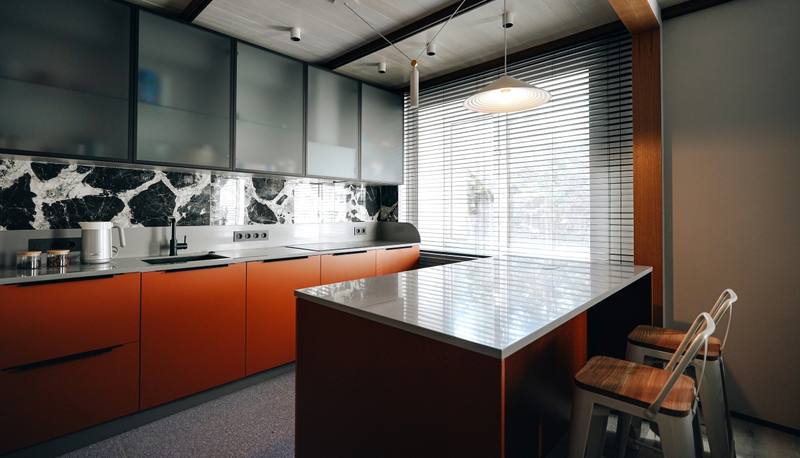
Automation: The house can do some of the daily tasks on its own!
Automation at home does not make sense when you can manage the maximum number of devices from a smartphone.
Its real value is in reducing the number of actions that a person does every day.
- Lights on and off.
- Set the climate.
- Close the curtains.
- Check home security.
- Enable a specific lighting scenario at the time it is needed.
- Managing machinery.
Individually, each action takes a few seconds. But the task of automation is precisely that the person does not think about part of these processes.
For example, in the morning, a certain lighting scenario may automatically turn on in the house. In the evening, another, more calm. Curtains can work according to a predetermined scenario, and the climate can be maintained without constant manual adjustment. The warm floor will automatically turn on where you appear after half an hour. And if you start talking about a private house, the number of competencies of automated processes is fascinating! Heating cables on driveways, evening lighting, video surveillance and alarm, gas boiler control and gas leak sensors... All this removes a huge layer of daily tasks and worries.
The main thing is here. - Not the number of technologies, but their correspondence to the real life of the owner.
If the feature is used every day and eliminates repetitive actions, automation is really useful. If technology exists only for the sake of impression, it quickly turns into an expensive toy (which is also the case if it is the hobby of the owner). Therefore, it is better to think through technical solutions at the design stage. Then you can predict the location of equipment, communications, sensors, charging stations and control scenarios. When automation is added after repairs are completed, the options are often limited and the solutions are compromised.
A well-designed home does not demonstrate technology. They just work in the background.
The house should help switch.
And only now we come to what is most often expected from a good interior - aesthetics and visuals. But in the context of our topic, these concepts will be revealed much more deeply.
After work, it is not enough to be physically at home. It is important to get out of the working state. Switch. Recover attention. Reduce the number of external stimuli. It is here that the interior begins to perform a much more complex function than just creating a beautiful picture.
The ability to rest affects many details:
- Visual order.
- Calm color medium.
- Natural materials.
- Nice tactile sensation.
- Good acoustics.
- Natural light.
- Different scenarios of artificial lighting.
- An opportunity to be alone.
- There is no permanent domestic chaos.
A person should not, passing through his own house, constantly notice the list of tasks.
- "It needs to be reworked here."
- "It's uncomfortable."
- "That thing gets in the way all the time."
- "We've got to go somewhere."
- "Why is it always dark here?"
- "Where is the charger again?"
- "We have to deal with this closet."
When there are too many such thoughts, the house ceases to be a space of restoration. It becomes another set of unfinished processes that require attention. Therefore, a good interior does not need to constantly remind yourself. It does not require endless maintenance at the level of daily decisions. Does not force a person to constantly adapt to an uncomfortable layout. It doesn't make visual noise. Does not turn ordinary household activities into a series of additional tasks.
And this is the base of a beautiful interior. Without this base, housing will turn into a set of disparate design elements, mixed with something household and chaotic. And already on the basis of this base, the tip of the iceberg is being built - color combinations, materials, interior solutions. Then the space begins to please and fill its owners.
The interior should support the person, not require him to work.
When talking about the interior of an entrepreneur, it is easy to go into discussions of expensive materials, large areas and visual signs of success.
But the real value of space doesn’t usually show up when guests arrive.
Every day.
In the morning, when you do not need to look for the right things.
Before the trip, when everything is in place.
During an unexpected work call, when there is a ready space for conversation.
In the evening, when the house helps to switch, rather than reminding of a dozen household problems.
On the weekend, when the hobby does not require to organize the space around it.
The ability to live without constant domestic resistance is one of the most underrated characteristics of a good interior.
Especially for a person who makes a lot of decisions every day and is responsible for a lot of processes.
Ultimately, a good entrepreneur’s home doesn’t have to look like a demonstration of success.
Its main task is much more practical: to quietly support a person every day.
- Save time on household tasks.
- Save energy.
- Help you focus when needed.
- And give the chance to really switch when the workday is over.
The most well-organized interior is the one that does not make a person constantly think about how it works. He's just working for him.