Greenland and the New Arctic Economy: Resources, Logistics and Geopolitics of the Future
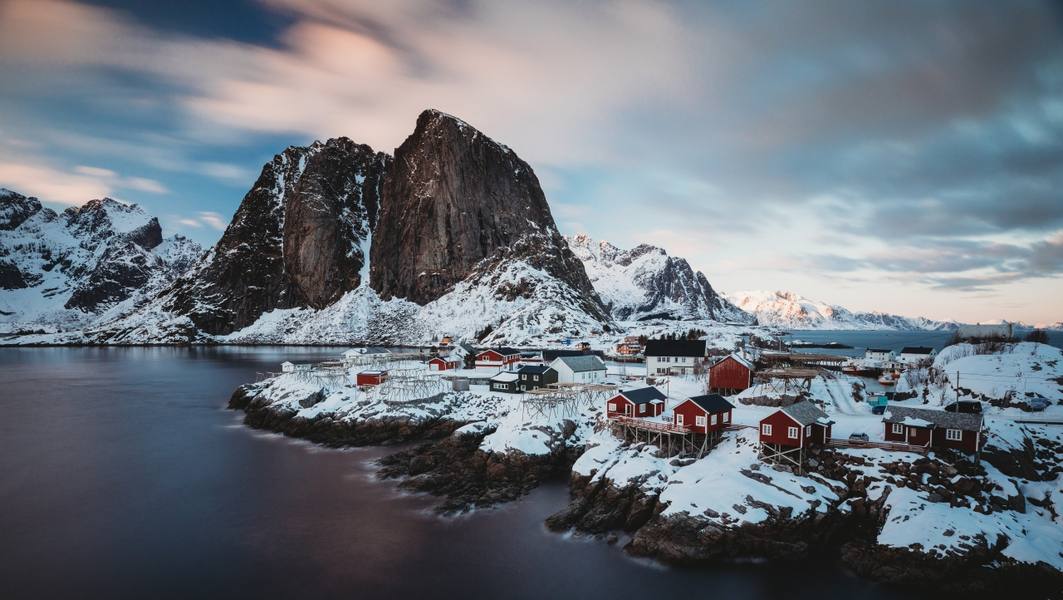
If Arctic navigation becomes widespread, Greenland will be at the intersection of important international trade routes.
Until a few years ago, Greenland was associated with ice, icebergs and polar bears. Today, however, this huge Arctic island is gradually becoming one of the most discussed strategic regions in the world.
Behind the interest in Greenland is not the romance of polar expeditions or tourism. At stake are natural resources, new logistics routes, control of the Arctic and the future architecture of the global economy.
Why are the US, China, Russia and Europe watching Greenland closely? What opportunities does this offer for businesses and investors?
Let's take a closer look.
greenland - largest undeveloped storehouse of resources
Greenland covers more than 2 million square kilometers, most of which is still covered by glacier.
However, global warming is gradually opening up access to vast reserves of minerals.
According to geologists, there are significant reserves on the island:
- rare earth metals;
- graphite;
- lithium;
- nickel;
- cobalt
- copper;
- uranium;
- gold;
- iron ore.
Of particular interest are rare earth elements.
Without them, production is impossible:
- electric vehicles;
- solar panels;
- batteries;
- military electronics;
- semiconductors;
- artificial intelligence systems.
Today, the world market for rare earth metals is largely dependent on China. The United States and Europe are looking for alternative sources of supply.
Greenland is considered one of the most promising options.
The Arctic is becoming the new Suez Canal
Another factor that dramatically increases the importance of Greenland is related to logistics.
Due to the melting of the Arctic ice, new sea routes are gradually opening up.
The traditional route from Asia to Europe runs through:
- Indian Ocean;
- Suez Canal;
- The Mediterranean.
But the northern routes can reduce the distance by thousands of kilometers.
That means:
- reduction of transportation costs;
- reducing delivery time;
- Reducing dependence on congested sea lanes.
If Arctic navigation becomes widespread, Greenland will find itself at the crossroads of major international trade routes.
That is why the port and transport infrastructure is already developing around the island.
Why the United States Wanted to Buy Greenland
When US President Donald Trump proposed buying Greenland from Denmark in 2019, many took it as a joke.
However, this was a very pragmatic calculation.
For the United States, the island is of strategic interest in several areas.
Military security
There is an American early warning base in Greenland.
The Arctic is the shortest route between North America and Eurasia.
Control of the region plays an important role for missile defense systems and national security.
Resources
The U.S. is seeking to reduce its dependence on Chinese supplies of critical minerals.
Logistics
Future Arctic routes could reshape world trade as much as the Suez and Panama Canals did.
China has long been looking at the Arctic.
Although China is not an Arctic power, Beijing is investing heavily in northern projects.
Chinese companies are exploring opportunities to participate in:
- extraction of minerals;
- construction of infrastructure;
- transport projects;
- logistic corridors.
The term “Polar Silk Road” even appeared in Chinese strategy.
This is part of a major initiative to develop global trade routes.
If the northern routes develop, China will have additional opportunities to supply goods to Europe and North America.
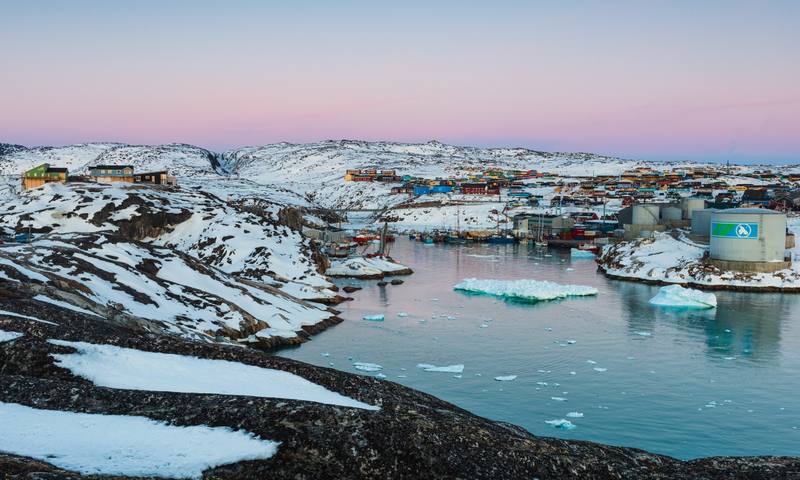
What role does Russia play?
Russia has the longest Arctic coastline in the world.
The development of the Northern Sea Route has already become one of the priorities of state policy.
For Russia, the increased focus on the Arctic means:
- development of port infrastructure;
- increase in freight traffic;
- investment in the icebreaker fleet;
- development of new fields.
In this context, the processes around Greenland are directly related to the future of the entire Arctic economy.
The more active the Northern logistics will develop, the higher will be the importance of Arctic projects in general.
Main barrier - production
Despite the huge prospects, Greenland has not yet become a global resource center.
The reason is simple.
It is extremely expensive to extract resources in the Arctic.
Companies face:
- harsh climate;
- lack of infrastructure;
- high energy costs;
- environmental restrictions;
- labor shortages.
Therefore, not every field is economically viable for development.
However, the development of technology is gradually reducing these barriers.
Environmental question
The development of industry in Greenland is causing serious debate.
On the one hand, resource extraction can bring investment, jobs and economic independence to the island.
On the other hand, environmentalists warn of risks to the unique Arctic nature.
Therefore, many projects undergo lengthy environmental approvals and public discussions.
The balance between economic development and nature conservation is becoming one of the key issues for the future of the region.
What it means for businesses and investors
Greenland today is not a glacier story.
It is a story about future supply chains, strategic resources, and new global trade routes.
Investors are closely monitoring projects in the following areas:
- Mining of rare earth metals;
- Arctic logistics;
- port infrastructure;
- energy;
- transport technologies;
- shipping.
Most projects are in the early stages of development, which makes them both promising and high-risk.
However, history shows that these areas often become centers of economic growth in 10-20 years.
Greenland is gradually turning from a geographical exotic to one of the key elements of the global economy of the future.
The island is at the crossroads of three major global trends:
- fight for critical resources;
- Transformation of international logistics;
- geopolitical competition in the Arctic.
That is why the largest world powers, investment funds and transnational corporations are showing interest in Greenland today.
For business, this is a signal to closely monitor the development of the region. Investors can see future growth points ahead of most market participants.